

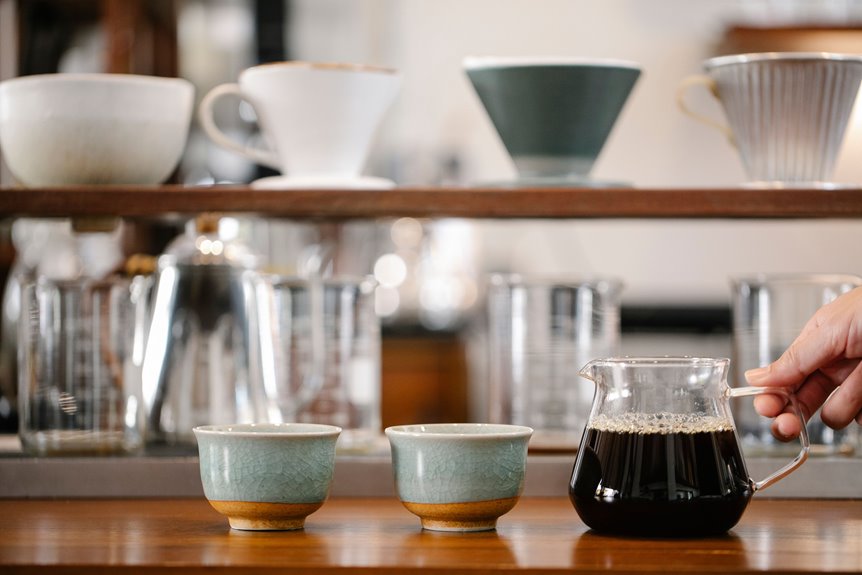
Coffee cupping is a structured tasting method used to evaluate coffee’s aroma, flavor, body, and finish. It involves smelling dry grounds, pouring hot water, breaking the crust, and sipping small spoonfuls. This process trains sensory skills and provides a fair way to compare beans from different origins or roasts. Cupping reveals subtle notes and defects that casual sipping can miss. With repeated practice, a cup communicates clear information about a coffee’s profile.
What Is Coffee Cupping?
Sipping coffee and trying to name what you taste can feel tricky at outset, and that’s exactly where coffee cupping comes in.
You join others around a table, smell the grounds, add hot water, then break the crust with a spoon. That simple routine helps you notice sweetness, acidity, body, and aroma without guesswork.
In many cafés, you’ll see regional rituals that shape the way people cup, from the tools they use to the pace they keep.
Cupping also supports sensory training, because you learn to trust your own senses while comparing notes with the group. Should you’ve ever felt lost in coffee talk, cupping gives you a shared language and a welcoming place to start.
Why Coffee Cupping Matters
Coffee cupping matters because it turns a complicated drink into something you can actually understand and trust. You don’t have to guess why one cup feels bright and another feels flat. Cupping helps you notice those differences with care, and that builds confidence fast.
It also gives you sensory training, so your nose and tongue learn to spot sweetness, acidity, body, and balance without stress. Whenever you taste with others, you feel part of a shared craft, not left on the outside. That sense of belonging matters.
You also see origin impact, because beans from different places can taste wildly different for good reasons. So, cupping connects flavor, people, and place in a simple way that makes coffee feel more personal and easier to appreciate.
What You Need for Coffee Cupping
To start coffee cupping, you’ll need a few essential tools that help you taste each sample with care and confidence.
Fresh beans and clean water matter just as much, because they let you notice the real flavors without any distractions.
Then grab scoring sheets and spoons, since they help you track what you taste and compare each cup with ease.
Essential Cupping Tools
A good cupping session starts with the right tools, because the gear helps you notice what’s really in the cup without getting in the way.
You’ll want a reliable grinder, sturdy cupping bowls, spoons, a scale, and a timer. Whenever you keep your grinder calibration steady, you give every sample a fair chance, which helps you trust what you taste.
Good cupping protocols also matter, because they keep the process calm, shared, and easy to follow. Use bowls that feel comfortable in your hands, and pick spoons that move smoothly from sip to sip.
With each tool in place, you can relax and focus on the coffee, not the setup. That’s how you join the table with confidence and feel like you belong there.
Fresh Beans And Water
Fresh beans and clean water do most of the heavy lifting in a cupping session, so once your tools are ready, your focus should shift to what goes inside the bowl.
You want fresh beans that were roasted recently, because old coffee can taste flat and hide the details you’re trying to notice. Choose a few coffees that interest you, then keep each sample sealed until you’re ready. That helps you feel like you’re joining the process at the right moment.
Next, use pure water with no strong mineral taste or smell. Good water lets the coffee speak clearly, and it keeps your cup fair.
As you bring both together, you give yourself a better chance to taste what makes each coffee special.
Scoring Sheets And Spoons
Scoring sheets and spoons help turn cupping from a loose taste evaluation into a clear, repeatable process.
You use the sheet to track aroma, flavor, body, balance, and aftertaste, so your observations stay steady with each round. That matters because score normalization lets you compare coffees fairly, even whenever several people taste together.
You also need a good spoon. The right cup spoon feels balanced in your hand, carries enough liquid, and lets you break the crust without strain.
Pay attention to spoon ergonomics, because comfort helps you move faster and stay focused at the table gets busy.
With clean sheets and the right spoon, you join the rhythm of the cupping table and make each sample easier to trust.
How to Set Up a Coffee Cupping Table
Start with a clean, calm table, because the way you set it up can shape the whole cupping session. Place the bowls in a neat table layout, leaving enough space between each one so you can move with ease and feel settled. Keep your scoring sheets and spoons within easy reach, since that helps you stay focused and part of the flow.
Next, check the lighting setup. Soft, even light lets you see color and surface clearly without strain, and that can make the room feel more welcoming too. Then clear away strong smells, clutter, and extra noise, so everyone at the table can relax and trust the moment.
Once you prepare it this way, you create a space that feels thoughtful, shared, and ready for good coffee.
Coffee Cupping: Step-by-Step Process
With the table set and the room feeling calm, you’re ready to move into the cupping itself. Firstly, check each bowl for equal doses and steady grind consistency, because a fair tasting starts there.
Next, add hot water until the grounds are fully covered, then let the crust form without rushing. After a few minutes, break that crust gently with your spoon.
Move slowly, and let each bowl feel like part of the same shared ritual. Then skim off the floating grounds so the cup stays clear.
Once the surface settles, use your slurping technique to spread the coffee across your tongue and notice how each sample speaks. Keep your pace steady, trust your senses, and stay curious. You’re not just tasting alone; you’re joining a simple, welcoming craft.
How to Smell Aroma and Fragrance
Now that the cups have opened, bring your nose close and take in the aroma before you ever sip. Breathe in gently, then pause and let the steam rise to meet you.
You’re looking for fragrance in the dry grounds, then aroma in the wet coffee, and both can change fast. Move from cup to cup so you can notice aroma layering, where one note sits over another like a friendly stack of clues.
Should one cup feel shy, lean in again after a few seconds. Trust your fragrance memory, even whilst it surprises you, because your nose knows more than you reckon.
Stay relaxed, stay curious, and let each scent help you feel right at home with the coffee.
How to Taste Flavor, Acidity, and Body
Taking a small sip is where the real tasting begins, because flavor, acidity, and body tell you how the coffee feels as much as how it tastes.
Let the coffee roll across your tongue, and notice the initial flavors that show up. You could catch fruit, chocolate, or nuts, but your own cup perhaps surprise you in a good way.
Then pay attention to acidic balance, which gives the coffee brightness without making it harsh.
After that, notice body, or how full the coffee feels in your mouth. Use mouthfeel descriptors like silky, creamy, light, or heavy to name that feeling.
As you taste, compare each sip with the last one. This helps you spot changes and trust your senses.
You belong in this process, and every careful sip builds your confidence.
How Roast Level Affects Coffee Cupping
Roast level can change a cupping experience before you even take the initial sip, because it shapes the coffee’s smell, color, and the way flavors show up in the bowl.
Whenever you cup lighter roasts, you might notice brighter notes and sharper edges.
With darker roasts, you’ll often feel more warmth, heavier sweetness, and less sparkle.
- Light roast: clearer details
- Medium roast: balanced roast evolution
- Dark roast: softer acidity
- Your sensory thresholds: observe what stands out
As you move between roasts, trust your own senses and give each cup space to speak.
That helps you compare coffees without feeling lost.
You’re not trying to win an examination here.
You’re just learning how roast level guides what you taste, one bowl at a time.
How Processing Changes Coffee Flavor
As you cup coffee, processing methods shape the initial big clues you notice in the bowl.
Washed coffees often taste cleaner and brighter, while natural and honey-processed coffees can show more fruit, sweetness, and body.
As you compare them, you’ll start to see how each step after picking helps build flavor.
Processing Methods
Coffee processing shapes flavor long before the beans ever reach a roaster, and that’s where cupping starts to get interesting.
If you cup, you can notice how washed, honey, and natural lots each bring their own voice to the table. Washed coffee often tastes cleaner and brighter, while natural coffee can feel fruitier and more open. Honey processing sits in the middle, so you get a gentle mix of both.
You might also catch fermentation aromas that hint at berries, flowers, or spice. Some farms even try experimental yeasts to shape the cup in new ways.
That can sound fancy, but it’s really about helping you find coffees that feel familiar, surprising, and easy to enjoy with your people.
- Washed lots often taste crisp
- Natural lots can feel juicy
- Honey lots balance both styles
- Fermentation aromas add extra character
Flavor Development
Processing methods don’t just change how coffee looks on the outside, they shape how it tastes in your cup from the initial sip to the last. Whenever you cup coffee, you’ll notice that washed lots often feel bright and crisp, while natural lots can taste sweeter and fruitier.
That shift comes from acidity evolution, which changes how lively or mellow the cup feels. You’ll also notice aroma extraction, because the beans release different scents as water pulls out oils and compounds.
Should you roast, grind, or brew with care, those flavors open more clearly, and you can taste the farmer’s choices with each sip. This is where your palate gets to join the group and find the cup that feels most like home.
How to Read Coffee Cupping Scores
Once you know the cupping scale, the numbers start to make real sense, and you can use them to spot what makes a coffee shine or fall flat. You’re not just chasing a big score. You’re reading a shared language that helps you compare cups with confidence and feel like you belong at the table.
- 80 to 84 means good, clean coffee.
- 85 to 87 points to stronger balance and clarity.
- 88 and up shows standout sweetness or complexity.
- Impressions in brew vocabulary guide your next taste.
- Sensory training helps you trust what you taste.
When you pair the score with the impressions, you see the story behind it. A higher number usually means better harmony, but the details matter most. That’s where your palate grows, and where coffee starts to feel more familiar.
Common Coffee Cupping Mistakes
Even though you can read cupping scores with confidence, a few common mistakes can still blur what’s really in the cup. You’re not alone should the setup feel tricky. Small equipment mistakes, like dirty bowls or uneven grind size, can throw off flavor and make good coffee seem flat. Timing errors matter too, because coffee changes fast as it cools. Suppose you break the crust too early or too late, you miss key aromas. | Mistake | What It Does | Why It Matters |
| — | — | — |
|---|---|---|
| Dirty tools | Adds stale notes | Masks true flavor |
| Wrong grind | Changes extraction | Skews balance |
| Timing errors | Misses peak aroma | Hides clarity |
When you notice these slips, you can trust your palate more and feel like part of the cupping crowd.
How to Practice Coffee Cupping at Home
Start near gathering a few simple cupping tools, like bowls, spoons, hot water, and freshly ground coffee, so you can set up a calm tasting space at home.
Then taste with purpose by smelling, slurping, and noting what you notice in each cup, even assuming your initial try feels a little messy.
With a little focus, you’ll train your palate and start spotting the flavors that make each coffee unique.
Gather Cupping Tools
Before you brew, pull together a few simple tools so your coffee cupping feels calm, clean, and easy to follow. You don’t need fancy gear; you just need a steady setup that helps you feel confident and welcome at the table.
- Fresh beans from the same roast date
- A grinder with a consistent setting
- Two or more small cups or bowls
- A spoon, timer, and hot water
Keep your equipment sourcing simple so you can focus on the coffee, not the hunt. Choose clean cups, a kettle you trust, and a notebook for quick thoughts.
Good sensory calibration starts here, because a familiar setup helps you notice small changes without stress. Once your tools are ready, you can move into the tasting with a clearer head and a lighter heart.
Taste With Purpose
With your cups, grinder, and hot water ready, you can turn a simple coffee session into a focused tasting at home.
Start by grinding each coffee evenly, then add the grounds and pour water slowly so every cup gets the same treatment. Let the coffee bloom, wait, and break the crust with a spoon.
As you smell and sip, notice sweetness, acidity, body, and finish. You’re not trying to be perfect; you’re building sensory training one cup at a time.
Then jot down what stands out, even provided it’s just “bright” or “smooth.” That small habit helps you trust your own palate.
Whenever you repeat these brewing rituals, you’ll feel more at home with the process, and your tasting circle starts to feel like yours.
Frequently Asked Questions
How Often Do Professional Cuppers Taste Coffee Samples?
You usually taste samples daily or several times weekly depending on sampling frequency and tasting cadence. You’ll join a tight knit cupping team, comparing lots, tracking changes, and refining flavor calls together.
Can Coffee Cupping Identify Defects Before Roasting?
Yes — you can catch pre roast flaws through coffee cupping, and you’ll spot some undetectable taints before roasting, helping you belong with cuppers who protect quality and keep your coffees cleaner, brighter, and more consistent.
Do Cupping Sessions Use Specific Water Temperatures?
Yes, you’ll usually use water just off boil, around 200°F, because it helps standardize brewing variables and reveal taste thresholds. You’ll fit right in with cuppers who chase consistency, clarity, and shared flavor exploration.
Is Coffee Cupping Used in Green Coffee Buying Decisions?
Yes, you will use coffee cupping to guide green buying decisions because it helps you compare lots, build producer relationships, and support price negotiation. You will feel part of a shared quality focused buying community.
Can Beginners Join Professional Coffee Cupping Events?
Yes, you can join. Like opening a door to a warm community, professional cupping welcomes beginners who are curious and respectful. You will learn through sensory training, and your home brewing skills will grow as you taste alongside others.