

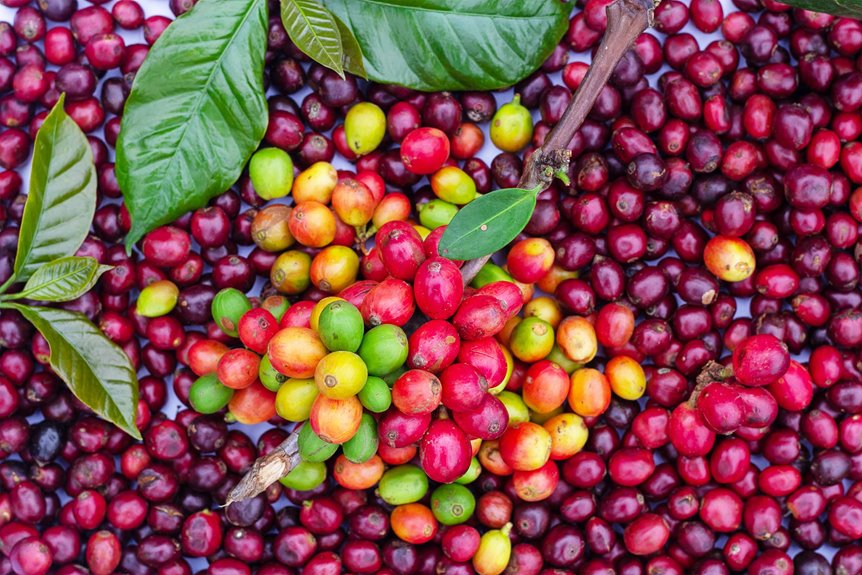
Coffee begins as a clean seed removed from a ripe cherry. Farmers soak and plant seeds in warm, moist, shaded soil to encourage germination. Seedlings receive steady water, nutrients, and pest protection as they develop. Mature plants flower and produce cherries that are hand- or machine-picked at ripeness. Processing and drying of those cherries shape the final flavor in your cup.
What Starts a Coffee Plant?
Starting a coffee plant begins with a seed, and that seed usually comes from a ripe coffee cherry. You’re looking at the tiny start of a future plant, and that matters more than it seems.
Inside the seed, seed dormancy keeps growth paused until conditions feel safe. Then moisture, warmth, and light signals help switch on germination hormones.
Those hormones wake the embryo and tell it to grow roots initially, subsequently a shoot. You don’t need fancy terms to see what’s happening: the seed is getting ready to join you in a new cycle of life.
Once you understand this outset, you can treat each seed with patience and confidence, like part of your growing coffee family.
Preparing Coffee Seeds for Planting
Before you plant coffee seeds, you need to choose ones that look full, healthy, and free from damage. Then you should wash them well and sort out any weak or broken seeds so only the best ones stay. After that, a short soak can help wake them up and get them ready for the soil.
Seed Selection Criteria
Choosing the right coffee seeds can make the difference between a weak start and a strong, healthy plant, so this step deserves your full attention. You want seeds from a trusted source, because good genetics help your future plants grow with confidence. Look for varieties that fit your climate, and recall that altitude influence matters since some coffees do better in cooler highland areas.
You’ll also want healthy, mature seeds with steady size and strong color, since those traits often signal better vigor. Genetic diversity matters too, because a wider mix can help your crop handle stress more smoothly. Whenever you choose carefully now, you give yourself and your garden a better chance to grow together.
Cleaning And Sorting
Once you’ve picked strong coffee seeds, the next step is to clean and sort them so they’re ready to grow. You’ll feel better knowing each seed gets the same careful start. Gently remove pulp, dust, and broken pieces, then let the healthy seeds stand out.
| Step | What you do |
|---|---|
| Clean | Rinse away debris and weak bits |
| Sort | Keep seeds that look full and firm |
| Check | Set aside damaged seeds for pest control and soil analysis reminder |
When you work this way, you’re building a calm, shared space for young plants to begin. Clean seeds also make later care easier, since you can spot problems sooner. Keep your hands and tools tidy, and treat each seed like it matters, because it does.
Pre-Planting Soaking
Soaking the cleaned coffee seeds gives them a gentle wake-up call and helps them get ready for planting. You start by placing them in clean water for several hours, so they can absorb moisture and soften their outer coat. This simple step helps you feel more confident, because the seeds won’t go into the soil dry and stressed.
Should your variety need it, you can use cold stratification initially, then move to soaking. Some growers also add a mild nutrient infusion to support early strength, but you should keep it gentle. After soaking, drain the seeds well and plant them right away in moist, loose soil. Whenever you treat them with care, you give your future coffee plants a stronger, friendlier start together.
Where Coffee Seedlings Grow Best
Coffee seedlings do best whenever you give them a warm, gentle start with bright but filtered light, rich soil, and steady moisture. You’ll want a nursery spot that feels safe, airy, and protected from harsh sun, wind, and pounding rain.
Because young plants have limited shade tolerance, a light canopy or screen helps them settle in without stress. Good nursery infrastructure also matters, since raised beds, clean containers, and reliable drainage keep roots healthy and organized.
At the point you place seedlings together in a calm, well-kept space, you make it easier for them to grow strong alongside others like them. That shared setting can feel reassuring, and it gives you a clear place to watch each plant thrive as it begins its expedition toward the field.
How to Care for Young Coffee Plants
Young coffee plants need calm, steady care so they can build strong roots and sturdy stems without unnecessary stress. You’ll help them feel at home by giving gentle water, loose soil, and light that isn’t too harsh. Keep shade management simple, since young leaves can burn fast. Check the plants often, because pest monitoring catches trouble before it spreads.
| Care step | What you do |
|---|---|
| Watering | Keep soil evenly moist, not soggy |
| Shade | Use dappled cover during hot hours |
| Inspection | Look under leaves for insects or spots |
Also, give each plant enough space for air to move around it. Should a stem lean, support it softly with a thin stake. Whenever you stay attentive, your plants can settle in, and you’ll grow with them too.
What Coffee Plants Need to Flower
To set flower buds, a coffee plant needs the right mix of age, energy, and weather, and that balance can take time to build.
You help it by keeping steady care, because coffee flowers only once stress stays low and the plant feels safe.
Look for these flowering triggers:
- Cool, dry nights that whisper change
- Regular daylight without harsh shade
- Good moisture in the roots, not soggy soil
- Balanced nutrient requirements that keep leaves strong
If you meet those needs, your plant can shift from steady growth to bloom mode.
That moment feels special, almost like the garden is joining your routine.
Stay patient, and you’ll see the initial white blossoms open with quiet confidence.
How Coffee Cherries Grow
After the coffee flowers fade, tiny green cherries begin to form at the base of each bloom, and that’s where the next stage of growth starts.
You’ll watch them swell slowly as they take in sun, rain, and soil nutrients. Initially on, they stay firm and bright green, so don’t expect quick change. Good shade management helps them develop at a steady pace and protects them from harsh heat.
As the cherries grow, you also need pest prevention, because insects and disease can weaken the fruit before it matures. Whenever you check your plants often, you notice small differences that matter.
Each branch carries its own rhythm, and you’re part of that care team. With patience, you help each cherry move from tiny bud to fuller fruit, day after day.
When Coffee Cherries Are Ready to Pick?
Coffee cherries are ready to pick once they’ve fully changed color, and that color tells you a lot. Whenever you look closely, you’ll see the ripeness indicators that help you choose the right harvest timing. You’re aiming for cherries that feel full, look glossy, and match the deep shade of their variety.
- Bright red cherries often signal peak sweetness.
- Yellow or orange cherries might need more time.
- Dark red or burgundy fruit usually feels firm and plump.
- Green cherries still need sun and patience.
As you walk the rows, you’re not guessing alone. You’re learning with your local coffee community, and that shared eye for color makes the work feel calm and confident. Trust those clues, and you’ll know whenever the crop is truly ready.
How Coffee Harvesting Works
Once those coffee cherries show the right color, the real work begins in the field. You and your team move row by row, checking each branch with care. In shade management areas, the canopy helps slow ripening, so you might need extra passes to catch only the best cherries. Some farms use handpicking, which lets you choose ripe fruit one by one. Others rely on mechanized harvesting, where machines shake the plants and collect more fruit fast.
| Harvest method | Field feel |
|---|---|
| Handpicking | Slow and careful |
| Strip picking | Faster, less selective |
| Mechanized harvesting | Quick and efficient |
| Shade management | Cooler, greener rows |
| Mixed methods | Flexible and practical |
You stay alert, because clean picking protects the crop and keeps your crew working with purpose, dignity, and a shared rhythm.
What Happens After Coffee Picking
The real sorting starts the moment the baskets come in, and this step matters more than many people realize.
You’re joining the post harvest flow, where each cherry gets checked fast so good lots stay together.
Quality control helps you spot ripe fruit, leaves, and damaged beans before they mix.
Then careful storage solutions protect the coffee from heat, rain, and odd smells that can sneak in and spoil the batch.
Consider the scene like this:
- Bright red cherries in clean crates
- Busy hands moving with calm purpose
- Cool shade keeping the fruit steady
- Neat sacks waiting for the next step
When you handle this stage well, you support flavor development from the start.
It’s a quiet job, but you’re part of the team that keeps great coffee feeling honest, fresh, and full of promise.
How Coffee Beans Are Processed and Dried
After you pick coffee cherries, you’ll see that washing and fermentation help separate the beans and bring out their clean flavor.
Next, you’ll dry the beans carefully so they don’t spoil, and then milling removes the last outer layers.
These steps might sound simple, but they play a huge role in how smooth and tasty your cup will be.
Washing And Fermentation
- You rinse off loose pulp.
- You let natural microbes work on the sweet layer.
- You check the beans for feel and freshness.
- You wash them again so they’re ready for the next stage.
When you stay close to this step, you’re part of the same careful chain that gives coffee its clean, bright voice.
Drying And Milling
Now the coffee beans begin a slower, steadier stage, and this is where careful drying and milling protect all the work you’ve already done.
You’ll spread the beans with sun drying techniques, turning them often so they dry evenly and stay safe from mold. Should weather change, you can move them to raised beds or use dryers to keep the pace steady.
Once the moisture drops to the right level, you’ll rest easier because the beans can store well and travel safely.
Then milling starts. You’ll remove the outer husk, sort the beans, and use mechanical polishing methods once a cleaner finish helps. This step can feel technical, but you’re still part of the process, guiding each bean toward the cup your community will share.
How Coffee Is Sorted and Graded
Once the beans leave the drying stage, they get sifted, sorted, and graded so only the best lots move forward. You can imagine workers moving beside humming screens, handpicking stray sticks and broken beans with steady care. This step helps you feel part of a craft that values every bag.
- Screens separate beans by size.
- Color checks spot uneven beans.
- cupping protocols assess aroma and taste.
- market grading sets the lot’s class and price.
After that, each lot gets labeled for buyers who want a clear match, and you can trust the path from farm to cup a little more. With every clean heap and careful remark, you see how your favorite coffee earns its place, one sorted bean at a time.
Common Coffee Growing Challenges
Even the best coffee plants face hard days, and those struggles can shape the whole harvest. You’ll run into dry spells, heavy rain, poor soil, and sudden temperature swings. These problems can slow growth and weaken young roots.
You might also see leaf rust, borers, or tiny insects that chew buds and fruit. Good shade management helps you calm heat stress, hold moisture, and protect tender plants.
At the same time, smart pruning and clean fields improve pest resistance, so trouble doesn’t spread as fast. Should you watch your plants closely, you can spot changes sooner and act before damage grows.
With steady care, you’re not alone in the field, and your coffee trees can still thrive.
Frequently Asked Questions
How Long Does It Take for a Coffee Plant to Produce Fruit?
You’ll wait about 3 to 5 years for fruit, though it can occasionally be sooner or take longer. It’s remarkable to imagine the blossoms turning into cherries. The exact timing depends on how quickly the plant matures, and you play a role in that growth process.
Can Coffee Grow Indoors in Pots?
Yes, you can grow coffee indoors in pots with container gardening and indoor propagation. You will need bright light, warmth, humidity, and well draining soil. Join the growers’ circle, and your plant can thrive.
Do All Coffee Plants Need Shade to Survive?
No, not all coffee plants need shade to survive. For example, robusta can handle more sun than arabica. Match shade requirements and light tolerance so your plant feels right at home.
What Coffee Varieties Taste Best After Harvest?
You’ll usually love Geisha and Bourbon coffees most; Geisha aroma shines with floral sweetness, while Bourbon elegance brings silky balance and depth. Should you want a crowd pleasing cup, choose freshly harvested, well processed beans.
How Much Caffeine Is in a Single Coffee Cherry?
A single coffee cherry usually gives you about 1 to 2 milligrams of caffeine, though caffeine variability and bean metabolism shift that. You’re part of the brew crew, and each cherry’s punch can pleasantly surprise you.