
Have you ever noticed that delightful layer of foam on your coffee? That foam isn’t just for show; it reveals how well the milk has been whipped and stretched. On the other hand, the rich crema on espresso tells you how expertly it was brewed and how fresh the beans are. Both elements change the look, feel, and taste of your drink in unique ways. Next time you sip your coffee, pay attention to these details—they can tell you a lot about your brew!
What Coffee Foam and Crema Are
That light, golden layer on top of your coffee could look the same, but coffee foam and crema are actually two different things.
Whenever you sip a cappuccino or latte, foam comes from milk that gets whipped with air, so it feels soft, airy, and cozy on your tongue. It changes the coffee texture and can make each sip feel smoother and warmer.
Crema, on the other hand, forms on espresso and comes from pressure, oils, and gases working together. It adds a rich look and can shape the flavor profile with a light, bold edge.
What Crema Is in Espresso
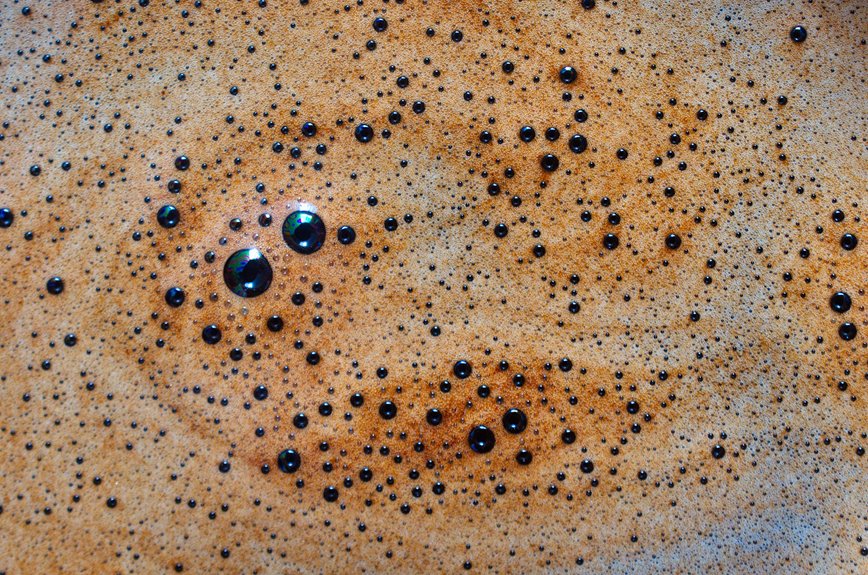
Crema is the pale, silky layer that forms on top of a fresh espresso shot, and it shows up because hot water pushes through finely ground coffee under strong pressure. As you see it, you’re looking at one of the clearest espresso qualities, and that can make your cup feel special right away.
Crema significance goes beyond looks. It can hint at a well-pulled shot, with a creamy texture and a lively aroma that welcomes you in. You may notice golden tones, tiny bubbles, and a smooth top that holds for a short time.
Still, crema is only one part of espresso’s charm. It works with body, scent, and taste to create the full experience you share with your favorite cup, and that’s part of the fun.
How Roasting Affects Coffee Crema
Roast level changes how much crema you get, because lighter roasts often hold more gas while darker roasts can lose some of it during roasting.
Whenever you use freshly roasted coffee, you usually see richer crema since the beans still keep more trapped carbon dioxide.
Therefore, in case your espresso looks a little thin, the roast and freshness could be the real reason, not your machine.
Roast Level Impact
As beans darken in the roaster, their chemistry changes in ways that can make or break a rich layer of crema.
Whenever you choose a dark roast, you usually get more oil content and a thicker look, while a light roast keeps more bean density and a brighter flavor profile. That shift can alter your extraction time, aroma hints, and even how your cup feels at the top. You don’t need to guess your way through it.
- Use a slightly higher brewing temperature for darker beans.
- Watch how a lighter roast might need a longer pull.
- Observe which roast level gives you the crema you enjoy most.
Freshness And Crema
Fresh coffee often makes the biggest difference in crema, and you can see it almost right away. Whenever beans are freshly roasted, they hold more carbon dioxide, and that gas helps build a richer top layer. Should you’ve ever joined friends at the espresso bar, you know that a good crema can feel like a small welcome. As beans age, crema quality drops fast, so your shot might look thin and pale.
| Bean age | Gas release | Crema quality |
|---|---|---|
| 1 to 7 days | High | Thick |
| 8 to 14 days | Medium | Balanced |
| 15 to 30 days | Lower | Softer |
| 30+ days | Low | Weak |
How Beans and Grind Affect Crema
Even before water touches the grounds, the beans and the grind set the stage for crema. Your bean origin matters because it shapes oil, sugar, and gas levels, which help create that golden top you love seeing.
Fresh, dense beans often provide a richer layer, so you can feel right at home with a better shot. Grind size matters too. Should you grind too coarse, crema thins out fast. Should you grind too fine, the shot can choke and lose balance.
- Choose beans with strong freshness.
- Match grind size to your espresso setup.
- Watch for a tight, even pour.
When you dial in both parts, you give yourself a calmer, more confident cup.
How Brewing Method Changes Crema
Upon altering the brewing method, one changes the kind of crema or foam your coffee can build, and that shift can be bigger than most people expect. With brewing techniques like espresso, you trap pressure and gas, so you get a thicker top layer. With drip or pour-over, you usually see light foam, not true crema. Should you like a richer cup, that’s okay, because your method can fit your mood and routine.
| Brewing method | Crema result |
|---|---|
| Espresso | Dense, stable crema |
| AeroPress | Thin foam, less crema |
When you adjust pressure, water flow, and contact time, you also affect crema stability. So you can choose the style that feels right for your morning and still feel at home in your cup.
What Crema Color Says About Freshness
At the time crema looks deep hazel or warm caramel, your coffee usually feels fresh and lively, because the oils, gases, and tiny bubbles are still working together. You can read these crema indicators like a friendly signal from the cup, and that helps you trust your own taste more.
- When the color stays rich and even, you’re near the sweet spot in the freshness timeline.
- Should the shade turn lighter very fast, the coffee might’ve aged a bit, so the flavor can feel less bright.
- When the crema sits smoothly on top, you’re getting a lively pour that many coffee lovers welcome.
When you notice these signs, you can feel right at home with your brew.
When Weak Crema Points to Problems
As crema looks thin, pale, or patchy, it often points to a problem that starts prior to the cup ever reaching your hands. You’re not doing anything wrong, and that matters.
Weak crema can signal stale beans, uneven grinding, poor tamping, or water that misses the right range. Each issue can weaken crema stability and lower espresso quality, even though the shot smells delightful.
Should the grind be too coarse, water rushes through and leaves little behind. Should the beans sit too long, gases escape and the top falls flat.
Still, you can learn from it. Whenever you notice weak crema, you’re seeing a small clue from the brew path, and that clue can help your coffee feel more like yours.
How to Read Crema for Better Espresso
Reading crema starts with looking past the pretty surface and noticing what it’s trying to tell you. You can use it like a quick guide to espresso extraction, and that makes you feel more in control at the bar. Watch these signs:
- Crema thickness should look even, not blotchy.
- A warm hazelnut color often suggests balanced brewing.
- Tiny bubbles usually indicate fresher coffee and better pressure.
When you notice these details, you’ll start to trust your eyes and your palate together.
Should the crema look thin or break fast, your shot could need a small grind or time change.
When it holds well and smells sweet, you’re probably close to the cup your coffee crew would cheer for.
That little layer can help you dial in with less guesswork and more confidence.
What Coffee Foam Looks Like in Milk Drinks
Milk foam can look simple, but it tells you a lot once you know what to notice. In milk drinks, you’ll see a soft layer that sits on top and feels light, silky, and a little springy.
Good milk texture looks smooth, with tiny bubbles that blend in instead of standing out. That gives the foam a clean, foamy appearance, not a dry or stiff one. You might notice it holding shape in latte art, or spreading evenly over the drink like a cozy blanket.
In a cappuccino, the foam usually feels fuller and more airy, while a latte shows a thinner, gentler layer. Whenever you look closely, you can tell the drink was made with care, and that little detail makes your cup feel more welcoming.
Why Coffee Foam Forms in Milk Drinks
That soft, silky layer you noticed on top of a milk drink forms because air and milk proteins work together during steaming.
Whenever you practice milk frothing, you spin tiny bubbles into the milk, and heat helps the proteins stretch and wrap around them. This creates a light foam that feels smooth, not airy and harsh.
- You add steam, and it pulls in air.
- Proteins and fats then hold those bubbles in place.
- Good foam stability keeps the top layer from collapsing fast.
Coffee Foam vs Crema: The Main Differences
Although coffee foam and crema can both sit on top of a drink, they come from very different places and behave in different ways.
You get foam as milk traps air during steaming, so it feels light, airy, and stable. Crema forms as hot water and pressure pull oils, gases, and tiny coffee particles from espresso, so it looks richer and more golden.
That means foam shapes your latte’s comfort, while crema tells you about espresso texture and brewing techniques.
Should you enjoy milk drinks, foam gives you that soft, cozy layer you can sip through. Should you love espresso, crema offers a short-lived sign of a fresh shot and careful extraction.
Once you know both, you can read your cup with more confidence and feel right at home.
Frequently Asked Questions
Does Crema Affect Espresso Flavor, or Is It Only Visual?
Yes, crema does affect flavor, not just looks. In many shots, nearly 30 percent of perceived aroma rides on it. You will taste richer espresso extraction and crema stability upon its freshness, joining the club of better espresso.
Can Stale Coffee Still Produce a Decent Crema?
Not really. You will get weaker crema quality from stale coffee because gases escape over time. You can still brew a drink, but fresh beans help you belong with the best tasting and most inviting espresso crowd.
Why Does My French Press Coffee Have Foam on Top?
Your French press coffee has foam because trapped gases rise during coffee extraction and your brewing techniques affect foam stability. You are not alone. Fresh grounds, gentle pressing, and a bloom help create that silky top.
Is Crema the Same as the Foam in Cappuccinos?
No, they are not the same, and you are not alone in noticing. Crema gives espresso texture while cappuccino foam consists of airy milk bubbles. In this cappuccino comparison, you can tell espresso’s richer and denser top from foam.
Do Lighter Roasts Always Make Less Crema?
No, you will not always get less crema with lighter roasts. The characteristics of your light roast and factors affecting crema formation matter, such as freshness, grind, pressure, and bean origin. You are in good company experimenting to find your sweet spot.