
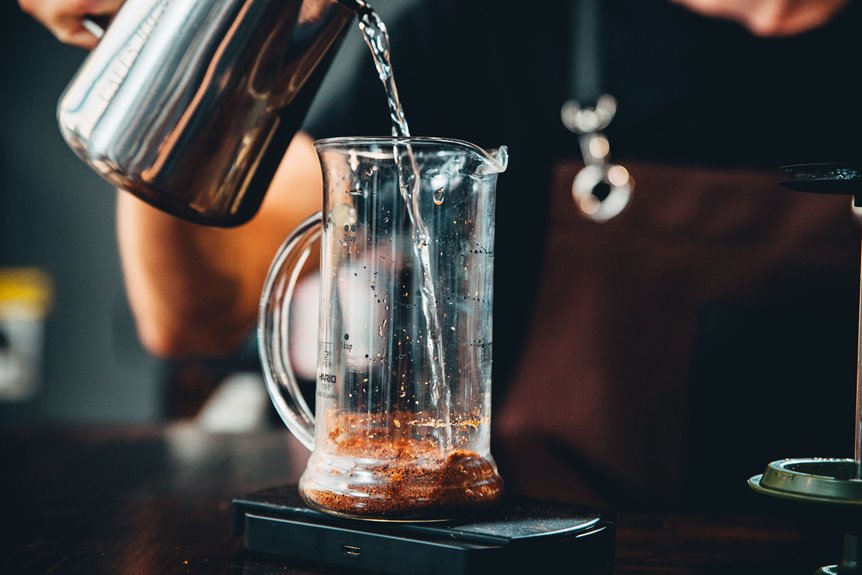
Have you thought about how the water you use affects your coffee’s flavor? The truth is, it plays a bigger role than you might expect. Fresh, filtered water with a light mineral content is ideal, as it has the right amount of calcium and magnesium to aid extraction without overpowering the taste. Tap water can introduce unexpected flavors and alter pH levels, impacting every sip. Next time you brew, consider how your water choice can transform your coffee experience.
What Makes the Best Water for Coffee?
Whenever you want coffee that tastes smooth, rich, and clean, the water matters just as much as the beans. You want fresh, odor-free water, because stale or cloudy water can hide your coffee’s true flavor. Good water supports the brew instead of fighting it, so each cup feels familiar and welcoming.
Pay attention to water temperature, too, because water that’s too hot can scorch the grounds, while cooler water can leave the cup weak. Different brewing methods also respond in their own way, from drip to French press, so you’ll get better results whenever you match the water to the style you use.
Whenever you choose water with care, you join the group of coffee drinkers who know that small details make a big difference.
What Is the Right Mineral Balance?
You want water with the right mineral balance, because that balance shapes how your coffee tastes and smells in the cup.
Calcium and magnesium matter most, since they help bring out sweetness, body, and a smoother finish without muddying the flavor.
Should your water get too hard, though, it can drown out the coffee’s best tones, so aim for a clean middle ground instead of a mineral overload.
Ideal Mineral Ratios
A good mineral balance can make your coffee taste smooth, sweet, and full, while the wrong mix can leave it flat, sour, or harsh. You want water that feels steady, not extreme, so your beans can shine and your brew can stay friendly on the palate.
Check the mineral content initially, because it shapes how well water pulls flavor from coffee. Then look at water hardness, since very soft water can taste thin and very hard water can crowd out delicate hints.
Aim for a balanced middle ground that gives your coffee structure without stealing its charm. Whenever you brew with that kind of water, you join the group of people who get richer cups, clearer aromas, and a more welcoming sip every time.
Calcium And Magnesium
Calcium and magnesium are the two minerals that do most of the heavy lifting in coffee water, and they need to work together in a calm balance.
You want enough calcium for structure and enough magnesium for brightness, so your brew feels lively, not flat. Calcium sources like filtered tap water, mineral water, or balanced brewing blends can help you get there.
Magnesium benefits show up in sweeter tones and a cleaner finish, which makes your cup feel more welcoming. Should one mineral take over, your coffee can taste dull or harsh, and nobody wants that surprise before breakfast.
Avoiding Overly Hard Water
Even though a little mineral content helps coffee shine, too much hardness can quietly take over the cup and make every sip feel heavy. You want water hardness that supports flavor, not one that buries it.
Should your water taste chalky, scale builds fast, or your brew feels dull, your minerals could be too high. Try filtered water, then adjust with gentle brewing techniques like a finer grind, shorter contact time, or a lower dose to keep balance.
You’re not chasing perfect lab numbers, just a clean, lively cup that feels welcoming at home. Once you keep calcium and magnesium in check, coffee opens up with sweetness, clarity, and a softer finish.
That balance helps you brew with confidence, and your mug starts feeling like it belongs in your routine.
Why Filtered Water Tastes Better
Filtered water can make your coffee taste cleaner because it removes unwanted odors that can sneak into your cup.
It also helps reduce mineral imbalance, so your brew stays smoother and more consistent.
Once the water tastes better on its own, it gives your coffee flavor room to shine.
Removes Unwanted Odors
Whenever your water carries odd smells, your coffee can pick up those same subtleties and taste flat, musty, or just plain off. You deserve a cup that feels welcoming from the initial sip, and filtered water helps make that happen.
Through water purification and odor removal, it strips away the stale hints that can hide your coffee’s best aroma. That means your beans can shine with a cleaner scent and a brighter taste.
As you brew with fresher water, you’ll notice the difference right away, especially in case your kitchen water sometimes smells like a damp pipe or a swimming pool.
Simple filtration gives you more control, so every mug feels more like yours. It’s a small step, but it can make your daily coffee ritual feel calmer, cozier, and easier to enjoy.
Reduces Mineral Imbalance
Whenever your water carries too much of one mineral and too little of another, your coffee can taste harsh, dull, or oddly flat. Filtered water helps you stay in the sweet spot, so you feel like you’re brewing with the same crowd of coffee lovers. It trims mineral sources that push water quality off balance, and that steadier mix lets your grounds brew more evenly.
| Water source | Mineral mix | Coffee result |
|---|---|---|
| Tap | Uneven | Bitter edge |
| Well | Variable | Muddy taste |
| Filtered | Balanced | Cleaner cup |
| Hard | Heavy | Dry finish |
| Soft | Light | Thin feel |
At the moment you choose better water, you’re not just fixing a cup. You’re joining a routine that feels calm, reliable, and right.
Brings Out Coffee Flavor
As soon as your brew water tastes clean and balanced, your coffee can finally show its real personality. You notice brighter flavors, smoother body, and a sweeter finish because filtered water helps coffee extraction work the way it should.
Without extra chlorine or heavy minerals, your grounds release flavor in a clearer, more even way. That means you get the fruit, chocolate, or nutty tones your beans were meant to share.
You also keep water temperature steadier, which supports better brewing from the initial pour to the last drip.
Can You Use Tap Water for Coffee?
Yes, you can use tap water for coffee, and for many people, it’s the easiest choice.
Should your tap water taste clean, your coffee can still taste great. You just need to pay attention to tap water quality and water temperature so your brew stays balanced.
Whenever the water smells odd, tastes metallic, or seems too hard, your cup might pick up those flaws fast. In that case, a simple filter can help you feel more at home with every sip.
You don’t need fancy gear to make a good cup. You just need water that works with your coffee, not against it, and a brewing temperature that lets the flavor shine without turning bitter.
How pH Affects Coffee Flavor
Should tap water can already shape your coffee’s taste, pH plays another quiet but significant role. pH tells you how acidic or alkaline your water is, and that balance can nudge your brew toward bright, clean tones or dull, flat ones. Whenever you watch acidity levels, you give your coffee a better stage for flavor extraction.
| pH range | What you might notice |
|---|---|
| Lower pH | Sharper taste, more bite |
| Near neutral | Balanced flavor, smoother cup |
If your water sits too far from neutral, your coffee can feel harsh or sleepy. You don’t need to chase perfection; you just need water that helps the beans show up well. That’s how you join the group of home brewers who trust every cup.
Best Water Types for Coffee Brewing
Upon it comes to brewing great coffee, not all water works the same, and that’s where your easiest win can start. You want water that helps your beans shine, not hide.
Spring water often works well because it usually carries minerals that support a fuller taste and a smoother cup. Should you like a clean, balanced brew, it can feel like the water is on your side.
Distilled water, though pure, often leaves coffee flat because it has nothing to lift the flavor. So you might want to skip it for daily brewing.
Instead, choose water with a gentle mineral presence and a fresh taste. That way, your coffee feels familiar, rich, and comforting, like it belongs in your morning routine.
How to Fix Bad Water in Coffee
Should your coffee taste muddy, sour, or just plain tired, the water could be the real troublemaker, and the positive news is that you can fix it. Start with simple water filtration, because chlorine and grit can flatten flavor fast. Should your tap water feel harsh, use a basic filter or switch to bottled spring water with balanced minerals. Then adjust your brewing techniques, since water that’s too hot or too cool can push a brew off track. | Problem | Quick Fix | Result |
| — | — | — |
|---|---|---|
| Chlorine taste | Filter the water | Cleaner cup |
| Weak flavor | Add minerals | Fuller taste |
| Bitter brew | Lower heat a bit | Softer finish |
When you make these changes, you join the group of home brewers who get it right. Small water tweaks can turn your coffee from forgettable to welcoming.
Frequently Asked Questions
Does Water Temperature Affect Coffee Extraction?
Yes, your water temperature strongly affects extraction efficiency. For ideal brewing, use hotter water for fuller extraction and cooler water for gentler flavor. You will find your sweet spot and brew with your community.
Should I Boil Water Before Brewing Coffee?
No, you should not boil it. You will usually get better coffee by heating water just off the boil. You can use boiling methods or water purification initially in case your tap water needs a cleaner and friendlier taste.
How Often Should I Descale My Coffee Maker?
You should descale your coffee maker every one to three months depending on use and water hardness. Check your descaling frequency and use a vinegar solution as soon as mineral buildup starts so your brew stays flavorful and welcoming.
Can Sparkling Water Be Used for Coffee?
Yes, you can use sparkling water but you will want to try it carefully. Its sparkling water benefits might add brightness yet the flavor profile can turn odd. You will fit right in experimenting just avoid overly fizzy results.
Does Water Hardness Change Espresso Crema?
Yes, water hardness changes espresso crema. Think of your shot as a choir where minerals can stabilize the voices. You will notice that hardness affects crema stability, making your espresso feel richer and more inviting.