
Coffee roasting temperature shapes flavor more than most people think.
A light roast can taste bright one day and dull the next from small heat changes.
Fast temperature checks, steady probe placement, and close attention to charge and cooling help keep results consistent.
Tiny shifts in power, airflow, and batch size can change the cup fast.
| Lightbeam Long Stem Deep Fry Thermometer with Clip |  | Best for Deep Frying | Temperature Range: 50°F–550°F | Display Type: Analog dial | Probe Length: 16-inch stem | VIEW LATEST PRICE | Read Our Analysis |
| Leaton Dual Channel K-Type Digital Thermometer |  | Best Precision Monitor | Temperature Range: Multiple thermocouple ranges | Display Type: Digital LCD | Probe Length: Dual probes | VIEW LATEST PRICE | Read Our Analysis |
| Instant Read Meat Thermometer for Grilling and Cooking |  | Best Instant Read | Temperature Range: 0°F–220°F | Display Type: Analog dial | Probe Length: 6-inch probe | VIEW LATEST PRICE | Read Our Analysis |
| Fresh Roast SR800 Coffee Roaster with Digital Display |  | Best Roasting Machine | Temperature Range: Real-time display | Display Type: Digital display | Probe Length: N/A | VIEW LATEST PRICE | Read Our Analysis |
| Milk Frothing Thermometer for Espresso Steaming Pitchers | 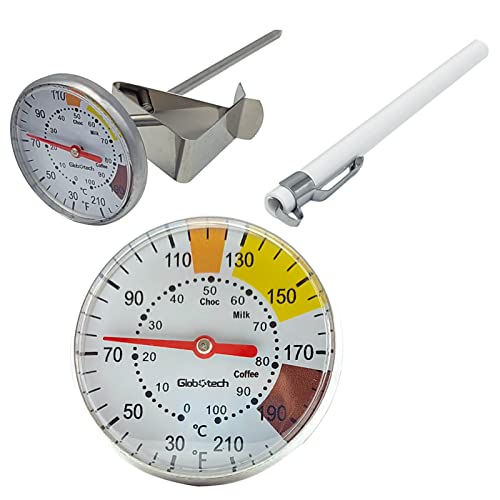 | Best for Milk Frothing | Temperature Range: 30°F–210°F | Display Type: Analog dial | Probe Length: 5-inch stem | VIEW LATEST PRICE | Read Our Analysis |
| Kitchen Food-Cooking Meat Coffee Thermometer 1″ Dial 5″ Stem |  | Budget-Friendly Pick | Temperature Range: 0°F–210°F | Display Type: Analog dial | Probe Length: 5-inch stem | VIEW LATEST PRICE | Read Our Analysis |
| DYVEE Coffee Bean Cooler Electric Roasting Machine |  | Best Cooling Solution | Temperature Range: N/A cooling unit | Display Type: N/A | Probe Length: N/A | VIEW LATEST PRICE | Read Our Analysis |
More Details on Our Top Picks
Lightbeam Long Stem Deep Fry Thermometer with Clip
Should you want a coffee-roasting helper that feels sturdy, easy to read, and safe to use near heat, the Lightbeam Long Stem Deep Fry Thermometer with Clip is a smart pick. You’ll like the extra-long 16-inch stem, because it keeps your hands farther from hot pans and roasters. The stainless-steel casing adds strength and resists corrosion, so it can handle busy kitchen use. Its 2-inch dial reads clearly, and the 50°F to 550°F range covers roasting needs. The metal clip holds it steady, freeing you to watch color and scent.
- Temperature Range:50°F–550°F
- Display Type:Analog dial
- Probe Length:16-inch stem
- Material:Stainless steel
- Power Source:Mechanical
- Usage:Deep frying
- Additional Feature:16-inch extra-long stem
- Additional Feature:Handy pot clip
- Additional Feature:2-inch clear dial
Leaton Dual Channel K-Type Digital Thermometer
The Leaton Dual Channel K-Type Digital Thermometer is a smart pick for coffee roasters who want fast, steady heat checks without a lot of fuss. You can watch two probes at once, so you’ll track bean and drum heat together with less guesswork. Its backlit LCD helps you read temps in dim spaces, and the 500 millisecond response keeps you moving. It supports K, J, T, E, R, S, and N types, so you get useful range. With included AAA batteries, you can start right away, wipe it clean, and roast with calmer confidence.
- Temperature Range:Multiple thermocouple ranges
- Display Type:Digital LCD
- Probe Length:Dual probes
- Material:Plastic body
- Power Source:AAA batteries
- Usage:Lab/industrial
- Additional Feature:Dual-channel probe display
- Additional Feature:Backlit LCD screen
- Additional Feature:Supports seven thermocouple types
Instant Read Meat Thermometer for Grilling and Cooking
A quick, no-battery instant read meat thermometer like the Hawgiman Food Thermometer-11 can be a smart pick should you want fast, simple temperature checks while roasting coffee or handling other hot kitchen tasks. You get a 6-inch stainless steel probe, a shatterproof dial, and a sturdy body that’s easy to clean. Since it reads from 0° to 220°F, you can check meat, milk, coffee, or tea with confidence. Insert the probe more than halfway for accuracy, then wipe it clean. Keep it out of fryers and ovens, and use the case to help prevent burns.
- Temperature Range:0°F–220°F
- Display Type:Analog dial
- Probe Length:6-inch probe
- Material:Stainless steel
- Power Source:No batteries
- Usage:Meat/food
- Additional Feature:Shatterproof lens dial
- Additional Feature:No batteries required
- Additional Feature:Protective transport case
Fresh Roast SR800 Coffee Roaster with Digital Display
Fresh Roast SR800 Coffee Roaster with Digital Display is a smart pick should you want fresh coffee without the guesswork, and it fits best for home roasters who care about control, speed, and flavor. You can roast 6 to 8 ounces in under 10 minutes, so your beans stay lively instead of stale. The digital display shows real-time temperature, while nine power levels and fan control let you shape each batch. Because you can roast many bean types and blend styles, you get more room to experiment and enjoy coffee that feels truly yours.
- Temperature Range:Real-time display
- Display Type:Digital display
- Probe Length:N/A
- Material:N/A
- Power Source:Electric
- Usage:Coffee roasting
- Additional Feature:Nine power levels
- Additional Feature:Real-time temperature display
- Additional Feature:Push-and-turn controls
Milk Frothing Thermometer for Espresso Steaming Pitchers
Milk frothing gets a lot easier once you can trust your temperature reading, and this thermometer is a smart pick should you make espresso drinks at home or in a busy café. You can use it for milk, chocolate, coffee, and latte art work. The food-grade stainless steel probe and dial feel sturdy, while the fog-resistant glass keeps reading clear. Its 2-inch dial and bright temperature zones help you spot the sweet range fast. The 5-inch stem and sliding clip stay secure on 12, 20, and 32 oz pitchers, so your hands stay free and your milk stays smooth.
- Temperature Range:30°F–210°F
- Display Type:Analog dial
- Probe Length:5-inch stem
- Material:Stainless steel
- Power Source:Mechanical
- Usage:Milk frothing
- Additional Feature:Sliding adjustable clip
- Additional Feature:Colored temperature zones
- Additional Feature:Fog-resistant glass cover
Kitchen Food-Cooking Meat Coffee Thermometer 1″ Dial 5″ Stem
In case you want a simple tool that helps you nail coffee roasting temperatures without guesswork, this Kitchen Food-Cooking Meat Coffee Thermometer with a 1-inch dial and 5-inch stem is a smart pick, especially for home roasters who also steam milk, melt chocolate, or check meat with one handy instrument. You get a food-grade stainless steel body, a shatterproof lens, and a bi-metal coil sensor that reads fast, usually in about 3 seconds. The clear color zones help you spot ideal ranges for coffee and milk. Use the red clip, keep it dry, and enjoy steady, confident brewing.
- Temperature Range:0°F–210°F
- Display Type:Analog dial
- Probe Length:5-inch stem
- Material:Stainless steel
- Power Source:Battery powered
- Usage:Coffee/milk
- Additional Feature:Magnified shatterproof lens
- Additional Feature:Colored temperature zones
- Additional Feature:Red pocket sleeve
DYVEE Coffee Bean Cooler Electric Roasting Machine
The DYVEE Coffee Bean Cooler Electric Roasting Cooling Machine is a smart pick should you roast at home and want to stop beans from carrying over into a darker, harsher finish. You can cool a batch in about 2 minutes, so your aroma stays bright and your flavor stays steady. The fan pulls heat away fast, while the double filter handles chaff above and silver skins below. Since it runs on a 12V 3A US adapter, you get safer low-voltage use. It includes one cooler and one adapter.
- Temperature Range:N/A cooling unit
- Display Type:N/A
- Probe Length:N/A
- Material:Plastic/metal
- Power Source:12V adapter
- Usage:Bean cooling
- Additional Feature:Two-minute cooling
- Additional Feature:Double-filter design
- Additional Feature:Silver skin collection
Factors to Consider When Choosing Coffee Roasting Temperature
At the time you choose a roasting temperature, start with the bean itself, since light, dense beans and softer beans won’t react the same way. Then match the heat to your roast goal, keep your temperature control tight, and bear in mind that bigger batches usually need a steadier hand than small ones. You’ll also want to cool the beans fast, because slow cooling can keep the roast moving at the point you want it to stop.
Bean Type Differences
Bean type sets the tone for the whole roast, so you want to match heat to what each bean can actually handle. Light, porous Arabica usually opens up with gentler heat and a shorter roast, while denser Robusta asks for more energy to develop fully. Whenever you work with high-altitude beans or peaberries, you’ll often need a bit more time, because heat moves through them slowly. Natural-processed beans can brown fast since they hold more fruit sugars, so keep a close eye on them or they might scorch. Washed beans usually forgive a little more heat. Also, sweeter origins caramelize sooner, while low-sugar lots need stronger drive. For delicate micro-lots, ease in carefully; for bold espresso blends, you could push a firmer start.
Roast Level Targets
A good roast target gives you a clear finish line, but you still need to watch how the coffee gets there. Should you want a light roast, aim to drop it soon after initial crack, around 196 to 205°C, so you keep lively acidity and origin flavor. For a medium roast, stay near 205 to 220°C and let the bean build more sweetness, body, and balance. Were you to prefer medium-dark, push development past initial crack toward 220 to 230°C for fuller body and deeper caramel notes. Dark roasts usually land at 230 to 245°C or more, often into second crack, with bolder roast flavor and more oils. Still, don’t chase temperature alone. Match it with roast time and development so you avoid scorching and overdone coffee.
Heat Control Precision
Dialing in roast temperature is only half the job, because even a great target can drift fast should your heat control be sloppy. You need small power steps, ideally under 1 percent, so you can nudge heat without shocking the beans. A fast probe helps too, since crack moments can pass in seconds. Aim for sensor accuracy within plus or minus 1 C, and keep response time near 1 to 2 seconds. Closed loop control, like PID, reads the probe and adjusts heat for you, which cuts overshoot and keeps ramp rates steady. Also, place the probe the same way every time, or your readings will wander. Finally, log temperature at least once per second so you can repeat a great roast with confidence.
Batch Size Impact
Upon altering batch size, you change the whole roast feel, because more coffee brings more thermal mass into the drum. Whenever you roast a larger charge, you usually need more heat or extra time to move the beans along at the same pace. Should you keep the profile unchanged, the roast can stall, and the flavor might turn flat or uneven. Smaller batches act faster, so you get tighter control over Maillard reactions and crack timing. That makes them easier to steer, though they can feel a bit lively. With bigger loads, don’t crowd the roaster, or airflow drops and heat spreads poorly. Watch bean temperature as you go, then alter heat and drum time so the curve stays steady and the color stays even.
Cooling Speed Matters
After you finish a roast, cooling speed can make or break the cup you worked so hard to build. You want to cool those beans fast, ideally in about two minutes, so heat stops the roast right where you want it. Should you let them linger, leftover heat keeps working, and your beans can drift darker, taste more bitter, and pick up smoky notes you didn’t ask for. Quick cooling also helps lock in floral and fruit aromatics, since it slows moisture movement and reaction carryover. Pay attention to airflow too, because weak circulation can leave hot centers and uneven cups. Aim for steady, fast air exchange that drops the beans to near room temperature without roughing them up.
Frequently Asked Questions
How Does Roast Temperature Affect Coffee Acidity?
Roast temperature changes acidity in clear ways: lighter roasts keep more tart, citrus-like notes, while hotter, longer roasts reduce that brightness and bring out a rounder, softer taste.
What Temperature Range Suits Light Roast Beans Best?
You’ll usually roast light beans best around 356 to 401°F. Keep the heat restrained so the beans hold onto acidity, floral notes, and brightness, then finish before deeper caramelization moves them into medium roast range.
When Should I Stop Roasting to Avoid Burnt Flavors?
Stop roasting just after the first crack, before the beans turn too dark. Look for a clean aroma instead of smoke. If you keep going too long, the flavors will shift into burnt bitterness.
Does Bean Origin Change Ideal Roasting Temperature?
Yes, origin often changes the ideal roast temperature because bean density, moisture, and sugar levels differ. Dense, high grown beans usually need more heat at the start, while delicate origins do better with a gentler profile to protect their bright, nuanced flavors.
Can I Roast Coffee Without a Thermometer?
Yes, you can, but you will rely on guesswork. Watch the color, smell, and crack sounds instead. If you trust your senses, you may roast well, though a thermometer makes consistency much easier.