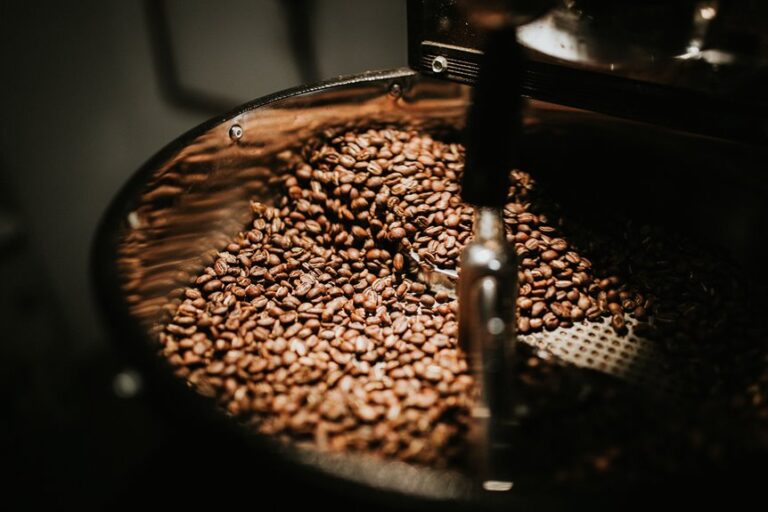

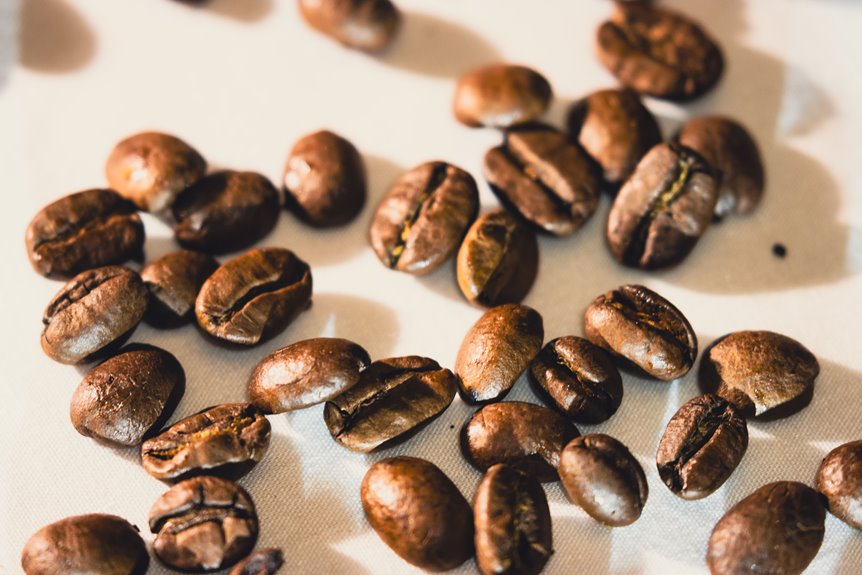
Coffee beans turn shiny because roasting drives oils from inside the bean to its surface. This happens most in darker roasts where higher temperatures rupture cell walls and release natural oils. Freshness, storage conditions, and bean variety influence how quickly and how much oil appears. A light sheen is normal and can signal a flavorful cup; heavy oiliness often points to age or poor storage. That shine offers clues about roast level and likely taste.
Why Coffee Beans Become Oily
That glossy shine on coffee beans usually comes from natural oils moving to the surface after roasting. You’ll notice it more whenever roast time runs longer, because heat pushes those oils outward and makes the beans look richer.
Different processing methods also affect how much shine you see, since drying and fermentation change the bean’s structure. On top of that, origin variations matter too. Beans from one region can seem drier, while beans from another can show oil sooner, and that’s completely normal.
What Coffee Bean Oils Are
Coffee bean oils are the natural fats and aromatic compounds tucked inside the bean, and they play a big role in how coffee smells, tastes, and feels in your mouth. You can consider them as tiny flavor carriers that help give your cup its rich body.
Their chemical composition includes lipids, acids, and compounds that hold onto scent and flavor. Because of that, they shape the sensory impact you notice whenever you sip, from a smooth feel to a fuller aroma.
Whenever you join other coffee fans, you start to see how these oils help each bean tell its own story. They stay concealed until brewing or roasting opens them up, which is why your coffee can seem bold, warm, and inviting.
How Roast Level Affects Oil
Roast level changes how much oil you see on the bean, and you’ll notice a big difference between light and dark roasts.
Light roasts usually stay dry on the surface, while dark roasts often look shinier because more oils move out as roasting goes on.
The longer you roast, the more heat opens up the bean and lets those oils show.
Light Vs Dark Roasts
As the roast gets darker, the beans usually look shinier because heat pushes more oils to the surface, while light roasts often stay dry and matte since they don’t spend enough time in the roaster for those oils to show. You might notice this difference right away whenever you compare bags at the store.
Light roasts often feel cleaner and brighter on your tongue, so their brewing impact can highlight fruit, floral notes, and crisp acidity.
Dark roasts can taste bolder and smoother, with a fuller body that could feel more familiar and cozy. That shift changes your sensory perception before you even take a sip.
Longer Roasts Release Oils
As the roast keeps going, the beans don’t just darken, they start to change at the surface in a very visible way. You’ll notice this because the chemical breakdown inside each bean pushes natural oils outward.
Once heat keeps working, the structure weakens, and those oils move through tiny cracks to the outside. That’s why darker beans often look shiny and feel smoother in your hand.
Should you love that bold cup, you’re not alone, because this change often signals a richer sensory perception with deeper body and less bright acidity. So, after you see oil, you’re usually looking at a longer roast at work. It’s a small sign, but it tells you the bean has traveled further into roast development.
Why Dark Roasts Look Shinier
At the point coffee beans get darker in the roast, they start to look shinier because heat pushes more natural oils to the surface.
You can see this shine most on dark roasts, where longer heat changes surface chemistry and raises roast perception.
As the bean walls open, the oils no longer stay concealed inside, so light reflects off them more easily.
That glossy look doesn’t mean the coffee is bad; it often means you’re seeing a deeper roast in a very clear way.
Should you like bold, rich coffee, that sheen can feel familiar and even inviting.
It’s one more sign that the roast has moved into a fuller, stronger place, and you’re right there with it.
How Freshness Changes the Surface
As soon as you initially crack open a fresh roast, you’ll usually see a dry, even surface that feels clean and lively.
As time passes, oils can slowly move to the outside, and heat, air, and light can speed that change up.
That’s why the way you store your beans matters so much, because good storage helps them stay fresh-looking longer and keeps that shiny coat from showing up too soon.
Fresh Roast Surface
A fresh roast usually starts out looking dry and almost dusty, but that clean look doesn’t last forever. As you let it rest, you’ll notice the surface shift from pale to a soft sheen.
That change happens because aroma compounds settle after roast profiling, and the bean skin begins to relax. You’re not losing quality; you’re watching the roast come into its own.
- You might feel relief seeing the color deepen.
- You might feel proud once your batch looks even.
- You might feel curious as the scent grows warmer.
- You might feel connected to other home roasters.
- You might feel reassured that this is normal.
Oil Migration Over Time
As those beans rest, the soft sheen can slowly turn into a fuller, oilier look because the natural oils begin working their way outward. You’re seeing lipid redistribution after roast cracking, once heat has already changed the bean microstructure. As cell wall weakening grows, tiny oil paths open, and the surface starts to glisten. That shift can feel familiar, like your favorite beans are settling into their next phase.
| Clue | What you notice |
|---|---|
| Fresh crack | Dry, light shine |
| Initial rest | Small glossy spots |
| Bean microstructure | Looser inner structure |
| Cell wall weakening | Oils move outward |
| Lipid redistribution | Oily surface grows |
Storage And Exposure
Storage can change your beans faster than you might expect, because air, light, heat, and moisture continue working on the surface long after roasting. Once you leave coffee in a warm spot, oils rise sooner, and the beans can look shinier before they truly taste fresher. With good humidity control and low light exposure, you help slow that shift and keep your coffee feeling like part of your daily circle.
- You open the bag and smell a softer, tired aroma.
- You see a slick patch that worries you.
- You feel proud whenever your storage keeps beans steady.
- You avoid that sad, stale cup surprise.
- You stay connected to the kind of brew your crew would expect.
What Heat and Air Do to Beans
Heat and air quietly change coffee beans long before you ever brew a cup. You can consider heat chemistry as the spark that wakes up the bean’s natural oils. As roast temperature climbs, those oils move closer to the surface, so the bean starts to look shinier.
At the same time, air oxidation works on those exposed oils and changes them little by little. That process can make the sheen stronger and the flavor feel flatter. You’re not imagining it in case your beans look different after sitting out. The bean is just reacting to its surroundings.
Whenever you understand this, you can feel more confident about what you’re seeing. Your coffee isn’t failing you; it’s simply responding to heat and air, the quiet duo that shape every roast.
How Storage Conditions Speed Up Oiliness
Assuming you keep coffee beans in the wrong spot, you can speed up the oily look without meaning to. Whenever you store them near a stove, window, or warm shelf, heat pushes oils outward faster. Then ambient humidity adds stress, because damp air can seep through weak seals and make the beans age unevenly. You can help your coffee crew by choosing dark, cool storage with tight packaging materials that block air and moisture. That small choice keeps your beans feeling cared for, not rushed.
- You avoid that sad, shiny surprise.
- You protect the fresh smell you love.
- You keep your morning ritual steady.
- You make each bag feel like it belongs.
- You save beans from rough conditions.
Oily vs. Stale Coffee Beans
You can spot oily coffee beans by their shiny surface, darker look, and the way they might feel slick in your hand.
Stale beans often look dry, flat, or faded, and they usually lose that rich coffee smell you want.
Whenever you compare the two, you’ll notice that oiliness can show freshness or roast level, while staleness points to beans that have lost their best flavor.
Oily Bean Indicators
Oily coffee beans can look rich and fresh at initial glance, but that shine doesn’t always tell the whole story. Whenever you study them closely, roast chemistry explains why oils rise to the surface after darker roasting. Your sensory perception picks up the clue right away, because the beans might feel slick and look deep brown, almost like they’re dressed for the café club.
- You notice a soft sheen under light.
- You feel a smoother, slightly slick surface.
- You spot darker patches near the creases.
- You trust your nose whenever aroma stays bold.
- You feel part of the coffee crowd whenever the beans look familiar.
These oily signs can help you choose beans with confidence and feel at home in your brew routine.
Signs Of Staleness
Fresh coffee can still show a light surface shine, but stale beans usually tell a different story.
You’ll notice the aroma fading initially, and that aroma deterioration makes each cup feel flat and a little sad. Then the flavor turns thin, papery, or oddly sour, even whenever you brew it the same way you always do.
Provided the beans feel dry and brittle, they’ve likely lost their best oils and gases. Packaging impact matters too, because weak seals let air sneak in and speed up staleness.
How Oily Beans Affect Flavor
Upon coffee beans turning oily, the flavor often changes in a way that feels stronger initially but less balanced in general. You might notice a heavier roast taste, and the bright notes you like can fade. That shift can throw off acidity balance, so each sip could seem flatter or harsher. Whenever you brew, oily beans can also change brewing extraction, making some cups taste muddy while others feel thin.
- You may miss the lively sparkle you shared with each cup.
- The initial sip can seem bold, then turn dull.
- Bitterness might crowd out sweeter notes.
- The cup can feel less welcoming at home.
- You may feel off track, like your coffee lost its voice.
Still, you can taste the difference clearly and trust your own palate.
When Oily Beans Are Normal
Sometimes, a slick sheen on coffee beans is completely normal, and it often shows up once the beans have reached a darker roast. You can relax whenever you see it, because heat has pushed oils to the surface and changed the bean’s surface tension. That shiny look often tells you the roast went deep enough to bring out bold, rich characteristics.
You might notice this with French roast, espresso blends, or any bag that sits a little longer after roasting. In those cases, the oils don’t mean the coffee is ruined. They just show that the bean’s inner fats have moved outward.
With a little sensory training, you’ll spot the difference between normal shine and odd-looking beans. So, trust your eyes, breathe in the aroma, and enjoy the familiar comfort of a roast that feels right.
When Oily Beans Mean Trouble
Oily beans can also be a warning sign in case the shine looks wrong, smells off, or shows up far too soon after roasting.
You’re not alone should that worries you. Once bean oxidation moves too fast, the beans can lose freshness and taste flat. That can create a brewing impact you’ll notice in the cup, like dull flavor, harsh notes, or weak aroma.
- You could feel let down by a brew you expected to love.
- You may notice a stale scent that breaks your coffee ritual.
- You could taste bitterness that crowds out sweetness.
- You might sense the beans are asking for help, not praise.
- You could want to trust your nose and your instincts.
In case the oil looks uneven or the smell turns sharp, your bag could be telling you something’s off.
How to Store Beans to Slow Oils
To slow down oil buildup, you need to store your beans in a way that protects their flavor, scent, and texture from air, heat, light, and moisture. Keep them in airtight containers, and choose a cool, dark cabinet instead of a sunny counter. That simple habit helps your beans stay fresher longer, and it keeps you in the group of coffee lovers who get great cups at home.
For best results, practice temperature control by avoiding spots near ovens, dishwashers, or windows. Also, buy only what you’ll use soon, so your beans don’t sit around and age too fast. In the event you open a bag, seal it tightly after each use. Small steps like these can make your coffee feel cared for, not forgotten.
Should You Grind Oily Beans Differently?
Yes, you can grind oily beans a little differently, and that small change can save you a lot of frustration. You’re not doing anything wrong; these beans just need a gentler touch. Use a medium-coarse grinding technique, then watch the grind closely so it doesn’t clump or smear. That helps keep your grinder cleaner and can improve extraction yield.
- You’ll feel less stuck whenever the grinder doesn’t gum up.
- You’ll smell the fresh coffee instead of burnt frustration.
- You’ll brew with more confidence and less guesswork.
- You’ll join other coffee lovers who’ve learned this trick.
- You’ll enjoy a cup that feels worth the effort.
If the grind still looks shiny, slow down a notch. Small adjustments help you stay in control and keep each brew feeling familiar, welcoming, and yours.
Frequently Asked Questions
Can Oily Beans Be Used in Espresso Machines?
Yes, you can use oily beans in your espresso machine, but you’ll want to clean it often because they can cause machine clogging; they could also affect crema improvement, so you might prefer fresher, drier beans.
Do Oily Beans Stain Coffee Grinders More Quickly?
Yes. Oily beans can stain your grinder faster, and you will notice it soon. With regular grinder maintenance and stain prevention, you will keep your setup clean, protect your routine, and stay in the coffee loving circle.
Are Oily Beans More Common in Pre-Ground Coffee?
Yes, you’ll usually see oily beans more in pre ground coffee, since roast degree and packaging type can expose oils faster. You’re not alone; freshly ground beans from sealed bags usually stay drier longer.
Does Bean Origin Influence How Oily They Become?
Yes — bean origin can make a world of difference. You’ll notice regional varietals and processing methods shape oil levels, so your beans might look dramatically slicker. Still, roast degree matters most, and you’re never alone in noticing.
Can Freezing Beans Prevent Surface Oils From Appearing?
Yes, freezing can slow surface oils, but you will need tight cold storage and careful thawing to avoid condensation effects. You are not alone here; many coffee lovers use it to protect freshness and keep beans looking better.