
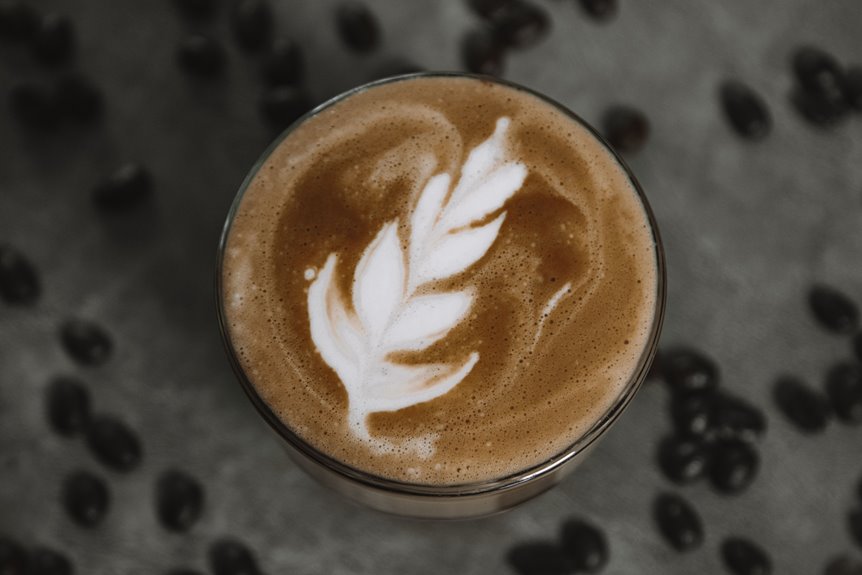
A latte is a delightful coffee drink that combines espresso and steamed milk, creating a creamy texture that many adore. With its smooth finish, it offers a gentle coffee experience without the sharpness of a regular brew. This drink is perfect for anyone seeking a comforting caffeine fix. The magic lies in the balance of flavors, making each sip enjoyable. Whether you’re at a café or making it at home, a latte can feel like a little luxury in your day.
What Is a Latte?
A latte is a warm coffee drink made with espresso and steamed milk, and it often feels like the gentler cousin of a plain black coffee. You can envision it as a cozy cup that invites you in, even on a busy day.
Its frothy texture gives each sip a soft, smooth feel, which many people love. As you learn about coffee origins, you see how this drink grew from simple café traditions into a favorite around the world. That history helps you understand why it feels familiar and comforting.
Should you want a drink that feels welcoming, a latte fits right in. It gives you a calm coffee moment without asking you to work too hard.
Latte Ingredients and Ratios
You usually get a latte from a simple mix of espresso and steamed milk, and that balance gives it a smooth, gentle taste.
Should you like a stronger cup, you can keep the espresso-to-milk ratio tighter, but in case you want it softer, a little more milk does the trick.
You can also add flavors like vanilla, caramel, cinnamon, or cocoa, which make your drink feel a bit more personal without stealing the show.
Espresso and Milk Ratio
Upon the arrival of a latte, the balance between espresso and milk is what gives the drink its calm, smooth taste. You usually meet a steady mix that lets the espresso strength guide the cup while milk texture softens each sip.
As you pour in more milk, the flavor feels gentler and more welcoming, like a seat saved for you.
- A classic latte begins with one shot and plenty of steamed milk.
- The ratio keeps bitterness in check.
- Foam adds a light finish, not a heavy layer.
- A stronger shot gives you a bolder initial taste.
- Silkier milk helps everything blend with ease.
Common Latte Additions
Sweet extras can change a latte in small but meaningful ways, and the most common additions usually stay gentle so they don’t crowd out the espresso. You can lean into vanilla syrup or caramel drizzle for warmth, or try hazelnut flavoring whenever you want a nutty edge. Should you like a softer cup, oat milk or almond milk can smooth the texture without stealing the show. A cinnamon sprinkle adds comfort, while chocolate shavings or whipped cream make the drink feel like a treat you earned.
| Add-in | Effect |
|---|---|
| vanilla syrup | sweet, cozy touch |
| caramel drizzle | rich finish |
| hazelnut flavoring | nutty depth |
| oat milk | creamy balance |
| almond milk | light body |
For seasonal flavors, peppermint mocha can help you feel right at home.
How to Make a Latte
To make a latte, you’ll need strong espresso, fresh milk, and a clean way to froth it, so gather those basics before you start.
Next, brew your espresso, heat the milk, and whisk in air until you get a smooth, creamy foam that feels soft and light.
Then pour the milk slowly into the espresso, and you’ll have a warm latte that looks good and tastes even better.
Essential Latte Ingredients
A great latte starts with just a few key ingredients, and each one plays a clear role in the cup. You only need espresso, steamed milk, and a little foam to feel at home with this drink.
Strong espresso gives you that bold base, while milk softens it with a smooth, cozy taste. The foam adds a light top that feels inviting. In latte history, these simple parts helped shape a drink people share in cafes everywhere.
In latte culture, the balance matters because it welcomes both new drinkers and loyal fans.
- Fresh espresso for a rich start
- Milk for body and sweetness
- Foam for a gentle finish
- Clean water for the shot
- Your favorite cup for comfort
Step-By-Step Brewing
Now that you know what goes into a latte, you can turn those simple parts into a drink that feels calm, warm, and just a little fancy. Start with brewing a strong espresso shot, because that’s the heart of the cup. Next, warm your milk and combine it with the coffee in a mug you like. In Latte history, people shaped this drink to feel both simple and welcoming. In many Latte cultures, the steps stay close to home and comfort. Use this quick guide to keep your flow steady:
| Step | What to Do | Why It Helps |
|---|---|---|
| 1 | Grind coffee fresh | Brings out rich flavor |
| 2 | Brew espresso | Gives the drink strength |
| 3 | Warm milk | Adds smooth balance |
| 4 | Pour together | Blends taste |
| 5 | Sip slowly | Lets you enjoy it |
Frothing Milk Properly
As you froth milk the right way, your latte starts to feel silky, cozy, and a lot more like the one you’d order at a cafe. You want tiny bubbles, not stiff foam, because that texture blends with espresso and helps every sip feel warm and smooth.
Use frothing techniques that keep the pitcher angled and the wand just below the surface. Then, watch the milk temperature closely so it stays hot, but never scorched.
- Start with cold milk for better control.
- Stretch the milk for a few seconds.
- Tap the pitcher to break larger bubbles.
- Swirl it so the texture stays glossy.
- Pour right away for the best balance.
When you do this, you join the same cozy coffee rhythm many home baristas love.
Latte vs. Cappuccino
Although both drinks start with espresso, a latte and a cappuccino feel different the moment they hit your cup. You’ll notice it fast: a latte wraps you in more steamed milk, so it tastes smooth and gentle, while a cappuccino stays bolder with a thicker foam cap.
Should you like a softer sip, the latte often feels easier to settle into, especially as you’re easing into your day. Should you want a brighter coffee edge, the cappuccino gives you that lift.
In latte history, people shaped the drink for comfort and balance, and today latte variations keep that friendly feel alive. So as you’re choosing, trust your mood. You’re not picking wrong, just picking your fit.
Latte Flavor Variations
As you start exploring latte flavor variations, you’ll see how easy it’s to make this drink feel like your own. You can lean into cozy spiced lattes, bright seasonal flavors, or sweetened options that match your mood and your crew.
- Flavored syrups add vanilla, caramel, or hazelnut.
- Alternative milks bring a new texture.
- Cold lattes keep things smooth and invigorating.
- Herbal infusions add a soft, calming twist.
- Dessert lattes feel like a treat in a cup.
When you want warmth, cinnamon or nutmeg can bring comfort.
Then, should you be craving something lighter, iced versions and bold flavors can fit right in.
Because latte culture is about choice, you don’t have to pick one favorite forever. You can switch it up and still feel at home with every sip.
What Milk Works Best in a Latte?
The milk you select can transform a latte from good to exactly right for you.
Should you desire a rich, creamy cup, whole milk provides the best milk frothing and a smooth flavor profile. It also feels comforting, like the drink understands your day.
In case you prefer lighter tastes, oat milk brings gentle sweetness and foams nicely, while almond milk remains lean and nutty. Both can accommodate non-dairy options without losing the latte feel.
You should also consider milk temperature, because warm milk blends better with espresso and keeps the texture silky.
Check nutritional content too, so your choice aligns with your needs.
With the right milk, you can enjoy a latte that feels welcoming and truly yours.
Latte Sizes and Espresso Counts
Latte size alters how much espresso ends up in your cup, so it’s worth comprehending before you order.
Whenever you select among latte varieties, serving sizes typically inform the espresso count. A small latte often has one shot, which gives you a lighter lift.
A medium might use two shots, so the flavor feels stronger and more balanced. Larger cups often maintain that same two-shot base, then add more milk, so you get a milder sip. That can assist you in matching your drink to your day.
- Choose small when you want less caffeine.
- Pick medium for a classic feel.
- Go large should you like a longer drink.
- Ask about shop-specific serving sizes.
- Match the shot count to your mood.
Latte Art and Foam Basics
Even before you take the initial sip, latte art gives you a quick clue about how well the drink was made. You’re usually seeing silky milk meet espresso in a smooth, friendly swirl.
Good latte art techniques depend on steady pouring, a gentle wrist, and milk that feels glossy, not bubbly. At the moment the foam is right, it stays soft and holds shape just long enough to support a heart, rosette, or simple tulip.
That’s where foam durability matters, because weak foam disappears fast and can leave your drink flat. You don’t need to be a barista to appreciate it.
You just need a cup that feels welcoming, balanced, and cared for, with foam that makes each sip feel a little more special.
How to Order a Latte Like a Pro
Whenever you order a latte like a pro, you make the process feel easy for both you and the barista. You’ll fit right in once you speak clearly and smile.
Use simple ordering etiquette: name the drink, size, milk, and any syrup. Should you care about flavor preferences, say so promptly, like “oat milk, one pump vanilla.” That helps the barista guide you without guesswork.
- Start with the drink name
- Choose your size
- Share milk choice
- Mention sweeteners or syrups
- Ask for extra foam should you want it
Then listen, pay, and wait kindly. In case the café feels busy, stay patient and keep your order short. You’ll come across as confident, friendly, and easy to serve. That’s the sweet spot where you belong.
Frequently Asked Questions
Can Lattes Be Made Without Espresso?
Yes, you can make lattes without espresso by using strong coffee or tea along with your favorite latte alternatives and milk options. You will still enjoy a cozy drink that feels familiar and welcoming.
Are Lattes Served Hot or Iced?
You can enjoy lattes hot or iced based on your mood. With various latte options and milk choices, you will find a cozy drink or a refreshing one that fits perfectly into your routine.
Do Lattes Contain Any Added Sugar?
Typically, you do not add sugar because your latte serves as a blank canvas. However, flavored syrups or sugar alternatives can be used to sweeten it. You are in control, making it easy to suit your taste and the preferences of those around you.
What Caffeine Amount Is in a Latte?
You will usually get about 63 to 126 mg of caffeine in a latte, depending on size and shots. Latte variations and caffeine sources vary, so you can choose what fits your routine and your coffee crew.
Can Lattes Be Decaffeinated?
Yes, you can choose decaffeinated options. About one in four coffee drinkers prefers decaf sometimes, so you are not alone. You will still enjoy rich flavor variations, warm comfort, and a café moment that feels like yours.