
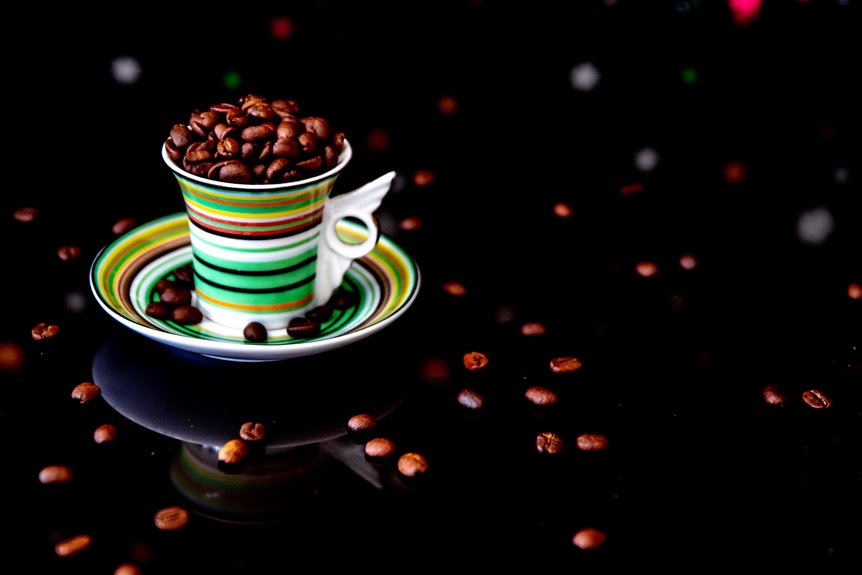
A typical 8-ounce cup of brewed coffee contains about 80 to 100 mg of caffeine. Brew method, bean variety, roast level, and cup size cause substantial variation. Espresso delivers more caffeine per ounce but less per standard shot than a full cup. Decaffeinated coffee still contains small amounts of caffeine, usually 2 to 5 mg per cup. Specialty blends and stronger brews can push caffeine content noticeably higher.
How Much Caffeine Is in a Cup of Coffee?
A single cup of coffee can hold a surprising range of caffeine, and that’s why the answer isn’t always the same. You may get about 80 to 100 milligrams in an 8-ounce cup, but your cup can feel stronger or gentler depending on the bean and roast.
In caffeine chemistry, the amount stays tied to the coffee’s natural makeup, so you’re not imagining the differences you notice. Should you choose decaffeination methods, you’ll still get a small amount, because decaf isn’t fully free of caffeine.
That can feel frustrating, but it’s normal, and you’re in good company. So whenever you pick up your mug, know that your coffee has its own story, and your body can learn to read it with confidence.
How Brewing Method Changes Caffeine?
Your brewing method can change caffeine more than you could expect, because the water stays in contact with the coffee for different lengths of time.
Whenever you brew longer, you usually pull more caffeine from the grounds, and if you brew faster, you might get less.
Grind size matters too, since finer grounds give water more surface area to work with, so your cup can end up stronger than you planned.
Brewing Time Effects
Whenever coffee stays in contact with hot water longer, it pulls out more caffeine, so brewing time can change your cup more than you might suppose. Whenever you let your brew run a bit longer, you usually get a stronger kick, and that can help you match your morning mood.
For ideal extraction, keep brewing time steady so each cup tastes familiar and feels right. Good temperature control also matters, because hot water at the proper heat helps caffeine move out smoothly instead of rushing or stalling.
In case you’re rushing, a short brew can still work, but it could feel lighter and less bold. Should you want more comfort in your cup, give the water a little more time, and let your routine support you.
Grind Size Impact
Grind size changes how fast water can pull caffeine from coffee, so it can shape your cup more than people initially expect.
Whenever you choose a finer grind, you expose more surface area, and that helps caffeine move into the brew faster.
Should your grind be too coarse, water might slide past the grounds before it extracts enough flavor or caffeine, and you can feel like the cup missed the mark.
You and your coffee crew might notice that particle distribution matters too, because uneven pieces brew unevenly.
That hurts extraction uniformity and can leave some grounds overworked while others stay quiet.
How Bean Type Affects Coffee Caffeine?
Should you’ve ever pondered why one cup feels stronger than another, bean type plays a big role. Arabica and conilon beans carry different caffeine levels, and roast style can shift that balance a bit too.
Bean Species Differences
Arabica and Sturdy beans don’t just taste different, they also carry different caffeine levels, and that’s the biggest reason bean species matter so much in your cup. Should you compare Arabica versus Robusta, you’ll usually find Arabica with less caffeine and a smoother lift, whereas sturdy Robusta delivers more punch.
You’re not imagining it provided one brew feels stronger; the bean’s genetics help shape that result.
- Arabica often fits lighter mornings.
- Sturdy beans can amplify a bold blend.
- Genetic variants can shift caffeine a bit within each species.
Caffeine By Roast
Roast level changes how your coffee feels in the cup, and it can make people second-guess what “strong” really means. You’re not alone provided you’ve heard dark roast has more caffeine, because the truth feels sneaky. Per weight, light and dark roasts stay close. Per scoop, light roast can seem a bit stronger since the beans are denser.
| Roast | Taste | Caffeine |
|---|---|---|
| Light | Bright | Slightly higher per scoop |
| Medium | Balanced | Very similar |
| Dark | Bold | Slightly lower per scoop |
| Espresso | Rich | Depends on dose |
Does Roast Level Change Caffeine?
Although roast level can change the taste and color of your coffee, it doesn’t change the caffeine in a big way. You and your coffee crew can relax here. A dark roast might taste bolder, but that richer flavor profile comes from heat, not extra caffeine. During roasting, beans lose water and grow lighter, so a scoop of dark roast can look fuller without packing much more caffeine.
- Light and dark roasts usually stay close in caffeine.
- Grinding and brewing affect your cup more than roast level.
- Your favorite roast can fit your routine, and you don’t have to choose between comfort and alertness.
How Does Cup Size Affect Caffeine?
Cup size can change caffeine more than most people expect, and that’s where the story gets practical. When you choose a larger cup, you usually pour more coffee, so you get more caffeine too. Smaller cups hold less, so they naturally keep the dose lower.
You can also notice how cup dimensions shape your habit. A tall, narrow mug might feel full sooner, while a wide one invites bigger pours. That simple shift can nudge your intake up without you noticing.
Even mug insulation matters a little, because a better-insulated cup keeps coffee hot longer, and you could sip more slowly without rushing to refill. So in case you want steadier caffeine, pay attention to the cup you reach for each morning.
How Does Espresso Compare to Drip Coffee?
Espresso packs a strong caffeine punch in a small shot, so you get a quick hit without much liquid.
Drip coffee usually comes in a much bigger serving, and that often means more total caffeine even provided that it tastes milder.
You’ll also notice brew strength differences, since espresso feels bolder while drip coffee can seem smoother and easier to sip.
Caffeine Per Shot
Whenever you compare espresso and drip coffee, the numbers can surprise you. A single espresso shot usually gives you about 60 to 70 mg of caffeine, whereas drip coffee often has more caffeine in the cup. Still, espresso feels stronger because it’s concentrated. You’re not alone should that seem confusing.
- Shot variability can change the caffeine you get.
- Extraction yield affects how much caffeine moves into the drink.
- A ristretto might taste intense, but it can hold less caffeine than you expect.
Drip Coffee Serving Size
Looking at drip coffee serving size helps the espresso comparison make a lot more sense, because the amount in your cup changes the whole story.
A standard drip cup usually holds 8 to 12 ounces, so you might pour more coffee than you do with espresso.
That larger serving can make the caffeine feel more familiar and less intense.
Whenever you choose a mug, cup material matters too.
A thick ceramic cup keeps heat better than paper, and that affects your serving temperature while you sip.
Should you share coffee time with friends, you’ll notice drip coffee often feels like the easygoing neighbor to espresso’s bold hello.
Brew Strength Differences
Even though espresso tastes stronger, its brew strength works a little differently than drip coffee. You can regard weak vs strong as flavor and concentration, not just caffeine. Espresso packs bold taste in a tiny shot, while drip coffee spreads caffeine across a larger cup. That means your sip can feel different from your actual intake.
- Espresso: intense, short, and concentrated
- Drip coffee: milder per ounce, but often more total caffeine
- Cold brew strength: can be smooth yet very strong
Why Do Some Coffees Have More Caffeine?
Some cups hit harder than others, and caffeine is usually the reason.
You may notice this whenever one mug feels lively and another feels mild.
Bean type matters initially: conillon usually carries more caffeine than arabica.
Then brewing method steps in.
A long brew pulls more caffeine from the grounds, and hotter brewing temperature can help release a bit more too.
Grind size matters as well, because finer grounds expose more surface area.
Should you be comparing drinks, cup size also changes the scene fast.
Your caffeine tolerance shapes how strong it feels, but it doesn’t change what’s in the cup.
How Much Caffeine Is Too Much?
Too much caffeine can turn a good coffee break into a shaky, uncomfortable one, so it helps to know your limit before that second or third cup sneaks up on you.
For most adults, about 400 milligrams a day is the usual ceiling, but your body might ask for less. Listen for:
- fast heartbeat or jitters
- sleep disruption later that night
- stomach upset or anxiety
Should you feel off, scale back and give yourself room to breathe. You don’t need to keep up with anyone else’s pace. Some days, one cup feels great; other days, that same amount hits harder.
Were you pregnant, pregnancy limits are lower, so check your guidance and stay cautious. The goal is simple: enjoy coffee in a way that fits your body and keeps you steady.
What Are the Lowest-Caffeine Coffee Options?
Assuming you want the lightest caffeine hit, decaf coffee is the clear starting point, and it can still give you that warm, familiar coffee feel without piling on much caffeine. In case you’re easing into a gentler routine, you’re in good company, and that matters.
| Option | Caffeine feel | Best for |
|---|---|---|
| Decaf | Very low | Night sips |
| Low caf blends | Low | Daily balance |
| Half caf | Moderate-low | Smooth shift |
Decaf processes remove most caffeine, so you can sip with less worry. Low caf blends mix in beans with less caffeine, and they keep flavor close to what you know. Half caf choices also help whenever you want comfort but less buzz. You don’t have to give up coffee to feel steady. You can choose what fits your day and still belong at the table.
How Can You Estimate Coffee Caffeine?
You can size up coffee caffeine through looking at the clues in the cup, and that makes the guess a lot less scary.
Start with the bean type, since robusta usually carries more caffeine than arabica.
Next, watch the brew time and brew temperature, because hotter water and longer contact can enhance caffeine extraction.
Then consider the drink style:
- Espresso often tastes strong, but its small size can hide the total.
- Drip coffee usually lands in the middle.
- Cold brew can feel smooth, yet it might pack a bigger punch.
You can also ask the café about bean blends or serving size.
Once you know these details, you’re not guessing alone.
You’re reading the signs like everyone else in the coffee crowd, and that feels a lot steadier.
Frequently Asked Questions
What Decaf Coffee Options Still Contain Caffeine?
You can choose low-caf blends, Swiss Water decaf, or decaf espresso; they still have small caffeine amounts. You’re not alone—many coffee lovers prefer these gentler options for flavor, comfort, and connection daily.
Does Cold Brew Always Have More Caffeine?
No, you can’t assume cold brew always has more caffeine. Your brewing variables and serving size matter most, so a small, weak cold brew might have less than a larger, stronger hot coffee you enjoy.
Can Coffee Caffeine Affect Sleep Quality?
Yes. If you drink coffee late, you could lie awake longer. For example, you sip espresso at 4 p.m., then notice longer sleep latency and disrupted sleep structure, so you feel less rested and less connected tomorrow.
How Long Does Caffeine Stay in Your System?
Caffeine usually stays in your system about 5 hours, though half life variability and genetic metabolism can stretch it to 2 to 12 hours. You’ll fit right in by noticing your own energy and sleep patterns.
Are Coffee Pods Higher in Caffeine Than Ground Coffee?
Not necessarily: you’ll often find pod strength matches or exceeds ground coffee, but pod variety changes things. You’re in good company checking labels, since brew size and brand can tip caffeine either way.