

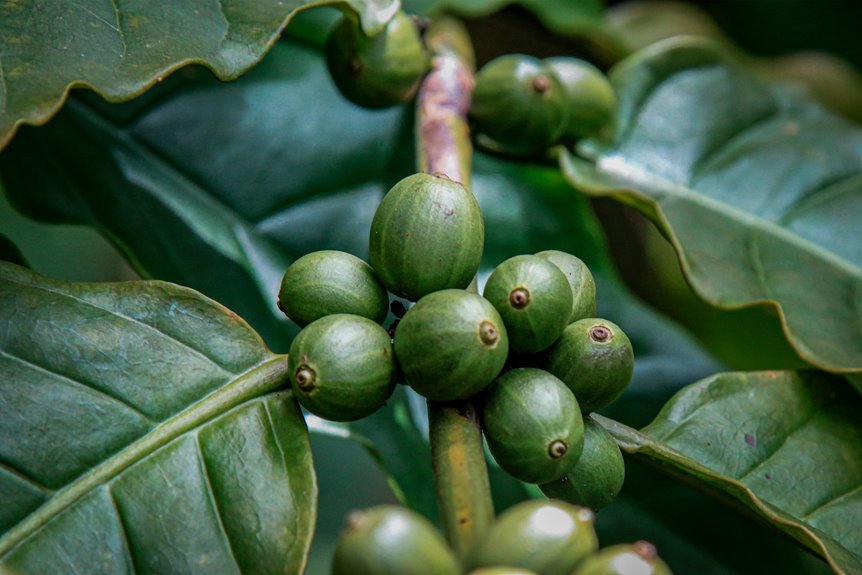
Coffee lovers, ever thought about how your daily brew connects to climate change? Around the globe, farmers are feeling the heat, and it’s not just from the coffee roasters. Rising temperatures, erratic rainfall, and pests are all taking a toll on coffee crops. Fortunately, many farms are adapting by planting hardier varieties, enhancing soil health, and using shade-grown techniques. These changes are reshaping the future of coffee production.
How Climate Change Affects Coffee Production
As you contemplate coffee, you could envision a warm cup and a calm morning, but climate change is making that simple comfort harder to safeguard. You feel the pressure through production challenges, from shifting harvests to uneven bean quality.
Coffee genetics can help, and sustainable practices support stronger plants and healthier soil. As you add crop diversification and agroforestry benefits, you give farms more balance and shade.
Farming innovations also help you adapt faster, while consumer awareness can lift better choices at home. Still, market fluctuations can shake incomes, and economic impacts often reach whole communities.
That’s why climate policies matter, because they can guide fair support and real action. As you stay informed, you help protect coffee’s future together, cup for cup.
Why Coffee Plants Are Climate-Sensitive
Coffee plants are picky, and you can see it in how they react to heat, rain, and cold. They grow best whenever temperatures stay steady, because too much heat or chill can stress the plant and hurt the beans.
They also need the right rainfall and higher altitudes, so even a small climate shift can change where coffee can grow and how well it does.
Temperature Sensitivity
Why do coffee plants seem so selective about the weather? You’re not imagining it. Coffee grows best within narrow temperature thresholds, so even small shifts can stress the plant.
During coffee adaptation, farmers and growers monitor heat closely because warm days can accelerate growth too much, while cool nights can hinder it.
Whenever temperatures drift outside that comfort zone, the plant might flower at the wrong time or produce smaller beans. You can regard it like a familiar routine getting thrown off by one missing step.
That’s why hotter climates can lower quality and reduce harvests. Should you care about coffee, this sensitivity matters to you, because it helps explain why each farm has to match the plant’s needs with care, patience, and local expertise.
Rainfall Dependence
Rainfall plays a huge role in coffee growth, and even a small change in wet weather can shake the whole crop. Whenever rain arrives on time, you help coffee trees stay steady, bloom well, and fill their cherries evenly.
But should rain patterns shift, the plants can get stressed fast. Too little water dries the soil, while too much can drown roots and weaken young fruit. You also depend on good moisture retention in the ground, because healthy soil holds water longer and gives the trees a safer buffer between storms.
That’s why climate swings feel so personal for coffee growers. You’re not just watching weather maps; you’re protecting a crop that needs a careful balance to keep your harvest strong and your work worthwhile every season.
Altitude Requirements
As the weather shifts, the land under your coffee trees starts to matter even more, and altitude becomes a big part of that story. You can feel how cooler mountain air helps coffee ripen slowly, which often supports better flavor and healthier plants.
But climate change can push farms past their climate thresholds, so altitude adaptation becomes part of your daily reality. Should your field sit too low, heat stress can rise fast. Should it sit too high, frost can still surprise you.
- You might need to shift shade cover to protect tender leaves.
- You might watch flowering patterns change with warmer nights.
- You might adjust harvest timing as altitude conditions move.
When you understand elevation, you give your coffee a better chance to stay strong, and you don’t face those changes alone.
How Rising Temperatures Stress Coffee Crops
As temperatures rise, you can feel the stress in coffee plants as they struggle to stay healthy in the heat.
That heat can slow bean development, so you might see smaller harvests and weaker flavor.
At the same time, warmer conditions can invite more pests, which makes it even harder for your coffee crops to thrive.
Heat Stress On Coffee Plants
Hotter days can quietly wear coffee plants down, even before you notice any clear damage. You might see leaves curl, feel the soil dry faster, and notice the plant saving energy instead of growing strong.
That’s where coffee plant resilience matters most, because healthy roots and shade can help your crop cope better.
- Give plants morning sun and afternoon cover
- Keep mulch around the base to slow water loss
- Check leaves often for initial heat stress signs
As you use heat adaptation strategies, you give your coffee a better chance to stay steady through warm spells.
Small changes can ease pressure and help your plants feel less alone in the field, which matters as every hot day seems a little too enthusiastic.
Reduced Bean Development
Even a slight rise in temperature can interrupt how coffee cherries fill out, and that shift can leave you with smaller beans at harvest. As heat lingers, your plants spend more energy staying alive than building dense seeds, so the cup can feel thinner and less balanced. You can see this in bean genetics, where some varieties hold size better than others. That’s why choosing lines with drought resistance matters, because stressed roots often slow development too.
| What you notice | What it means |
|---|---|
| Loose, light cherries | Less seed growth |
| Uneven ripening | Weaker bean fill |
| Smaller green beans | Lower roast weight |
| Tough growing seasons | Need for better selection |
Higher Pest Pressure
As coffee plants work harder to cope with heat, they also become easier targets for pests. You might notice more coffee berry borer, leaf miners, and mites as fields stay warm and dry. These insects move faster, feed longer, and spread stress through your crop. That can leave you feeling frustrated, but you’re not powerless.
Strong pest resistance strategies help you protect plants with shade trees, healthy soil, and timely pruning. Integrated pest management lets you watch pest levels, use traps, and bring in helpful insects before damage grows.
- Check leaves and berries often
- Remove infected plant material quickly
- Work with neighbors on shared control plans
How Changing Rainfall Reduces Coffee Yields
Whenever rainfall shifts out of its usual pattern, coffee plants feel it fast. Whenever rain comes too late or too soon, the roots can’t take up water well, and flowers might drop before they set fruit. You might see smaller cherries, fewer beans, and lower harvests.
Rainfall variability also makes it harder for your farm to keep steady growth through the season, so each wet spell matters more than usual. During a drought impact, leaves curl, the soil dries, and the plant spends energy staying alive instead of filling out berries.
Then, whenever rain returns unevenly, the crop can recover slowly and unevenly too. Should you grow coffee, this changing rhythm can feel unfair, but you’re not alone, and careful timing can still protect part of your yield.
Why Extreme Weather Harms Coffee Farms
Extreme weather can hit your coffee farm hard, and heat stress can weaken trees fast.
Whenever temperatures spike, leaves can dry out, cherries can shrink, and the plants might stop growing the way they should.
Should heavy rain follow, floodwater can soak roots, wash away soil, and leave your crop struggling to recover.
Heat Stress On Trees
As heat waves settle in for too long, coffee trees can start to struggle in ways you mightn’t notice initially. You could see curled leaves, slower growth, and cherries that don’t fill out well.
That stress can weaken coffee tree resilience, so your plants need extra care as the sun stays fierce.
- Keep shade trees healthy to soften direct heat
- Mulch the soil to help roots stay cooler
- Water promptly so moisture lasts longer through the day
These climate adaptation strategies can help your farm feel more stable, and they also give you a better shot at steady harvests.
Once you notice stress promptly, you can act with your community’s shared know-how and protect the crop together.
Flood Damage To Crops
Floodwaters can hit a coffee farm fast, and the damage often starts below the surface. Once soil stays soaked, roots lose air, and your trees struggle to take in nutrients. You might see yellow leaves, dropped cherries, and weak new growth soon after.
In case water rushes across slopes, it can wash away topsoil and expose roots, which makes recovery harder. You also face mold, fungus, and fruit loss as wet conditions linger. That’s why quick flood recovery matters.
You need to drain standing water, clear blocked paths, and check each tree for stress. Crop insurance can ease some losses, but care still counts. Whenever you protect the farm together, you help your coffee stay standing, even after a rough storm.
How Warming Climate Spreads Coffee Pests
As temperatures rise, coffee pests don’t just survive more easily, they also move into new places and cause more damage. You might notice beetles, leaf miners, and tiny borers showing up where they once struggled to live. This pest migration often brings faster disease spread too, because insects can carry fungi and bacteria from plant to plant.
- Warmer nights help pests breed longer.
- Dry stress can leave coffee trees weaker.
- New pests can arrive before you anticipate them.
That means your farm team has to watch plants closely and act promptly. Whenever you spot chewing leaves, holes in cherries, or moldy spots, you’re not alone.
Many growers face the same pressure, and quick checks can help you stay one step ahead.
Which Coffee Regions Face the Biggest Risks
The biggest risks don’t hit every coffee farm at once, but they do show up faster in certain places.
Should you grow coffee in low mountain zones, you’re more exposed because heat builds there initially. In coffee geography, regions near the equator with narrow elevation ranges often feel the sharpest pressure.
You’ll also see stronger regional impacts in places that depend on steady rain, because dry spells can arrive suddenly and stay longer than usual. Farms in Central America, parts of East Africa, and some Southeast Asian areas might need more care as seasons shift.
Still, you’re not alone in this. Many growers are adapting together, sharing shade trees, water plans, and local knowledge to protect the crop and the community around it.
How Climate Change Affects Coffee Flavor
As climate shifts, coffee flavor shifts too, and you can taste that change in the cup. Whenever heat rises and rain patterns wobble, beans mature under stress, and you notice sharper acidity, thinner sweetness, or a flatter finish. That can feel disappointing, but you’re not alone in caring about every sip.
- Cooler nights often help flavor profiles stay bright and balanced.
- Longer dry spells can reduce aromatic compounds that give coffee its lift.
- Sudden storms might change how evenly cherries ripen.
Because of these shifts, your favorite brew could taste less fruity or less chocolatey than before.
Still, skilled growers and roasters can protect quality through watching each lot closely and adjusting with care.
How Coffee Prices Rise When Supply Falls
Upon climate change cutting coffee supply, you feel the effect fast because fewer beans reach the market.
Buyers then compete for what’s left, and prices can spike before you even notice the shortage.
That means your daily cup can cost more, even though nothing about your routine has changed.
Supply Shortages
Even a small drop in coffee harvests can shake the whole market, because buyers still need beans and farmers can only sell what they grow. As climate stress cuts yields, you feel the pinch through the supply chain, from farm to roaster.
Fewer bags move forward, so everyone works harder to keep shelves filled and your cup steady.
- Farmers might sort ripe cherries more carefully.
- Importers might search new regions for beans.
- Roasters might blend batches to stretch supply.
Because consumer demand stays strong, shortages don’t stay concealed for long. You could notice smaller lots, tighter choices, and less room for waste.
Still, your coffee community can adapt with planning, patience, and fair support for growers who keep the crop moving.
Market Price Spikes
A tighter coffee harvest often sends prices climbing fast, and you typically feel that shift long before the market calms down. As fewer beans reach buyers, roasters bid harder, and you see shelf prices rise.
That jump can feel rough, but it follows simple supply and demand. You might notice market fluctuations in your morning brew initially, then in café menus and grocery aisles.
These swings also create economic impacts for farmers, workers, and you as a buyer. Still, higher prices can help growers recover some losses from climate damage.
Should you drink coffee every day, you’re part of that story too. So as supply falls, the whole coffee community feels the squeeze, together.
How Farmers Are Adapting Coffee Production
As climate change keeps shifting rainfall, heat, and disease pressure, coffee farmers are adapting in practical and often creative ways to protect their crops and their livelihoods. You can see them using sustainable practices and innovative techniques that fit local conditions and keep farms resilient.
They prune more carefully, adjust planting dates, and choose hardier varieties that handle stress better. They also assess soil more often so they can feed plants with the right nutrients, not guesswork.
- They collect rainwater for dry spells.
- They use weather alerts to plan field work.
- They replace weak plants fast to protect yields.
These steps help you feel more connected to growers who face the same uncertain seasons. As farmers share knowledge, your morning cup stays part of a stronger, more adaptable community.
Why Shade-Grown Coffee Helps Farms
As coffee grows under trees, the farm receives more than just extra shade, because that cover can stabilize the whole growing system.
You get real shade benefits from a shade canopy that softens heat, slows wind, and cuts stress on plants. Those microclimate effects help your coffee stay steadier during hot spells and dry stretches, which elevates crop resilience.
At the same time, biodiversity improvement brings birds, insects, and helpful organisms that support pest control and keep ecosystem balance stronger.
That mix protects soil health through reducing erosion and holding moisture longer. As a result, you can use sustainable practices that support farmer livelihoods without pushing the land too hard.
As you work with shade-grown coffee, you’re not alone; you’re building a healthier farm with your community.
How Resilient Coffee Varieties Are Developed
Shade helps farms handle heat, but coffee plants still need varieties that can withstand a harsher climate. You can help protect your harvest through choosing resilient hybrids bred for heat, disease pressure, and uneven rain.
Breeders start with genetic diversity, then cross plants with traits that work well together. They grow many seedlings, observe which ones stay productive, and keep the strongest performers.
- You get plants that fit your farm’s stress points.
- You share in the work of field evaluation and selection.
- You gain options that keep coffee growing year after year.
When you plant these improved lines, you join a community that’s building a steadier future for coffee, one careful cross at a time.
Why Healthy Soil Matters In Hotter Weather
Healthy soil matters even more in hotter weather because it helps coffee plants hold onto water, feed their roots, and stay steady as heat puts them under stress.
Whenever you protect soil health, you give your farm a stronger base for moisture management and nutrient retention. Organic practices like composting techniques and crop rotation can enhance microbial activity, which helps roots take in food more easily.
You also get biodiversity benefits, because thriving soil supports more helpful organisms around your trees. On sloped land, erosion control keeps rich topsoil from washing away in heavy rain after dry spells.
That’s why sustainable farming starts below your boots. Whenever you care for the ground, you’re not just helping plants survive; you’re helping your whole coffee community stay resilient, together, season after season.
What The Future Holds For Coffee Farming
Looking ahead, coffee farming will likely ask more from growers, but it can also open the door to smarter, sturdier systems that work with nature instead of fighting it.
You’ll see future innovations like shade trees, drought-tough plants, and better water tools. With technology integration, you can track heat, rain, and pests before they spread. These shifts support sustainable practices and protect biodiversity benefits that keep farms healthier.
At the same time, consumer awareness can push buyers to value coffee grown with care, which helps your hard work matter more.
- Stronger global partnerships can share seed knowledge and farm training.
- Policy changes might ease economic impacts for small growers.
- Local evaluations can help you adapt faster and stay connected.
Frequently Asked Questions
How Does Climate Change Affect Coffee Bean Harvest Timing?
Climate change affects harvest timing by causing seasonal shifts and variability. As a result, your coffee cherries may ripen earlier, later, or unevenly. This requires you to adapt your plans with your farming community to remain prepared.
Can Coffee Be Grown at Higher Altitudes as Temperatures Rise?
Yes, you can grow coffee at higher altitudes as temperatures rise and altitude adaptation can help your plants thrive. You will build temperature resilience while joining growers who protect quality and adapt together to changing conditions.
Which Countries May Lose the Most Coffee-Growing Land?
Brazil, Vietnam, Colombia, and Ethiopia may lose the most coffee-growing land. You will see Brazil facing challenges, Vietnam experiencing impacts, Colombia dealing with vulnerabilities, and Ethiopia encountering risks as warming pushes suitable farms uphill and reshapes your coffee community’s future.
Does Climate Change Affect Organic Coffee Production Differently?
Yes, climate change will impact organic coffee differently. Organic farming can improve climate resilience and soil health. However, you may experience greater yield variability due to increased pests, heat, and unpredictable rainfall putting stress on your crop.
How Long Does a Coffee Plant Usually Live Under Stress?
Under stress, your coffee plant usually lives 15 to 30 years, though plant resilience and stress factors like heat, drought, and pests can shorten that. You can help it thrive by protecting roots, providing shade, and ensuring healthy soil.