
Yes — coffee can trigger anxiety for some people. Caffeine stimulates the nervous system, raising heart rate and sharpening thoughts, which can feel like an anxiety attack. Sensitivity to caffeine, skipping food, or drinking late increases that response. Small changes like reducing intake or choosing low-caffeine options often reduce symptoms. Watch how your body reacts after drinking to decide what works best.
Can Coffee Trigger Anxiety?
Yes, coffee can trigger anxiety in some people, and it can happen faster than you’d expect. In the event you’ve felt jittery after a cup, you’re not alone.
Coffee mythbusting starts here: coffee isn’t “bad,” but your body could react strongly. In fact, your response can change with sleep, stress, food, and how much you drink.
That’s why cultural caffeine habits, like grabbing a latte to fit in or power through work, can make things feel tricky. You deserve to know your own limits without shame.
How Caffeine Triggers Anxiety Symptoms?
Caffeine can trigger anxiety symptoms because it pushes your body into a faster, more alert state, and that can feel a lot like anxiety. You could feel your chest flutter, your thoughts race, and your muscles tighten.
That quick shift can bring heart palpitations and nervous tension, especially whenever you’re already stressed. It can also make small worries feel bigger, like your mind grabbed a megaphone.
- A steaming cup in your hand, while your pulse drums in your ears.
- A busy room that suddenly feels too loud and too bright.
- Shoulders up near your ears, as though you’re bracing for bad news.
At the moment caffeine hits hard, you may feel less grounded and more on edge. That’s unsettling, but you’re not alone in it.
Why Some People Are More Sensitive?
Some people feel caffeine much more strongly than others because their bodies and brains don’t process it at the same speed. Should you be one of them, you’re not being dramatic.
Genetic factors can change how fast your liver breaks caffeine down, so it could stay in your system longer and feel stronger. Your brain chemistry also matters, since caffeine can nudge your stress response in a way that feels bigger for you.
Even your gut microbiome might play a role, because it helps shape how your body handles food and drinks. That mix of biology means your friend’s “one cup is fine” advice may not fit you. You don’t have to compare yourself to anyone else. Your sensitivity is real, and it deserves respect.
Signs Caffeine Is Causing Anxiety?
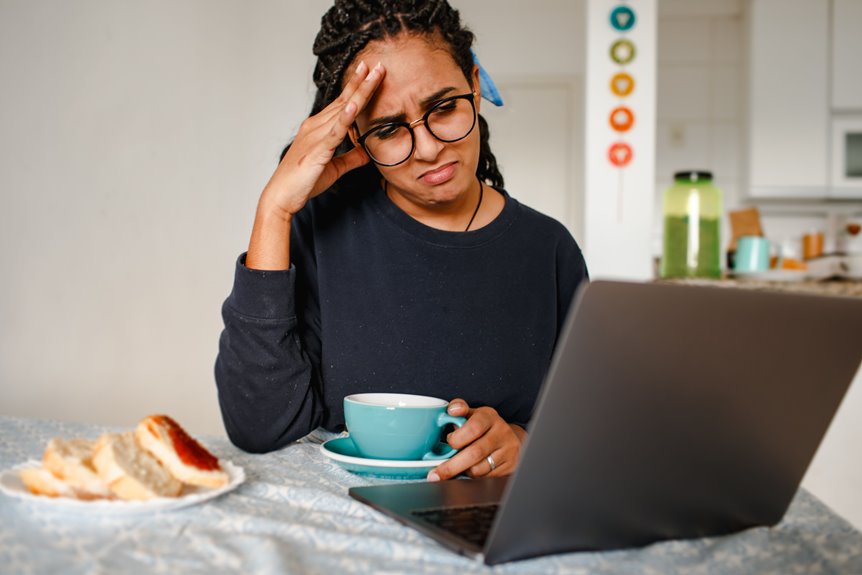
In case caffeine is making you anxious, you could feel a racing heart, shaky hands, sweaty skin, or a tight stomach shortly after your coffee or energy drink.
You might also notice that you get restless, on edge, or suddenly worry more after certain drinks or extra cups.
These signs often show up once caffeine hits you harder than your body likes, so paying attention to whenever they start can help you spot your triggers.
Physical Anxiety Symptoms
Often, the initial clues that coffee is bothering you show up in your body before you even realize you feel anxious. You might notice heart palpitations, like your chest is drumming after one more sip. Your shoulders could rise and stay there, carrying muscle tension that makes you feel tight and uneasy. Sometimes your hands shake a little, or your stomach feels fluttery, as though your body got the wrong memo.
- A racing pulse can make you feel jumpy.
- Tight jaws and stiff necks can make you feel worn down.
- Sweaty palms can show up whenever your system feels overstimulated.
Should these signs keep showing up, your body might be telling you that caffeine is too much for you right now.
Behavioral Caffeine Triggers
Behavior often gives you the initial clue that coffee is stirring up anxiety, even before your mind catches up. You might notice restless pacing, fast talking, or snapping at small things. Those habit cues can show up whenever you drink coffee on an empty stomach, before a big meeting, or during your usual social rituals with friends. Pay attention provided you keep checking your phone, tapping your foot, or feeling too wired to sit still.
| Behavior | What it possibly signifies |
|---|---|
| Fidgeting | Extra stimulation |
| Rushing speech | Overdrive |
| Avoiding people | Unease |
| Reaching for more coffee | Tolerance shift |
| Needing busy tasks | Nervous energy |
Should this sound familiar, you’re not alone. Many people notice these patterns and feel relieved to name them.
How Much Coffee Is Too Much?
How much coffee is too much really depends on your caffeine sensitivity, since one cup could feel fine for you while another can leave someone else jittery.
For many adults, about 400 milligrams of caffeine a day is a common safe daily limit, but your own body might ask for less.
Should you notice your heart racing, your thoughts speeding up, or your nerves fraying, that’s your cue to cut back a bit.
Caffeine Sensitivity Levels
Coffee can feel harmless initially, but your body could tell a very different story should you’re sensitive to caffeine. If one cup leaves you wired, shaky, or stuck in a loop of racing thoughts, you might’ve a genetic predisposition that makes caffeine hit harder.
Your metabolic rate also matters, because a slower pace can keep caffeine in your system longer. Image a buzzing phone you can’t silence, a knee that won’t stop bouncing, or a heart that taps out a fast drumline. Those signs don’t mean you’re weak; they mean your body notices coffee more. So, whenever your friend sips three mugs and feels fine, you might need less to stay comfortable and connected.
Safe Daily Limits
Even though you know you’re sensitive to caffeine, the next question is still simple: at what point does your daily cup cross the line? For many people, about 400 milligrams a day is the upper safe limit, but you might need less. Portion control helps you stay steady, because one large mug can equal two small cups.
Should you feel jittery, restless, or your heart races, you’ve likely had too much for your body. Gender differences can also matter, since hormone shifts could change how you handle caffeine. So, listen to your own pattern, not just the label.
Were you to want to keep coffee in your routine, spread it out, choose smaller servings, and notice how you feel after each cup.
Can Coffee Worsen Panic Symptoms?
Whenever panic symptoms already make your body feel like it’s on high alert, caffeine can sometimes turn the volume up even more. You could notice heart palpitations, shaky hands, or a tight chest, and that can feed panic clusters fast. Whenever that happens, your mind can race toward worst-case thoughts, and cortisol spikes can make everything feel sharper. Should you already know that feeling, you’re not alone.
- A coffee cup on a busy desk can feel like a spark near dry grass.
- Your chest could pound like footsteps in a quiet hallway.
- Anticipatory dread can hang over the day like dark clouds before rain.
How Coffee Disrupts Sleep and Mood?
A late cup can quietly throw your body clock off, and that small shift can spill into both sleep and mood. When caffeine stays in your system, you might take longer to fall asleep, wake up more often, and lose the deep rest your body needs. That breaks your sleep structure, so your brain gets less time to reset.
Then, the next day, you could feel tense, flat, or more irritable than usual. You’re not weak, and you’re not alone in this. Coffee can make mood regulation harder because tired brains handle stress less smoothly. Even should you feel fine at the outset, the effect can build by morning and leave you feeling less steady, less patient, and less like yourself.
When Is Coffee Riskiest?
Coffee can feel riskiest whenever you drink it on an empty stomach, because the jolt can hit you harder and make your nerves feel extra sharp.
It can also bother you more whenever you take in a high dose, since too much caffeine might push your heart rate and thoughts faster than you want.
And in case you sip it late in the day, it can sneak into your sleep and leave you more tense tomorrow.
Empty Stomach Intake
Running on an empty stomach can make coffee feel much harsher than it should. Whenever you sip before breakfast, your body could react faster, and that can raise stomach acidity and spark digestive discomfort.
You might notice a quick jitter, a twist in your gut, or that shaky, too-alert feeling that makes you feel a little off from the group.
- Imagine a hot mug on a bare kitchen counter.
- Envision your stomach with no food buffer at all.
- Visualize a sudden buzz that lands before you’re ready.
If you want coffee to feel gentler, eat a small snack initially. A banana, toast, or yogurt can help steady the ride and make the moment feel more like yours.
High-Dose Consumption
Pushing the dose higher can turn coffee from a lift into a trigger, especially should you drink more than your body can handle.
Whenever you stack cups, your heart could race, your thoughts can feel jumpy, and calm can slip away fast. You’re not weak for noticing it; you might just have a lower limit than other people.
Tolerance development can change that limit over time, but it doesn’t protect everyone the same way. Your body’s response also depends on metabolic differences, so one friend could sip safely while you feel edgy after one strong mug.
In case coffee starts to feel intense, the dose is likely the real issue. Listening to your own signals helps you stay in the group without pushing yourself past comfort.
Late-Day Caffeine
Provided the dose is starting to feel a little too strong, the clock can matter just as much as the cup size. Should you drink coffee late, you might feel wired at the moment you want calm, and that can stir anxiety fast.
Your evening rituals, like reading, cooking, or winding down with friends, can start to feel rushed. Then your circadian rhythms lose their steady beat, so sleep gets lighter and your mind stays alert.
- A 3 p.m. latte can still echo at midnight.
- A 6 p.m. espresso can make your chest feel fluttery.
- A late night refill can turn rest into restlessness.
How to Cut Back Without Withdrawal?
Cutting back on coffee doesn’t have to feel like a crash landing. You can use gradual tapering, which means shaving off a little each few days so your body keeps up. That steady pace helps you stay part of the coffee crowd without the rough edge. Should mornings feel empty, swap one cup for herbal substitutes that feel warm and familiar.
| Step | What you do |
|---|---|
| 1 | Measure your usual cups |
| 2 | Cut a small amount |
| 3 | Add water or decaf |
| 4 | Keep a calm routine |
Drink water, eat regularly, and sleep on time. Should headaches show up, pause and hold your new level for a few days. You’re not failing. You’re training your system to relax, one sip at a time.
Low-Caffeine Drinks to Try
Should you’re easing off coffee because your nerves feel a little too jumpy, low-caffeine drinks can help you keep the warm ritual without the full jolt. You still get the cozy mug, the steam, and that “I’ve got this” moment with your crew. Try these decaf alternatives and herbal substitutes:
- Half-caf coffee, which softens the buzz but keeps the familiar taste.
- Green tea, with a gentle lift that feels lighter on busy mornings.
- Rooibos latte, which brings a rich, earthy comfort without caffeine.
You can also sip chicory coffee, golden milk, or peppermint tea whenever you want something soothing in hand. These drinks let you stay part of the coffee crowd, just at a pace that feels calmer and kinder to you.
When to Get Help for Anxiety?
In the event that anxiety keeps showing up often, getting in the way of your sleep, work, school, or relationships, it could be time to reach out for help. You don’t have to wait until you’re swamped. In case coffee, stress, or both keep pushing your symptoms higher, talk with a doctor or therapist about therapy timing. They can help you notice patterns and choose next steps that fit your life.
Should you ever feel panic that won’t ease, chest pain, or thoughts of hurting yourself, get urgent care right away. You can also make crisis planning with someone you trust, so you know who to call and where to go. Getting support doesn’t mean you’re failing. It means you’re taking care of yourself, and that’s brave.
Frequently Asked Questions
Can Decaf Coffee Still Trigger Anxiety?
Yes. You can still feel anxious from decaf sometimes. Withdrawal symptoms or the placebo effect can play a part. You are not alone. Notice how your body responds and choose what helps you feel calm.
Does Tea Cause Anxiety Like Coffee Does?
Sometimes, yes. Tea can make your nerves feel like fireworks. You are more likely to react to caffeine in black or green tea, while herbal alternatives and ritual brewing can keep you cozy with the group.
How Long Does Caffeine Anxiety Usually Last?
Usually, your caffeine anxiety lasts a few hours, often 3 to 6 hours, depending on caffeine tolerance and dose. You are not alone; your withdrawal timeline might start later today and ease within a day or two.
Can Taking Caffeine With Food Reduce Anxiety?
Yes, taking caffeine with food can help you feel steadier while supporting blood sugar and easing jitters. Try sipping slowly and pairing it with a mindfulness practice so you are not handling it alone—you’ve got this.
Do Energy Drinks Worsen Anxiety More Than Coffee?
Yes. Energy drinks can worsen anxiety more than coffee because they often contain higher caffeine doses and other stimulants that interact. If you have built caffeine tolerance you might feel less, but you still deserve calmer choices.