

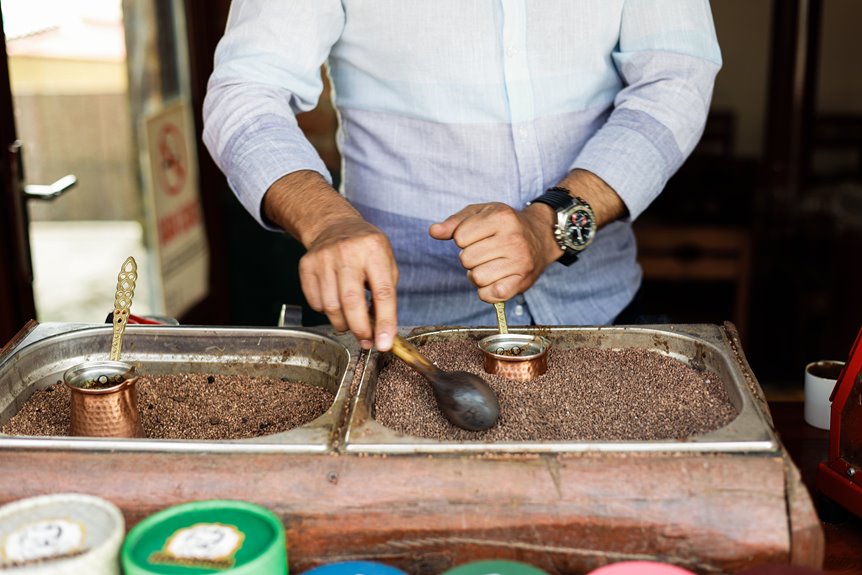
Turkish coffee is more than just a drink; it’s a cherished ritual that brings people together. The process begins with finely ground coffee, cold water, and sugar combined in a cezve. Gently warming this mixture allows the foam to develop beautifully. Each small cup offers a surprisingly rich flavor, often enjoyed alongside water and a sweet treat. The grounds play a key role, adding depth to this beloved beverage.
What Makes Turkish Coffee Unique
Turkish coffee feels unique right from the initial sip because it’s made in a way that lets the grounds stay in the cup, giving you a rich, bold drink with a silky feel and a deep aroma. That texture shapes the flavor profile and makes each cup feel personal.
You also join brewing rituals that ask for patience and care, which adds calm to your day. Its cultural significance shows up in social customs and serving etiquette, where a small cup can welcome you like family.
The historical backdrop and regional variations give the drink more character, while preparation techniques keep every step simple but exact. As you slow down with it, you don’t just drink coffee; you share a warm tradition that feels like home.
Where Turkish Coffee Comes From
Long before it became a beloved drink served in tiny cups, coffee found its roots in the highlands of Ethiopia, where people initially noticed the energy in its beans.
From there, trade carried it across the Red Sea into the Arab world, and you can trace Turkish coffee’s historical origins through this wide path.
Later, Ottoman influence helped shape how people in the empire accepted it at home and in public life.
As you follow its expedition, you see strong cultural significance grow around shared cups, conversation, and welcome.
Because different cities encountered coffee in their own way, regional variations appeared over time.
Turkish Coffee Ingredients and Tools
To make Turkish coffee the right way, you’ll need strong coffee, cold water, and just the right amount of sugar for your taste.
You’ll also want a small cezve, a heat source, and a fine grinder, since these tools help create that rich foam and smooth texture.
Once you gather them, you can start seeing how each ingredient and tool works together to shape the flavor in your cup.
Coffee, Water, And Sugar
A great cup of coffee starts with just three simple things: coffee, water, and sugar. You deserve each one to work together, because that balance gives Turkish coffee its warm, shared feel.
Choose finely ground coffee that smells fresh and bold. Next, pay attention to water quality, since clean water lets the flavor stay smooth and bright. Should your tap water taste harsh, your coffee will too, and nobody wants that little surprise.
Then consider sugar types, from none at all to a little or a lot. In Turkish homes, you often add sugar before brewing, so the sweetness blends in well.
At the moment you pick these three with care, you join a tradition that feels welcoming, comforting, and easy to enjoy with others.
Essential Brewing Equipment
Now that your coffee, water, and sugar are ready, the next step is gathering the right tools, because Turkish coffee depends on more than good ingredients.
You’ll feel more confident once you set out the essential tools before you start. A small cezve, a steady heat source, and a demitasse cup help you practice classic brewing techniques with care.
- Cezve: This little pot gives you control and helps your coffee rise gently.
- Heat source: It keeps the brew calm, so you can protect the foam.
- Spoon: You use it to stir with purpose, not speed.
- Serving cup: It welcomes the finished coffee and the moment you share.
As you keep these essential tools close, you join a tradition that feels warm, familiar, and proudly yours.
Choosing The Right Grinder
Because Turkish coffee needs an ultra-fine grind, your grinder matters just as much as your cezve. Whenever you compare grinder types, look for one that can turn beans into powder, not tiny pebbles.
A hand burr grinder gives you control and a calm morning ritual, while a strong electric grinder saves time while you’re serving friends. What matters most is grind size, so evaluate a small batch and check for softness between your fingers.
Should it feel sandy and even, you’re close. Should it look speckled or coarse, adjust and try again. With the right grinder, you’ll feel ready to join the tradition with confidence, and every cup will taste more welcoming, rich, and true.
How to Make Turkish Coffee at Home
Making Turkish coffee at home is easier than it looks, and the best part is that you only need a few simple tools, a little patience, and the right grind.
You join a warm tradition whenever you slow down and follow these steps. Your coffee rituals can feel comforting, and your brewing techniques can build confidence fast.
- Measure cold water into your cezve.
- Add finely ground coffee and sugar, should you like.
- Stir once, then heat it slowly until foam rises.
- Pour carefully into a small cup and let the grounds settle.
As you practice, you’ll notice the flavor grow richer and the process feel more natural.
That steady rhythm helps you feel at home with every cup.
Turkish Coffee Serving Customs
In Turkish coffee service, the smallest details can make the whole moment feel special, so you’ll often see the cup handled with care from the very beginning.
You’ll notice coffee etiquette in the way the host serves elders or guests initially, then offers you a steady, respectful pour. These serving styles reflect hospitality norms, and they help you feel welcomed right away.
Alongside the cup, you might get water and a small sweet, which are traditional accompaniments that balance the rich taste.
Because this drink carries deep cultural significance, the act of serving becomes one of the social rituals that brings people together.
Whenever you accept the cup with both hands, you show respect and join the shared warmth of the table.
Turkish Coffee and Fortune-Telling
Upon finishing a cup of Turkish coffee, one can turn the cup over and let the grounds create shapes that feel full of meaning.
You’ll often notice lines, circles, and tiny marks that people read as symbols of travel, luck, love, or coming changes.
Should you know what to look for, these cup patterns can make the tradition feel personal and surprisingly warm.
Reading Coffee Grounds
Although Turkish coffee already feels rich and memorable, the grounds left at the bottom can turn the cup into something even more intriguing. As you read them, you join a warm tradition that blends conversation, trust, and cultural significance.
You don’t need to act like an expert to feel included. You simply notice shapes, then share what they could signify.
- Look for ground interpretations that speak to your current worries.
- Notice how the reading invites care from friends and family.
- Let the practice remind you that stories can travel through coffee.
- Enjoy the moment, because belonging starts with shared attention.
As you listen, you’ll feel how fortune-telling can be gentle, personal, and welcoming.
Symbolism in Cup Patterns
Because Turkish coffee leaves a dark, uneven pattern behind, people often see more than stains in the cup. You read those shapes with friends, and each line can feel like a small message. A tall mark might suggest hope, while a broken edge can point to a change ahead.
These symbolic meanings matter because they turn a simple coffee break into shared care and curiosity. As you listen, you also notice the cultural significance of the ritual, since it connects you to hosts, family, and old stories.
The cup can show birds, paths, or hearts, and you learn to trust the moment instead of rushing it. In this way, the patterns invite you into belonging, one warm sip at a time.
Common Turkish Coffee Mistakes to Avoid
Even a small mistake can change the taste of Turkish coffee, so it helps to know what to avoid before you start. You’ll feel more at home with each cup as you keep a few basics in mind.
- Use the right grind consistency, because coarse grounds make the brew weak and gritty.
- Measure water carefully, since too much or too little throws off the balance.
- Watch the heat, because boiling too fast can burn the coffee and hurt the serving temperature.
- Stir once, then leave it alone, so the foam can form nicely.
As you slow down, you respect the tradition and give yourself a better cup. That care also helps you share coffee with confidence, whether you’re serving family or new friends.
Frequently Asked Questions
How Is Turkish Coffee Different From Espresso?
Unlike espresso, Turkish coffee brews unfiltered like silk through water while espresso uses pressure. You will taste different brewing methods and flavor profiles and you will feel at home exploring both rich shared coffee traditions.
What Grind Size Works Best for Turkish Coffee?
You will want an ultra fine and powdery grind for Turkish coffee with excellent grind consistency. This helps your brewing techniques create a silky cup and you will feel right at home perfecting this shared ritual together.
Can Turkish Coffee Be Made Without a Cezve?
Yes, you can make it without a cezve. Imagine a tiny coffee rebellion. You will need alternative brewing tools like a small pot and even coffee substitutes can work while you are craving that shared cozy ritual.
Why Is Turkish Coffee Served With Water?
You are served water to cleanse your palate and prepare for the coffee’s strong flavor. It is part of coffee etiquette and demonstrates cultural significance. This gesture helps you feel welcomed, included, and ready to enjoy the moment.
How Long Does Turkish Coffee Grounds Last?
Turkish coffee grounds last about 3 to 6 months for optimal freshness. You can extend their lifespan with proper storage tips. Keep them in an airtight container, store them in a cool place, and protect them from light, heat, and moisture.