

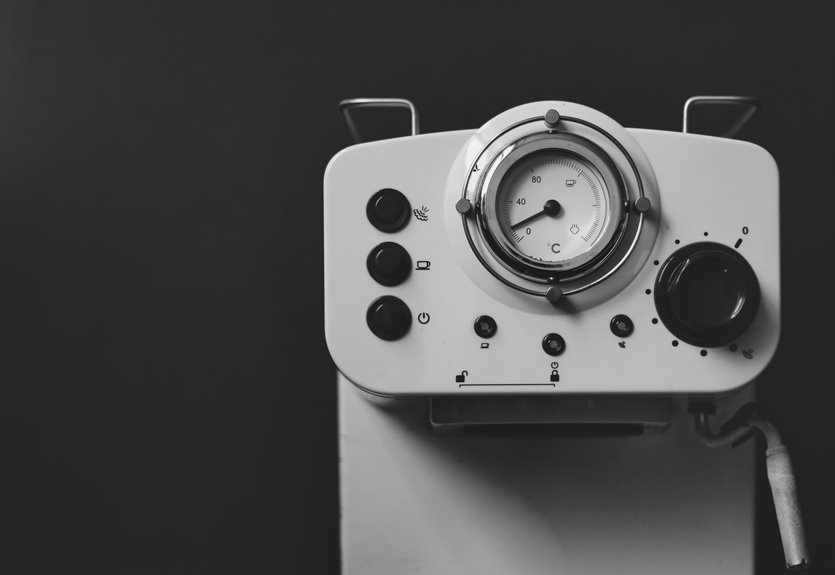
Espresso machines create pressure by balancing pump power, boiler heat, and the compact coffee puck in the portafilter. It’s not just about brute force; it’s a delicate dance of components working in harmony. When water encounters resistance from the coffee, it transforms into that rich, flavorful shot you crave. A tiny hiccup in any part of the process can change everything, leading to a different taste and texture. Understanding this balance can elevate your espresso game and help you appreciate that perfect brew even more.
What Actually Creates Brew Pressure?
At the heart of espresso pressure, your machine is really pushing water through tightly packed coffee grounds, and that’s where the magic starts. You feel the force because your puck resists, and that resistance shapes every shot you pull.
In brew interaction, grind size, dose, and tamping all work together, so even small changes can shift the pressure you build. Those extraction variables decide how fast water moves and how much flavor it pulls from the coffee.
Whenever you pack the grounds evenly, you give water a fair path, and that helps your espresso taste balanced and full. In case the coffee is too loose or too dense, pressure won’t behave the way you want.
How Pumps and Steam Create Pressure
Once you understand how the coffee puck resists water, the next piece is the machine itself, because that’s what gives the water the push it needs. You’re not alone when the parts feel mysterious at the outset, but they work together in a pretty friendly way.
Different pump types, like vibratory and rotary, move water with steady force. Then steam generation helps in some machines by building heat and pressure in a sealed path.
- The pump sends water forward.
- The boiler or heater warms it.
- Steam adds force in certain designs.
- Your puck turns that force into brew pressure.
How an Espresso Machine Pump Works
A pump is the small engine that gives your espresso machine its steady push, and it does that through moving water in a controlled, repeatable way. You can consider it as the part that helps you belong to the group of people who get rich espresso at home.
Most pump types in home machines use a vibration or rotary design. Each one draws water in, then pushes it toward the brew path with strong force. You don’t need to guess what’s happening, because pressure measurement tells you how hard the pump is working.
Whenever the reading stays steady, you can trust your shot to taste balanced. In case it swings too much, your machine might need attention, but the pump itself keeps doing the quiet, steady job you count on.
How Boiler Heat and Pressure Work Together
Upon the boiler heating water, it doesn’t just make things hot; it changes how pressure moves through your espresso machine. You’re part of that steady rhythm, where heat and pressure keep each shot on track.
As water warms, it expands, and the boiler holds that energy so your brew system can stay ready. Good boiler efficiency helps the machine waste less heat, so you get faster recovery and steadier performance.
- Warm water builds usable pressure
- Heat supports pressure balance
- Stable temperature protects flavor
- Even boiler output keeps your shots consistent
When you understand this teamwork, the machine feels less mysterious and more like a reliable kitchen friend.
The boiler isn’t fighting pressure; it’s shaping it with care, so you can pull espresso with confidence.
How Valves Control Pressure
You can consider valves as the machine’s traffic controllers, guiding pressure so it stays steady and safe.
The pressure valve opens or closes to release extra force as circumstances get too high, which helps protect the espresso machine and your shot.
The steam valve then lets you adjust steam flow with control, so you get the power you need without losing balance in the system.
Pressure Valve Function
Upon the brew switch turning on, the pressure valve helps keep the espresso machine from getting too wild. You can consider it as a calm guide that keeps water moving at the right force.
With steady pressure regulation, your shot stays balanced, so the coffee grounds don’t get slammed too hard. That means you get a smoother taste and a more welcoming brew.
- It opens once pressure rises too high.
- It closes once the system returns to normal.
- It protects the parts you rely on.
- It supports valve maintenance by reducing stress.
As you care for the valve, you help the whole machine stay friendly and reliable. A clean valve can respond faster, which gives you confidence every time you make espresso.
Steam Valve Regulation
As steam starts building, the steam valve steps in to keep that force under control, and that matters more than it sounds. You can consider it as your machine’s calm gatekeeper.
Whenever steam pressure rises too fast, the valve opens just enough to release extra force, so your wand stays steady and safe. Different valve types work in slightly different ways, but they all help you maintain control without fighting the machine.
In case you’ve ever felt a sudden hiss and then a smoother flow, that’s the valve doing its job. It protects parts from stress, helps froth milk more evenly, and gives you a more relaxed brewing routine.
With good regulation, you and your espresso setup work together instead of against each other, and that feels pretty great.
How Pressure Profiling Changes the Shot
Whenever you change the pressure profile, you change how the pressure curve rises, holds, and falls during the shot.
That shape can shift the flavor in your cup, making it taste brighter, sweeter, or heavier depending on how the water pushes through the coffee.
Pressure Curve Effects
Because pressure does more than push water through coffee, the shape of the pressure curve can change the whole feel of your shot.
At the time you watch pressure changes, you notice how a gentle ramp, a steady hold, or a quick drop each shifts extraction variables in real time. You’re not just dialing a machine; you’re guiding a team effort between water, puck, and time.
- A soft start can help the puck settle.
- A flatter middle can keep flow calm.
- A sharp rise can stress the puck.
- A gradual finish can smooth the pull.
That’s why pressure profiling feels personal. You get more control, and your espresso can match the style your crew loves.
Shot Flavor Shifts
Pressure profiling doesn’t just change the numbers on the gauge; it alters how your espresso tastes in the cup. Whenever you raise pressure slowly, you can coax sweeter flavors forward and soften sharp edges, so your shot taste feels smoother and more inviting.
Should you push hard too soon, you could extract bitter compounds faster, and the flavor balance can feel off, like the whole team missed a step.
You can use that shift to match the coffee you adore. A gentle ramp often highlights fruit and caramel, while a firmer profile can add body and punch.
As you learn each shot, you start to trust your own palate. That’s the real win: you’re not guessing alone. You’re shaping a cup that feels like it belongs to you.
Why Pressure Matters for Crema and Extraction
As hot water meets finely packed coffee, the right amount of force helps pull out the rich oils, sugars, and acids that give espresso its bold taste and thick crema. You can regard pressure as the quiet helper behind every balanced shot.
With the right push, you get crema importance and extraction precision working together, so your espresso feels smooth, lively, and full of character.
- It lifts golden crema that traps aroma.
- It helps water reach each coffee particle evenly.
- It brings out sweet flavors without dull bitterness.
- It gives you a shot that feels welcoming and complete.
When pressure stays steady, you belong to the kind of brewing that tastes clear and confident.
That’s why your cup can feel both comforting and exciting.
Common Espresso Pressure Problems and Fixes
Even a great espresso setup can act a little moody, and that’s where pressure problems show up.
Should your shot runs too fast or crawls, start with grinding consistency and tamping technique. A grind that’s too coarse lets water rush through, while one that’s too fine can choke the puck. Keep your tamp level and firm, so pressure spreads evenly.
Then check maintenance tips like cleaning the group head, basket, and gasket, because old oils can block flow.
Next, look at water quality and temperature control, since hard water and unstable heat can change how pressure feels in the cup.
Should the machine still acts off, try machine calibration or ask about equipment upgrades. Small fixes often bring your espresso back into the friendly zone.
How to Tell If Pressure Is Building
Watch the shot closely, because the initial signs of pressure are often easy to spot whenever you know what to look for. You’ll feel calmer once you notice the pattern.
Check these pressure indicators:
- The pump sound gets steadier
- Gauge readings climb instead of bouncing
- Shot timing starts to hold in range
- The stream thickens and stays even
Whenever these cues line up, your brew consistency usually improves, and you can trust the machine more.
Should the pressure stall, pause and check machine maintenance basics, like water flow and seals.
With practice, your operator experience grows fast, and you’ll spot changes before they spoil the cup. That small skill helps you stay part of the espresso crowd, pulling shots with confidence and a little satisfaction.
Frequently Asked Questions
How Does Grind Size Affect Espresso Pressure?
Finer grind raises pressure by choking flow. Coarser grind lowers it. You have joined the espresso crowd only as grind consistency nails extraction time. You will taste balanced shots instead of tragic caffeine weather.
Does Water Temperature Change Pump Pressure?
Yes, you will usually see little direct pump pressure change. However, warmer water lowers water viscosity and can improve flow. You will experience better temperature stability and your shots will feel more consistent, allowing you to be part of the smooth shot club.
Can Pre-Infusion Improve Flavor Without Extra Pressure?
Yes, you can improve flavor without extra pressure. During pre-infusion, you wet the coffee evenly, reduce channeling, and enhance flavor extraction. You will taste smoother sweetness and feel more confident pulling shots with the group.
Why Does a Pressure Gauge Sometimes Read Incorrectly?
Your pressure gauge can read incorrectly whenever gauge calibration drifts or pressure fluctuations confuse the needle. You are not alone. You can check the system and a technician can recalibrate it so you feel confident again.
Do Different Bean Roasts Need Different Pressure Settings?
Yes, you will often adjust pressure a bit. Darker roasts usually need less while lighter roasts might need more. Your bean density and roast profile guide you so you can join the crowd dialing in confidently.