
A coffee refractometer helps you measure brew strength with real numbers, not guesses. It shows how much dissolved coffee is in the cup.
That makes dialing in recipes much easier. The best pick depends on your brew style, range needs, and budget.
| Aichose 0-80% Brix Refractometer with Temperature Compensation |  | Budget-Friendly Pick | Measurement Range: 0–80% Brix | Temperature Compensation: ATC | Display Type: Analog scale | VIEW LATEST PRICE | Read Our Analysis |
| Milwaukee 0 to 85% Brix Digitial Refractometer – MA871 |  | Professional Grade | Measurement Range: 0–85% Brix | Temperature Compensation: ATC | Display Type: Digital display | VIEW LATEST PRICE | Read Our Analysis |
| Milwaukee Digital Refractometer with Carrying Case (MA871BOX) |  | Best With Case | Measurement Range: 0–85% Brix | Temperature Compensation: ATC | Display Type: Digital display | VIEW LATEST PRICE | Read Our Analysis |
| 0-10% Brix Refractometer with ATC and LED Light |  | Best For Small Batches | Measurement Range: 0–10% Brix | Temperature Compensation: ATC | Display Type: Analog scale | VIEW LATEST PRICE | Read Our Analysis |
| 3-in-1 Digital Refractometer with ATC for Brewing | 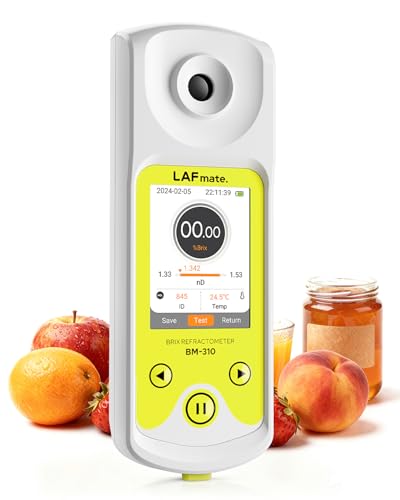 | Best For Brewing | Measurement Range: 0–95% Brix | Temperature Compensation: ATC | Display Type: TFT screen | VIEW LATEST PRICE | Read Our Analysis |
| Digital Sugar Brix Refractometer with Temperature Compensation |  | Best Basic Digital | Measurement Range: 0–35% Brix | Temperature Compensation: ATC | Display Type: LCD backlit screen | VIEW LATEST PRICE | Read Our Analysis |
| Digital Brix Refractometer with Automatic Temperature Compensation |  | Best Precision Pick | Measurement Range: 0–55% Brix | Temperature Compensation: ATC | Display Type: Digital display | VIEW LATEST PRICE | Read Our Analysis |
More Details on Our Top Picks
Aichose 0-80% Brix Refractometer with Temperature Compensation
Should you want a simple, portable refractometer that’s easy to use, the Aichose 0–80% Brix Meter is a solid fit. You can check sugar levels in fruit, honey, maple syrup, and other sweet drinks with its wide 0–80% Brix range. Automatic temperature compensation helps you get steadier readings without extra guessing. Since it doesn’t need a battery, you can carry and use it anywhere. The kit includes a hard case, cloth, screwdriver, manual, and pipettes. At 8.8 ounces, it’s lightweight, and its 973 reviews suggest plenty of users trust it.
- Measurement Range:0–80% Brix
- Temperature Compensation:ATC
- Display Type:Analog scale
- Portability:Handheld
- Power Source:No battery
- Includes Case:Plastic case
- Additional Feature:0-80% Brix range
- Additional Feature:No battery required
- Additional Feature:Includes pipettes
Milwaukee 0 to 85% Brix Digitial Refractometer – MA871
The Milwaukee MA871 digital refractometer is a strong fit should you want a fast, portable way to measure coffee-related sugar content with lab-level consistency. You can read results from 0 to 85% Brix with ±0.2% accuracy, making it useful for syrup checks, brew comparisons, and lab-style testing. Two buttons keep operation simple: calibrate with distilled or deionized water, then measure in 1.5 seconds. Automatic temperature compensation follows ICUMSA standards, and the sealed flint glass prism and stainless steel well wipe clean easily between samples. Its durable design works well in both field and lab settings.
- Measurement Range:0–85% Brix
- Temperature Compensation:ATC
- Display Type:Digital display
- Portability:Portable
- Power Source:Battery-powered
- Includes Case:Carrying case
- Additional Feature:±0.2% accuracy
- Additional Feature:1.5-second response
- Additional Feature:ICUMSA standard compensation
Milwaukee Digital Refractometer with Carrying Case (MA871BOX)
Milwaukee’s MA871 digital refractometer is a strong pick should you want quick, straightforward brew-strength testing without extra fuss. You get a 0 to 85% Brix range, ±0.2% Brix accuracy, and results in about 1.5 seconds, so you can check brew strength fast. It uses automatic temperature compensation per ICUMSA methods, and its two-button setup keeps calibration and measuring simple. You calibrate with distilled or deionized water, then read the display. A sealed flint glass prism, stainless sample well, wipe-clean care, and carrying case make it durable and easy to bring anywhere.
- Measurement Range:0–85% Brix
- Temperature Compensation:ATC
- Display Type:Digital display
- Portability:Portable
- Power Source:Battery-powered
- Includes Case:Carrying case
- Additional Feature:±0.2% accuracy
- Additional Feature:1.5-second response
- Additional Feature:Stainless steel sample well
0-10% Brix Refractometer with ATC and LED Light
With its 0–10% Brix range, ATC, and included LED light, the TEKCOPLUS RETK-72 is a smart pick should you need a compact refractometer for low-sugar liquid testing. You can check maple sap, tea, soups, and other water-soluble samples with 0.1% resolution and 0.1% accuracy. Its handheld body blends rubber and aluminum, so it feels sturdy yet easy to carry. The USB LED helps you read samples in dim conditions, and ATC keeps results stable whenever temperatures shift. You also get pipettes, a screwdriver, a cloth, and a protective case.
- Measurement Range:0–10% Brix
- Temperature Compensation:ATC
- Display Type:Analog scale
- Portability:Handheld
- Power Source:USB LED light
- Includes Case:Protective case
- Additional Feature:0.1% division
- Additional Feature:USB LED light
- Additional Feature:Rubber-aluminum build
3-in-1 Digital Refractometer with ATC for Brewing
A 3-in-1 digital refractometer with ATC suits coffee brewers who want fast, reliable measurements without a steep learning curve. You can read Brix from 0–95% with ±0.2% precision and 0.05% resolution, while the built-in ATC keeps results stable from 5°C–40°C. The TFT screen and backlight make readings easy, and you can switch units, view sugar charts, and store 100 results. It calibrates with distilled water, charges via Type-C, and lasts up to 12 hours. Its IP65 body handles splashes, and the included case helps you brew anywhere.
- Measurement Range:0–95% Brix
- Temperature Compensation:ATC
- Display Type:TFT screen
- Portability:Portable
- Power Source:Rechargeable battery
- Includes Case:Carrying case
- Additional Feature:Measures refractive index
- Additional Feature:Stores 100 readings
- Additional Feature:IP65 waterproof rating
Digital Sugar Brix Refractometer with Temperature Compensation
The Digital Sugar Brix Refractometer Q6 is a strong pick should you want fast, accurate coffee readings with minimal hassle. You can measure Brix from 0–35% with ±0.2% precision and 0.1% resolution, then see results in under 5 seconds. Its automatic temperature compensation helps you stay accurate from 10–40°C, which matters whenever your coffee isn’t perfectly cooled. You’ll also appreciate the rugged, dust- and drop-resistant build, plus IP65 water resistance for easy cleanup. The backlit LCD makes readings simple. It includes AAA batteries, a manual, and support should you require help.
- Measurement Range:0–35% Brix
- Temperature Compensation:ATC
- Display Type:LCD backlit screen
- Portability:Portable
- Power Source:AAA batteries
- Includes Case:Not specified
- Additional Feature:5-second results
- Additional Feature:Dust-drop resistant
- Additional Feature:Backlit LCD screen
Digital Brix Refractometer with Automatic Temperature Compensation
Digital Brix Refractometer Flagfront suits coffee buyers, home brewers, and small-scale beverage testers who need quick, reliable sweetness readings without fuss. You can measure 0–55% Brix with ±0.1% precision in about 3 seconds, and automatic temperature compensation keeps results steady. Its anti-glare optics help you read cloudy samples outdoors, while the IP58 waterproof body and sealed stainless-steel sample well make cleanup easy. Two-button operation keeps testing simple. You also get three dipping tubes, a cleaning cloth, a manual, 1-year warranty, lifetime support, and 24-hour service.
- Measurement Range:0–55% Brix
- Temperature Compensation:ATC
- Display Type:Digital display
- Portability:Portable
- Power Source:12V battery
- Includes Case:Not specified
- Additional Feature:±0.1% precision
- Additional Feature:3-second measurement
- Additional Feature:Anti-glare design
Factors to Consider When Choosing a Refractometer for Coffee
As soon as you choose a coffee refractometer, start with the Brix range and accuracy level so it matches the drinks you test and gives reliable readings. You’ll also want solid temperature compensation and fast response time, since both help you get consistent results without waiting. Should you move between brew stations or cupping sessions, portable features can make the tool much easier to use.
Brix Range
For coffee, you’ll want a Brix range that matches what you actually measure: brewed coffee usually sits well below 5%, while concentrated extracts, espresso concentrates, and cold brew concentrates can climb much higher. Choose a refractometer that starts near 0% and reaches at least 10% Brix so you can read normal brews and stronger drinks without dilution. In the event you test espresso concentrates, cold brew concentrates, or cupping samples with high soluble solids, look for 20–30% Brix to keep the scale from topping out. Wider ranges like 0–50% add versatility, but they can reduce low-end detail unless the meter offers fine resolution. Should you test espresso concentrates, cold brew concentrates, or cupping samples with high soluble solids, look for 20–30% Brix to keep the scale from topping out. For coffee TDS work, a low-Brix range helps you see the small shifts that matter.
Accuracy Level
Accuracy matters more than a long measurement range because coffee TDS changes are small, so you’ll want a refractometer with at least ±0.1–±0.2% Brix accuracy and, ideally, 0.01% resolution to catch subtle shifts in grind, dose, or brew time. That level lets you spot real extraction changes instead of noise. Check that the device stays precise in the coffee-relevant 0.5–2.5% TDS band, since that’s where your samples live. You should also compare repeatability ratings: should the same sample not give the same reading, you can’t trust your results. Look for stable calibration and a simple calibration routine so you can keep the instrument honest over time. Consistent performance matters more than a huge upper limit for everyday brewing decisions and recipe tweaks.
Temperature Compensation
Temperature compensation matters because coffee samples don’t stay at one temperature, and refractive readings can drift as they warm or cool. You should choose a refractometer with automatic temperature compensation (ATC) so it can correct Brix or refractive index to a standard reference, usually 20°C or 25°C. Without it, even a 1°C shift can change soluble solids about 0.1–0.3%, which can skew your brewing or cupping results. Check that the ATC reference matches your lab standard; assuming it doesn’t, use a documented correction factor. Also confirm the ATC range covers the temperatures you test, such as room-temperature samples and hot brews, so your readings stay reliable across coffee’s normal temperature spread.
Response Speed
While you’re brewing coffee, a refractometer should respond fast enough to keep up with rapid testing, so aim for a unit that settles in under about 5 seconds. That pace lets you check multiple samples during brew development without losing momentum. Should you can get 1–3 second readings, you’ll wait less and capture brief concentration shifts in hot or cooling brews. Look for designs with low thermal mass in the sample well and responsive electronics, since both affect how quickly the reading stabilizes. Whenever you profile extraction over time, consistent short response times improve comparison between samples. Provided the meter uses automatic temperature compensation, give it a few extra seconds to finish processing before you record the value.
Portability Features
Once you’ve confirmed a refractometer can settle quickly, portability becomes the next practical filter. You’ll want a lightweight unit, ideally under 12 ounces, so you can hold it comfortably during cupping or take it into the field without fatigue. Choose a compact design with a sealed, durable body and IP-rated water and dust resistance, since coffee spaces can be humid and messy. A carrying case or protective cover helps you move it safely between the roaster, lab, and origin work. Check the power setup too: long battery life, replaceable batteries, or battery-free operation keeps you measuring through long sessions and travel. Faster warm-up and response times still matter, because portable gear should keep your workflow moving, not slow it down.
Ease Of Cleaning
At the point you’re choosing a refractometer for coffee, ease of cleaning should be a top priority, because coffee oils and residue can build up fast and affect accuracy. You’ll want a stainless-steel or sealed prism/sample well with smooth surfaces, since they let you wipe or rinse away grime quickly. Pick a model with an IP65+ rating or similar water-resistant, dustproof construction so you can clean it without worrying about electronics. Simple one-button or two-button controls and removable sample wells cut down on disassembly between readings. Fewer crevices, sealed optics, or removable prisms help stop oils from hiding in hard-to-reach spots. Also, check that the unit handles soft cloths, mild detergent, distilled water, or isopropyl alcohol, and follow the maker’s cleaning guidance.
Frequently Asked Questions
Can Refractometers Measure Coffee Roast Level Accurately?
Yes, a refractometer can give an indirect estimate of coffee roast level, but it does not measure roast degree with precision. For accurate and repeatable roast assessment, use a color meter or dedicated roast profiling equipment.
Do I Need to Calibrate a Coffee Refractometer Daily?
Not usually. Calibrate it when readings drift, after a big temperature shift, or if you drop it. Check it with distilled water often so your coffee measurements stay accurate.
What Sample Temperature Is Ideal for Coffee Testing?
Aim for a sample temperature near 20°C/68°F. At this point, the coffee moves easily and readings stay clear. Let it rest briefly first, since excess heat can distort the result and a stable sample shows the brew’s actual strength.
Can I Use One Refractometer for Espresso and Cold Brew?
Yes, one refractometer can measure both espresso and cold brew as long as it is calibrated correctly and you prepare each sample the same way every time. Just keep in mind that espresso and cold brew have different strength levels and temperatures, so your readings need to be interpreted with those differences in mind.
How Often Should I Replace Refractometer Calibration Fluid?
Replace refractometer calibration fluid when its expiration date has passed, if it shows contamination, or if its reading shifts. After opening, plan on using a new bottle within 6 to 12 months if you keep it tightly sealed.