
The best coffee varietals for 2026 are the ones that bring standout flavor, balance, and character.
Ethiopian, Kenyan, and a few other top picks lead the pack.
Each one offers a different mix of acidity, body, and aroma.
That variety makes your morning cup more interesting.




More Details on Our Top Picks
Perfect Samplers Variety Pack Tea Cider Cocoa Coffee Pods
In case you want a simple way to sample more than just coffee, the Perfect Samplers Variety Pack is a smart pick for 2026. You get 20 single-serve pods with artisan coffee, tea, hot chocolate, cappuccino, and cider, so you can test different flavors without buying full boxes. It works with K-Cup style brewers, including Keurig 2.0, and delivers café-style drinks at home or in the office. Each pod gets inspected before packing, helping keep every cup fresh. You’ll appreciate the mix whenever your pantry needs variety.
- Format:K-pods
- Roast:Varied
- Flavor:Assorted
- Count:20 count
- Caffeine:Caffeinated
- Brewing style:Single-serve
- Additional Feature:20-count sampler pack
- Additional Feature:Includes tea and cider
- Additional Feature:Freshness-inspected pods
12 Gourmet Coffees of Christmas Holiday Gift Set
Should you’re shopping for a festive, ready-to-gift option, the 12 Gourmet Coffees of Christmas Holiday Gift Set stands out with its assorted, certified organic blends in a medium roast that’s made for adult coffee lovers who enjoy variety. You’ll get ground coffee in a convenient bag, so brewing feels simple and familiar. Its caffeinated profile gives you a dependable lift, while the assorted flavor selection keeps each cup interesting. At 1.08 pounds, it’s easy to wrap, store, and share. In case you want a holiday gift that feels thoughtful and practical, this set delivers seasonal charm without sacrificing everyday drinkability.
- Format:Ground
- Roast:Medium roast
- Flavor:Assorted
- Count:12 coffees
- Caffeine:Caffeinated
- Brewing style:Brewed
- Additional Feature:Certified organic coffee
- Additional Feature:Ground coffee format
- Additional Feature:Adult gift set
Nescafe Taster’s Choice Hazelnut Medium Dark Roast Instant Coffee 16 Count
Nescafe Taster’s Choice Hazelnut Medium Dark Roast Instant Coffee is a smart pick should you want a quick, flavorful cup with a warm, toasty hazelnut aroma. You get 16 single-serve sticks that lock in freshness, so each 8-ounce cup tastes vivid and rich. Just pour a packet, add hot water, and stir. The medium dark roast delivers depth, while the hazelnut hint adds a cozy finish. Keep it at home or pack it for travel. Crafted through NESCAFE TASTER’S CHOICE chief coffee crafters, it gives you easy access to dependable taste anywhere, anytime.
- Format:Instant sticks
- Roast:Medium dark roast
- Flavor:Hazelnut
- Count:16 sticks
- Caffeine:Caffeinated
- Brewing style:Hot water
- Additional Feature:Hazelnut aroma profile
- Additional Feature:Instant stick packets
- Additional Feature:8-ounce cup prep
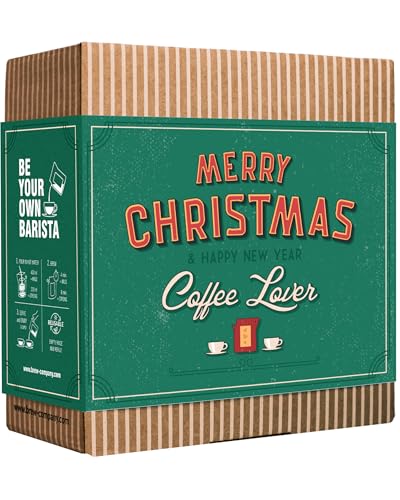
Christmas Coffee Gift Sampler Box for Coffee Lovers
In case you’re shopping for a coffee lover who appreciates variety, convenience, and a touch of holiday flair, this Christmas Coffee Gift Sampler Box is a standout choice. You get five single-estate specialty coffees in a premium, sustainable box, so you don’t need extra wrapping. The selection spans chocolaty Brazilian notations to crisp Ethiopian undertones, giving you mild, medium, and strong options. Each bean’s hand-roasted in Denmark and ethically sourced through organic, fair-trade trade. Individually packed Coffeebrewers make pour-over brewing simple anywhere, from your office to a trail stop.
- Format:Pour-over brewers
- Roast:Varied
- Flavor:Assorted
- Count:5 coffees
- Caffeine:Caffeinated
- Brewing style:Pour-over
- Additional Feature:Single-estate coffee selection
- Additional Feature:Fair-trade sourcing
- Additional Feature:Compact gift box
Lion Coffee Vanilla Macadamia Light Roast Ground Coffee
Lion Coffee Vanilla Macadamia Light Roast Ground Coffee is a great pick provided you want a smooth, Hawaiian-inspired cup with a light roast profile that leans into vanilla bean and macadamia reminders. You get premium Arabica beans, specially selected and roasted to perfection for a fragrant, tropical experience. Lion Coffee roasts in Hawaii and immediately vacuum seals the 10-ounce bag to help lock in freshness and aroma. When you brew it, you’ll taste a warm island-style finish. As Hawaii’s #1 local coffee brand, Lion delivers more Roar in Every Pour.
- Format:Ground
- Roast:Light roast
- Flavor:Vanilla macadamia
- Count:10 oz bag
- Caffeine:Caffeinated
- Brewing style:Brewed
- Additional Feature:Hawaiian-inspired flavor
- Additional Feature:Vacuum-sealed freshness
- Additional Feature:Premium Arabica beans
Victor Allen’s Mocha Variety Pack Coffee Pods
Victor Allen’s Coffee Mocha Variety Pack is a strong pick should you want dessert-style coffee without giving up the convenience of single-serve brewing. You get 32 K-Cup compatible pods with three dessert-inspired options: White Chocolate Mocha, Mocha Chocolate, and Chocolate Caramel. Each cup uses 100% Arabica beans, a medium roast, and caffeine for a balanced, sweet finish. It’s kosher certified, too. Should you enjoy easy mornings and flavored coffee, this pack lets you rotate tastes without extra effort. The case ships compactly, and you can brew it in any Keurig-style machine.
- Format:Coffee pods
- Roast:Medium roast
- Flavor:Mocha variety
- Count:32 pods
- Caffeine:Caffeinated
- Brewing style:Single-serve
- Additional Feature:Three mocha flavors
- Additional Feature:Kosher certified
- Additional Feature:32-pod case
Double Donut Assorted Coffee Variety Pack 48 Count
Double Donut’s Assorted Coffee Variety Pack, 48 Count is a smart pick should you want one sampler that covers a lot of ground, with medium, dark, and flavored coffees in recyclable single-serve cups. You get 100% Arabica beans across bold espresso-style, dark Italian and French-style roasts, plus vanilla, caramel, hazelnut, chocolate, and blueberry options. It works with Keurig-compatible brewers, including Keurig 2.0, though it isn’t affiliated with Keurig. Should you like warm, donut shop-inspired coffee and want to test both unflavored and flavored blends, this pack makes it easy.
- Format:Single-serve cups
- Roast:Varied
- Flavor:Assorted
- Count:48 count
- Caffeine:Caffeinated
- Brewing style:Single-serve
- Additional Feature:Recyclable single-serve cups
- Additional Feature:Espresso-style roasts
- Additional Feature:Traditional donut shop taste
Factors to Consider When Choosing a Coffee Varietal
As you choose a coffee varietal, start with bean origin and roast level, since both shape the cup’s character right away. You’ll also want to match the flavor profile and brewing format to how you like to drink coffee. Freshness and quality matter too, because they can make a good varietal taste even better.
Bean Origin
Bean origin plays a big role in how a coffee varietal tastes, so it’s one of the initial things you should check. In case you choose beans from higher altitudes, you’ll often get brighter acidity and floral or fruity notes; lower-altitude coffees usually taste heavier and more earthy. You should also look at soil, rainfall, temperature, and sun exposure, because they shape chemistry and can bring out chocolate, citrus, berry, or herbal tones. Genetic variety and local farming methods, including processing and harvest timing, can shift the cup too. Single-origin coffees show one region’s terroir clearly, while blends balance acidity, body, and complexity. Bear in mind labels for country, region, farm, and altitude to predict flavor and consistency.
Roast Level
Roast level is one of the biggest flavor drivers to keep in mind, since light roasts keep more of a coffee’s origin character and brightness, while darker roasts bring out more body, bitterness, and smoky or caramelized notes. You’ll also notice darker beans are more porous, so they extract faster and often need shorter brew times or a coarser grind to avoid over-extraction. Light roasts work well for pour-over, medium roasts suit drip machines, and dark roasts fit espresso or French press whenever you want fuller body. Caffeine changes little per weight, though dark roasts might give slightly less per scoop because they’re less dense. As roasting intensifies, Maillard reactions and caramelization deepen color and add roasted sugars. Choose the roast that matches your brewer and preferred intensity.
Flavor Profile
Flavor profile is where varietals really start to separate, because acidity, body, sweetness, and finish can change the whole cup. You’ll notice acidity initially: some coffees taste bright, citric, and lively, while others feel softer and lower in acid. Body shapes the mouthfeel, so you might prefer something light and crisp or heavier and more plush. Flavor notes also matter, since varietals can lean toward chocolate, caramel, berry, floral, or nutty tones depending on genetics and growing conditions. Sweetness and balance tell you how harmonious the cup feels, and naturally processed or high-altitude arabicas often taste richer and more layered. Finally, take note of the finish. A clean, lingering aftertaste usually signals a better cup than a harsh, bitter one.
Brewing Format
Once you’ve narrowed a varietal per flavor profile, the next question is how you’ll brew it. Your brewing format shapes equipment, grind, and even how the cup tastes. Should you choose whole bean, you’ll usually preserve more aroma than with preground coffee, while pods trade some control for convenience and consistency. Match grind size to the method: coarse for French press, medium-coarse for pour-over, medium for drip, fine for espresso, and very fine for Turkish. Get that wrong, and you’ll under- or over-extract. Also consider contact time: espresso finishes in about 20–30 seconds, pour-over in 2–4 minutes, and French press in about 4 minutes. Finally, use the right coffee-to-water ratio for each format.
Freshness And Quality
Fresh coffee can make or break a varietal, so don’t stop at origin and tasting annotations. Check the roast date first, not the package date, because whole beans usually taste best within 2–4 weeks of roasting. Choose whole beans whenever you can; they hold onto aromatics and oils far better than pre-ground coffee, which starts losing character within minutes of grinding. Look for one-way valve bags, since they let carbon dioxide escape without inviting air in. Once you open the bag, store the coffee in an opaque, airtight container at room temperature, away from heat, light, moisture, and strong odors. Should the aroma seem flat, the espresso lacks crema, or the cup tastes muted, you’re probably coping with stale coffee and reduced quality.
Frequently Asked Questions
Which Coffee Varietals Have the Highest Cup Quality in 2026?
You’ll usually get the highest cup quality from Gesha, Bourbon, Typica, SL28, and Pacamara, especially when they are grown at high elevation and processed with care. Focus on origin, freshness, and roast, since varietal alone does not guarantee exceptional flavor.
Are Hybrid Coffee Varietals More Climate-Resilient Than Traditional Ones?
Yes, many newer hybrids handle heat, drought, and disease better than many traditional varieties. Still, flavor, yield, and local adaptation can differ, so not every hybrid performs better in every place.
Which Varietals Work Best for Espresso Versus Filter Brewing?
For espresso, try dense, sweet varietals such as Bourbon, Caturra, and Gesha. For filter brewing, choose bright, complex varieties like SL28, Ethiopian heirlooms, and Typica. Matching roast style and extraction method helps bring out the best in each coffee.
How Do Rare Coffee Varietals Differ in Flavor From Common Ones?
Rare varietals can burst with jasmine, tropical fruit, and wine like acidity, while common ones usually lean toward cleaner, nuttier, steadier flavors. Rare coffees often taste more vivid, layered, and unexpectedly distinctive.
Which Coffee Varietals Are Expected to Be Most Sustainable in 2026?
You are likely to see disease resistant, heat tolerant varietals such as Castillo, Catimor, and Centroamericano leading sustainability in 2026 because they require fewer inputs, handle climate stress better, and produce more reliably on marginal land.