
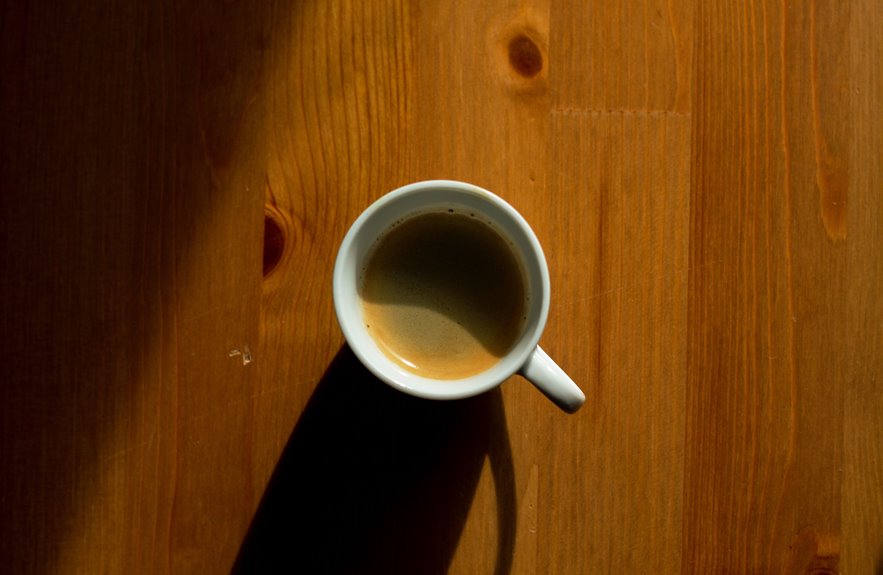
Espresso delivers a concentrated, intense shot brewed quickly under high pressure. Drip coffee produces a milder, larger cup brewed more slowly through gravity and paper or mesh filters. Espresso uses very fine grounds; drip uses medium-coarse grounds. Espresso-based drinks often include steamed milk and smaller servings; drip coffee is typically served black or with milk in bigger mugs. Knowing grind, pressure, extraction time, and serving size explains why espresso wakes you up fast while drip coffee invites a more relaxed sip.
What’s the Difference Between Espresso and Coffee?
Although espresso and coffee come from the same bean, they’re not quite the same drink. You’ll notice the difference in taste, strength, and feel right away. Espresso usually tastes bolder and richer, while coffee feels lighter and more spread out. That’s why some people reach for espresso whenever they want a quick, intense moment, and others choose coffee for a slower sip they can settle into.
These drinks also carry different origin myths and cultural rituals, which shape how you experience them at home or with friends. So, whenever you compare them, you’re really comparing two paths of the same tradition. One gives you a sharp little burst, and the other offers a longer, gentler pause that can fit your day.
How Espresso and Coffee Are Brewed
Whenever you brew espresso, hot water moves through finely ground coffee with strong pressure, which creates a rich, concentrated shot.
Whenever you make regular coffee, water usually drips through coarser grounds more slowly, so the result tastes lighter and less intense. That difference in pressure and drip style also changes extraction time, and it’s a big reason the two drinks feel so different in your cup.
Brewing Methods
Espresso and regular coffee start with the same beans, but the brewing process changes everything. You feel that difference in the cup, because each method asks for a different kind of care. Espresso needs a fine grind, a steady tamping technique, and close attention to water temperature, so you can build a bold shot with a rich finish. Regular coffee uses a coarser grind and a slower brew, which gives you a smoother, lighter drink that’s easy to enjoy any time.
- Espresso packs flavor fast
- Coffee brews at a gentler pace
- Grind size changes extraction
- Water temperature shapes taste
- Your routine can fit your mood
When you know these basics, you can choose the style that feels right for you and your daily rhythm.
Pressure Vs Drip
Because the brewing method shapes the whole cup, pressure and drip create two very different coffee experiences. Whenever you choose espresso, hot water moves through fine grounds under strong pressure, so you get a dense shot with bold flavor and a creamy top. You can feel the speed and force in every sip, and that intensity often makes you feel part of the serious coffee crowd.
With drip coffee, water flows more gently through drip channels and over coarser grounds, so the brew tastes lighter and smoother. You still get comfort, just in a calmer way. Provided you like a strong, fast cup, pressure profiles matter. Should you enjoy a slower, easygoing mug, drip gives you that familiar, friendly routine with less bite.
Extraction Time Differences
Although both drinks start with ground coffee and hot water, the clock changes everything.
You’ll notice espresso races through rapid extraction, usually in about 25 to 30 seconds, so it tastes bold, dense, and lively. Coffee, especially drip, gives the grounds more dwell time, often several minutes, which lets flavors unfold slowly and feel smoother.
- Espresso keeps water moving fast.
- Coffee lets water linger longer.
- Short time amplifies intensity.
- Longer time softens bitterness.
- Your cup reflects the brew style.
When you know this, you can pick the feel you want.
In case you’re craving a quick jolt with a rich punch, espresso fits. Should you want a calmer sip that feels easy to share, coffee’s longer brew has your back.
Why Grind Size and Pressure Matter
Grind size changes how fast water pulls flavor from your coffee, so a finer grind can make espresso taste bold while a coarser grind suits drip coffee better.
Pressure matters too because espresso machines force water through tightly packed grounds, which changes extraction in a way your regular brewer doesn’t.
Whenever you compare brew methods, you can see how these two factors work together to shape taste, strength, and balance.
Grind Fineness Basics
Whenever you change the grind, you change how coffee behaves under pressure, and that’s a big deal for espresso. You want a fine, even grind so water moves through the puck in a steady way, and you feel more in control while the shot starts to look right.
- Grind uniformity helps each piece extract at a similar pace.
- Particle distribution affects how tightly coffee packs together.
- Finer grounds create more surface area for quick brewing.
- Uneven grinds can make some flavors race ahead.
- Small changes in fineness can shift taste fast.
Once you aim for consistency, you join a crowd of home brewers who trust the process. That’s the comfort: your cup starts to feel less random and more yours.
Pressure’s Extraction Role
Now that the grind is set, pressure takes over and starts shaping the shot in real time. You feel this whenever hot water pushes through the coffee bed, pulling flavor, oils, and body fast.
Should the pressure stay steady, you get a balanced cup with a rich finish. Should it jump too hard, you might taste sharpness or uneven strength. That’s why pressure profiling matters. It allows you to guide the flow so the shot feels smooth, not rushed. You also protect crema stability, which helps the drink look and taste more complete.
Once grind size and pressure match, you create a brew that feels confident and welcoming, like it was made for you. In the end, the right pressure helps your cup come together.
Brew Method Differences
Brew method makes a big difference because it decides how water meets the coffee, and that changes everything from texture to strength. You’ll notice espresso feels bold because hot water pushes through fine grounds fast, while drip coffee lets water move slowly through coarser grounds.
That shift changes flavor, body, and even your morning mood.
- Fine grind slows flow and enhances intensity.
- Coarse grind helps water pass more evenly.
- Pressure profiling shapes espresso’s taste.
- Higher pressure can build richer crema science.
- Lower pressure often brings softer balance.
When you choose your method, you’re joining a coffee style that fits your taste. Should you like punchy shots, espresso gives you that snap. Should you want a gentler cup, brewed coffee feels calm and familiar.
How Espresso Tastes Different
Espresso usually tastes bolder and more intense than regular coffee, and that initial sip can catch you off guard in a good way.
You’ll notice a tighter, richer flavor that feels focused, not stretched out. Because espresso is brewed under pressure, it often shows a sharper acid profile that can brighten the cup without making it thin.
You might also spot crema formation on top, and that silky layer adds a warm, roasted note that makes the drink feel welcoming.
As you keep sipping, the flavor can shift quickly from sweet to bitter, which gives espresso its lively edge. Should you enjoy drinks that feel confident and close to the soul, espresso can feel like your kind of crowd.
How Coffee Taste and Texture Differ
- Brewed coffee spreads flavor gently.
- Water pulls out brighter nuances.
- Serving temperatures shape how sweet it feels.
- Finer filters keep the cup smooth.
- Lighter roasts can taste lively and crisp.
How Caffeine Differs in Each Drink
Although both drinks can give you a caffeine lift, they don’t deliver it in quite the same way. Whenever you sip espresso, you usually take in caffeine faster, so you might feel that quick wake-up initially.
With coffee, the rise can feel steadier, which fits better whenever you want a slower start to your day. Your caffeine metabolism also matters, because your body could process it at its own pace.
Genetic variation can make one person feel alert from a small cup while another barely notices. Also, your circadian impact matters too, since caffeine late in the day can nudge sleep off track.
Over time, tolerance buildup can soften the effect, so your usual cup might start to feel more like a friendly routine.
Which Brew Method Is Stronger?
While you ask which brew method is stronger, the answer depends on what you mean via “strong.” Espresso tastes bolder because hot water pushes through finely ground coffee under pressure, which pulls out a dense, concentrated shot in a short span. Still, drip coffee can feel more intense once you sip a larger cup and more total liquid reaches you.
- Espresso gives you a higher brew concentration.
- Drip coffee gives you a milder initial sip.
- Your caffeine perception changes with serving size.
- Flavor intensity can feel like strength.
- Personal preference shapes what you call strong.
What Beans Work Best for Each?
The best beans for espresso and drip coffee aren’t always the same, because each brew brings out different parts of the bean. You’ll usually feel at home with darker, sweeter beans for espresso, while drip coffee often shines with lighter or medium roasts. Single origin beans can show bright fruit, cocoa, or floral notes, and they let you taste one place clearly. Flavored blends can work too, especially should you want a dessert-like cup.
| Brew style | Best roast | What you taste |
|---|---|---|
| Espresso | Medium-dark | Rich, bold |
| Drip coffee | Light-medium | Clean, bright |
| Either | Single origin | Distinct character |
When you choose, trust your taste foremost. Your mug should feel like yours, not like a rulebook.
How Milk Changes Espresso and Coffee
Milk can change both espresso and coffee in big ways, and it often softens the sharp edges that make each brew taste unique.
You’ll notice how it adds body, sweetness, and a gentler finish, so your cup feels more welcoming.
- Milk chemistry affects how proteins bind with bitterness.
- Fat can round out espresso’s bold shot.
- In drip coffee, milk often lightens acidity.
- Foam techniques shape texture and mouthfeel.
- Warm milk can make your drink feel smoother.
When you choose the right milk, you help the drink match your mood and taste.
That small choice can turn a strong cup into something cozy, balanced, and easy to enjoy with friends.
How Espresso and Coffee Compare on Cost
Whenever you compare espresso and regular coffee, you’ll often notice that the cost per cup can look similar initially, but the beans you use per serving can change the math fast.
Espresso usually needs less water but more concentrated brewing gear, while coffee often uses more grounds per mug, so your daily spend depends on how you brew at home.
And provided you’re buying equipment, the price gap can be wide, which makes the upfront cost just as significant as the beans in your cupboard.
Brew Cost Per Cup
Espresso can feel fancy, but the cost per cup often surprises people in a good way. You usually pay less than you imagine because the serving size is small, so each drink stretches your budget. Whenever you brew at home, you also keep energy use low, since the machine heats quickly and serves fast. That helps you enjoy a café-style moment without the sticker shock.
- Small servings can keep each cup affordable.
- Quick heating can reduce energy use.
- Home brewing lets you control daily spending.
- A simple setup can fit busy routines.
- Shared habits make your coffee corner feel welcoming.
Beans Per Serving
Bean count matters just as much as cup size, and that’s where espresso and drip coffee start to part ways in cost. Whenever you make espresso, you usually use a single dose of finely ground beans for one small shot, so each drink feels rich without using much coffee.
With drip coffee, you often spend more beans per mug because the brew is larger, and that can add up fast whenever you refill often. Should you like bean counting, espresso can seem kinder to your wallet per serving, especially whenever you savor one cup at a time.
Coffee still works well for bigger pours, but you’ll notice the beans disappear faster. So you can choose the style that fits your routine and your budget.
Equipment Price Difference
Should you’re choosing between espresso and drip coffee, the price of the machine can feel like a big hurdle right away. Espresso gear usually costs more because it uses pressure, stronger parts, and finer controls. Drip coffee makers stay friendlier to your wallet, so you can join the home-brew crowd without a big leap. Also, espresso setups often need extra tools, which adds up fast.
- Entry-level drip machines cost less
- Espresso machines often start higher
- Grinders can raise your total cost
- machine maintenance might be more involved
- power consumption could be higher with espresso
When Espresso Makes More Sense
Whenever you want fast results and a bold cup, espresso often makes more sense than regular coffee. You can fit it into busy mornings, quick check-ins, or those moments where you want something that feels special without waiting around.
Its small size also works well whenever you’re craving quick shots of energy and a strong flavor that brings you into the coffee crowd right away. In case you enjoy café moments, espresso fits nicely with paired desserts, since its rich taste balances sweet treats with ease.
You also get more control over serving size, so you can sip slowly or make a drink that feels just right. Whenever you desire a drink that feels lively, social, and a little refined, espresso can fit your day well.
When Coffee Is the Better Choice
Coffee is the better choice whenever you want a bigger drink that lasts longer and feels easier to enjoy over time. It fits your morning rituals, keeps pace with busy days, and helps you stay steady in social settings.
- You can sip it slowly without rushing.
- It gives you room for milk, cream, or flavor.
- It feels less intense whenever you want comfort.
- It works well whenever you’re chatting with friends.
- It suits long work sessions and relaxed breaks.
If you like a drink that feels familiar and welcoming, coffee often wins. It gives you space to settle in, connect, and keep going without that quick espresso punch.
Frequently Asked Questions
Can Espresso Be Made Without a Machine?
Yes, you can make espresso like coffee without a machine using a Moka pot or AeroPress puck. You’ll get a rich, bold brew that feels familiar, so you can still belong at the coffee table.
Is Espresso Always Served in Small Cups?
No, you don’t always get espresso in small cups, though demitasse culture and serving etiquette often suggest it. You can enjoy it in larger cups too, and you’ll still fit right in.
Does Decaf Espresso Still Taste Different From Decaf Coffee?
Yes, it usually does. You’ll perceive a richer body, a sharper intensity, and different aroma nuances. Because extraction chemistry changes, the flavor profile shifts too, so you still feel that familiar coffee character, just in a different cup.
Can I Use Espresso Grounds in a Regular Coffee Maker?
Yes, you can use espresso grounds in your regular coffee maker, but the brew may be stronger and possibly over-extracted. Check that the grind size works with your machine’s filter and water flow, and adjust the amount of coffee and brew time to taste so you get the cup you prefer.
How Long Does Freshly Brewed Espresso Stay Hot?
Fresh espresso typically remains hot for about 5 to 10 minutes; after that it cools quickly like a fading ember. How long it stays warm depends on your choice of cup, and serving it with others makes the drinking experience more enjoyable.