
The best rice for 2026 coffee grinder cleaning is plain uncooked white rice.
It’s dry, soft, and gentle on the grinder. Brown rice, cooked rice, and damp grains can leave sticky residue. Use small batches, short pulses, then brush out the dust after about 10 seconds.
| Moongiantgo Electric Coffee and Spice Grinder (110V) |  | Best Compact Grinder | Power: 200W | Voltage: 110V | Capacity: 50–100g | VIEW LATEST PRICE | Read Our Analysis |
| Moongiantgo Electric Coffee and Spice Grinder |  | Easy Everyday Use | Power: 200W | Voltage: 110V | Capacity: 300mL / 50–100g | VIEW LATEST PRICE | Read Our Analysis |
| Moongiantgo Electric Grain Mill Grinder 150g Stainless Steel |  | Best Small Batch | Power: 850W | Voltage: 110V | Capacity: 150g | VIEW LATEST PRICE | Read Our Analysis |
| Moongiantgo Electric Grain Mill Grinder 300g Stainless Steel |  | Best Mid-Size | Power: 1500W | Voltage: 110V | Capacity: 300g | VIEW LATEST PRICE | Read Our Analysis |
| Moongiantgo Grain Mill Grinder (2500g Swing 110V) | 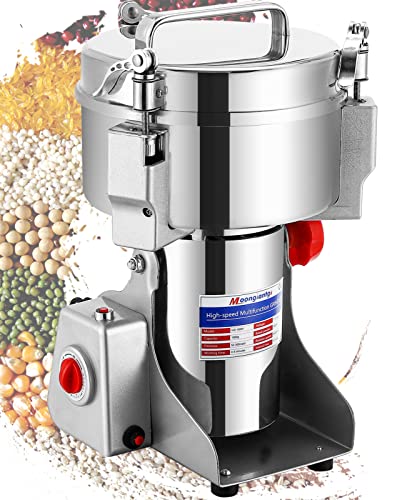 | Heavy-Duty Pick | Power: 3600W | Voltage: 110V | Capacity: 2500g | VIEW LATEST PRICE | Read Our Analysis |
More Details on Our Top Picks
Moongiantgo Electric Coffee and Spice Grinder (110V)
If you want a compact grinder that handles rice cleaning work without taking over your counter, the Moongiantgo Electric Coffee and Spice Grinder (110V) is a smart pick for small, dry batches. You can use it for rice, coffee, seeds, peppers, and spices, but you should skip wet foods and hard shells. The 200W motor, 50g to 100g capacity, and clear lid help you watch the grind. Press, pause, and check the texture. Then brush it clean, rest it, and keep the 110V unit dry.
- Power:200W
- Voltage:110V
- Capacity:50–100g
- Material:Stainless steel/plastic
- Use Type:Dry grinding
- Warranty:Not stated
- Additional Feature:Transparent viewing lid
- Additional Feature:One-hand grip design
- Additional Feature:50g–100g batch size
Moongiantgo Electric Coffee and Spice Grinder
The Moongiantgo Electric Coffee and Spice Grinder is a smart pick for anyone who wants a small, fast, and easy-clean grinder for dry foods like rice, coffee beans, seeds, and Indian spices. You can grind about 50 to 100 grams in roughly 10 seconds with its 200W motor. Its 300 mL cup lets you watch the grind through a clear lid, then stop once you want coarse or fine results. You should keep it dry, brush it clean, and let it rest after heavy use.
- Power:200W
- Voltage:110V
- Capacity:300mL / 50–100g
- Material:Stainless steel/plastic
- Use Type:Dry grinding
- Warranty:1 year
- Additional Feature:10-second fast grinding
- Additional Feature:Includes cleaning brush
- Additional Feature:Includes bean spoon
Moongiantgo Electric Grain Mill Grinder 150g Stainless Steel
Moongiantgo’s Electric Grain Mill Grinder 150g Stainless Steel is a smart pick for anyone who wants fast, fine, and fuss-free rice grinding for coffee grinder cleaning. You get 850W of power, 28,000 R/min speed, and a stainless steel body that feels sturdy. It handles dry rice, grains, spices, and herbs in about a minute. Safety buckles stop the unit whenever opened, and overload protection adds peace of mind. You can press to start, brush it clean, and keep going with confidence. Just avoid wet or oily materials.
- Power:850W
- Voltage:110V
- Capacity:150g
- Material:Stainless steel
- Use Type:Dry grinding
- Warranty:1 year
- Additional Feature:Safety buckles on sides
- Additional Feature:Immediate stop opening
- Additional Feature:3-layer stainless blades
Moongiantgo Electric Grain Mill Grinder 300g Stainless Steel
Built for people who want fast, safe grinding without babying the machine, the Moongiantgo Electric Grain Mill Grinder 300g Stainless Steel stands out with a 1500W copper motor, a 3-layer stainless steel blade system, and a built-in safety buckle that helps stop the grinder the moment the lid opens. You can grind dry rice, coffee beans, spices, and herbs in 30 seconds to 3 minutes. The 0 to 5 minute timer gives you control, while the overload protector helps guard against burn-out. Use only dry materials, brush the jar clean, and keep runs under 3 minutes.
- Power:1500W
- Voltage:110V
- Capacity:300g
- Material:Stainless steel
- Use Type:Dry grinding
- Warranty:1 year
- Additional Feature:0–5 minute timer
- Additional Feature:Immediate stop on open
- Additional Feature:Overload protector included
Moongiantgo Grain Mill Grinder (2500g Swing 110V)
Should you need a rice-style dry grinder that can handle bigger cleaning batches without feeling fussy, the Moongiantgo Grain Mill Grinder (2500g Swing, 110V) stands out because it gives you strong, fast grinding with a roomy 5.5 lb capacity. You can use it for rice, coffee beans, spices, and other dry items, but skip anything wet or oily. The swing design helps you pour more easily and grind more evenly. Its lid safety buckle, auto-stop, and overload protector add peace of mind. Just use short runs, let it rest, and keep the jar dry.
- Power:3600W
- Voltage:110V
- Capacity:2500g
- Material:Stainless steel
- Use Type:Dry grinding
- Warranty:1 year
- Additional Feature:Swing grind design
- Additional Feature:Sieve included
- Additional Feature:36000R/min speed
Factors to Consider When Choosing Rice for Cleaning Coffee Grinder
If you choose rice for cleaning your coffee grinder, start with grain hardness because it needs enough texture to lift residue without stressing the blades or burrs. You should also check the rice type, moisture level, grinder capacity, and your cleaning method, since each one changes how well the rice moves through the machine and picks up old grounds. If you match those factors well, you’ll get a cleaner grinder with less hassle and fewer surprise messes.
Grain Hardness
Grain hardness plays a big role in how safely rice cleans your coffee grinder, because harder grains put more stress on the blades and motor. You’ll get better results whenever you choose dry rice with steady hardness, since moisture makes grains sticky and harder to process. Should you use very hard, dense rice, expect slower grinding and less even particles, especially in a small grinder with a modest motor. Softer or more brittle rice usually breaks down faster, so it asks less of your machine. Whenever your grinder handles only 50 to 100 grams, keep the rice below the two-thirds fill mark. That helps reduce strain, heat, and that unhappy buzzing sound your grinder gives whenever it’s working too hard.
Rice Type
Rice type matters just as much as hardness, because the wrong kind can leave more mess behind than it removes. You should reach for plain white rice first, since it’s low in oil and less likely to coat your grinder with greasy film. Then choose uncooked kernels only, because cooked rice can clump and gum up the burrs fast. Also, pick small, uniform grains so they move through the grinder evenly and help lift coffee oils without stressing the motor. Skip flavored, seasoned, or parboiled rice when you can, since extra coatings can work against you. When you use the right rice type, the whole cleaning job feels calmer, smoother, and a lot less like a kitchen prank gone wrong.
Moisture Level
Just as essential as the rice type is how dry it is, because moisture can turn a simple cleaning step into a sticky mess. You should pick rice that feels cool, crisp, and fully dry. When grains carry even a little water, they can clump together, slow the grind, and leave paste-like bits behind. Freshly cooked, steamed, or rinsed rice is a bad choice, since wet grains may cling to blades and burrs instead of scrubbing them clean. Dry rice works better because it breaks into a fine powder and helps lift lingering oils and odors. To keep it ready, store your rice in a sealed container so it won’t drink in humidity from the air. That small habit keeps cleaning easier and less frustrating.
Grinder Capacity
A good cleaning batch starts with the right amount of rice, because your grinder needs room to work. You should match the rice load to your grinder’s cup size, and keep it under about two thirds full. That gives the grains space to move, so they can sweep the blades instead of sitting in a tight pile. When you use a small personal grinder, 50 g to 100 g often fits well. Larger mills might handle 150 g, 300 g, or even much more, depending on the model. If your cup is compact, like a 300 mL chamber, too much rice can block contact and leave spots untouched. So, when the bin is small, run a few short batches instead of crowding one big load.
Cleaning Method
Once you’ve matched the rice amount to your grinder’s cup size, the cleaning method decides how well the job actually works. Use only dry rice, because moisture or oil can cling to parts and leave a mess. Pour in a small amount, keeping it at about two-thirds of the cup so the grains can move and scrub the sides. Then grind in short bursts. Check the texture after about 10 seconds, and stop before it becomes too fine. Whenever the grinder feels warm, pause for 60 seconds after 30 to 45 seconds of use. Afterward, brush out the residue or wipe it with a dry cloth. Skip water, since it can hurt dry grinder parts and undo your careful cleanup.
Frequently Asked Questions
Can Uncooked Rice Damage Burrs or Blades Over Time?
Yes, uncooked rice can gradually wear down burrs or blades if you use it often. A grinder specific cleaning brush or cleaning pellets is a safer choice because rice can leave dust behind and put extra strain on the parts.
How Often Should I Clean a Coffee Grinder With Rice?
Clean it with rice only once a month if you grind every day. Do not do it more often, because repeated use can leave residue, create dust, and wear down the burrs or blades.
Is Jasmine Rice Better Than White Rice for Cleaning Grinders?
No, jasmine rice is not better than plain white rice for cleaning grinders. Dry white rice is usually the better choice because it is harder, less fragrant, and less likely to leave behind scent or starch.
Should I Vacuum the Grinder After Using Rice?
Yes, vacuum it afterward to remove rice dust and leftover bits. This helps keep flavors from mixing and stops buildup inside the grinder. Be careful not to vacuum any moisture or metal pieces.
Can Rice Leave Starch Residue Inside the Grinder?
Yes, rice can leave starch residue inside your grinder, especially if you run it too long or grind it into a very fine powder. Brush out the chamber and wipe it clean afterward to prevent buildup and sticky residue.
Final Thoughts
If you want to clean a coffee grinder without making a mess of it, plain uncooked white rice is the best choice. It’s dry, soft enough to help lift oily residue, and gentle compared with harder grains. Whenever you use it the right way, it can help refresh the grinder and cut through stale coffee smell. The key is to use small amounts, short pulses, and a careful touch so you protect the motor and blades.
Why plain white rice works best
Plain white rice has a simple job here. It moves through the grinder and helps loosen leftover coffee particles and light oil buildup. Since it is dry and not too hard, it is easier on the grinding parts than tougher grains. That matters a lot whenever you want your grinder to last.
Brown rice is not the best pick. It is harder and can create more stress inside the grinder. Cooked rice is even worse because moisture can clump, stick, and cause damage. For safe cleaning, dry white rice gives you the best balance of cleaning power and gentleness.
How to clean a coffee grinder with rice the right way
You do not need a lot of rice to get results. In fact, less is better. Fill the grinder no more than two thirds full so the rice can move freely instead of packing down like wet sand in a bucket.
Use short pulses instead of one long grind. This helps keep the motor from heating up. After about 10 seconds of total grinding time, stop and check the texture. Whenever the rice has turned into a fine dust, that is a good sign. Otherwise, give it a few more short bursts.
After that, empty the grinder and brush out the rice dust. Do not use water. A dry brush or soft cloth keeps moisture away from the inside parts, which is exactly what you want.
What to look for in the rice you use
Whenever you choose rice for grinder cleaning, simple is best. You want rice that is:
- Plain and uncooked
- White, not brown
- Very dry
- Free from seasoning or added oils
- Easy to crush without being hard on the grinder
If the rice feels damp or sticky, skip it. Moist grains can leave residue behind and can make the grinder harder to clean later. Dry rice should feel light and crisp, almost like tiny smooth pebbles that break apart without a fight.
Cleaning the Moongiantgo Electric Coffee and Spice Grinder 110V
This grinder is built for small jobs, so rice cleaning should stay light and controlled. Use a small handful of plain white rice and keep the chamber from filling too much. Short pulses work best because they let the rice sweep through the blades without pushing the motor too hard.
Since this grinder is made for coffee and spices, it can hold onto strong smells. Rice helps with that by picking up loose oils and fine dust. After grinding, tap out the crumbs and brush the inside well. Whenever you do this often, your coffee will taste cleaner and fresher.
Cleaning the Moongiantgo Electric Coffee and Spice Grinder
This model works the same way as the 110V version, so the cleaning method stays simple. Put in dry white rice, keep the batch small, and pulse in short bursts. You want movement, not pressure.
A useful habit is to stop and look after around 10 seconds. That quick check helps you avoid overdoing it. Whenever you hear the motor slowing or feel heat building, stop right away. A grinder should work for you, not sound like it’s training for a marathon.
Cleaning the Moongiantgo Electric Grain Mill Grinder 150g Stainless Steel
The 150g stainless steel grinder has a small capacity, so rice cleaning needs to stay modest. Do not be tempted to fill it to the top. Instead, use a small amount of white rice and let the grinder do the work in short bursts.
Stainless steel parts can show residue more clearly, which makes rice cleaning useful for daily upkeep. After grinding, inspect the chamber and brush away any powder left behind. Because this model is compact, a gentle cleaning routine helps it stay efficient without extra wear.
Cleaning the Moongiantgo Electric Grain Mill Grinder 300g Stainless Steel
With the 300g stainless steel grinder, you can feel tempted to use more rice because the chamber is larger. Still, the same rule applies. Keep the load below two thirds full. More rice does not mean better cleaning. It just means more strain.
Use pulse grinding and check the texture after about 10 seconds. Whenever the rice has become fine and dusty, empty the chamber and brush it clean. The larger size gives you a little more room to work, but it still needs the same careful touch to stay in good shape.
Cleaning the Moongiantgo Grain Mill Grinder 2500g Swing 110V
This bigger grinder can handle more volume, but rice cleaning still works best in controlled batches. Even though the chamber is much larger, you should not pack it full just because it can hold more. A smaller batch gives the rice space to move and clean better.
For this type of grinder, short bursts are still the safest choice. You want the rice to sweep through the inside, not sit there and grind endlessly. Afterward, brush out the dust so it does not settle in corners or around moving parts. The bigger the grinder, the more crucial steady maintenance becomes.
Points to keep in mind when choosing rice for cleaning your coffee grinder
A few simple details can help you choose the right rice and avoid trouble.
- Dryness matters most. Dry rice cleans better and lowers the risk of clumping.
- White rice is safest. It is softer and usually easier on the grinder than brown rice.
- Keep the batch small. Too much rice can jam the chamber or strain the motor.
- Use short pulses. This keeps heat down and helps protect the blades.
- Avoid moisture. Water and damp grains can cause damage and leave sticky residue.
- Brush, don’t rinse. Dry cleaning keeps the grinder safe and ready for the next use.
If you stick to these basics, you’ll make the job easier and safer. Your grinder will sound smoother, smell cleaner, and feel ready for the next cup.
A simple cleaning routine you can trust
The best routine is easy to remember. Use plain uncooked white rice. Add a small amount. Pulse for short bursts. Check the result after about 10 seconds. Then brush out the dust without water.
That’s it. No fuss, no soaking, no heavy effort. Just a clean grinder and a better coffee start.
In closing
You can keep your grinder fresh with a simple, gentle rice clean. Choose plain uncooked white rice, not brown or wet grains. Use small batches and short pulses so the motor stays calm. After about 10 seconds, check the texture and brush out the dust. Whenever you do it this way, your grinder feels cared for, like a tool that’s ready for tomorrow’s first warm, fragrant cup.