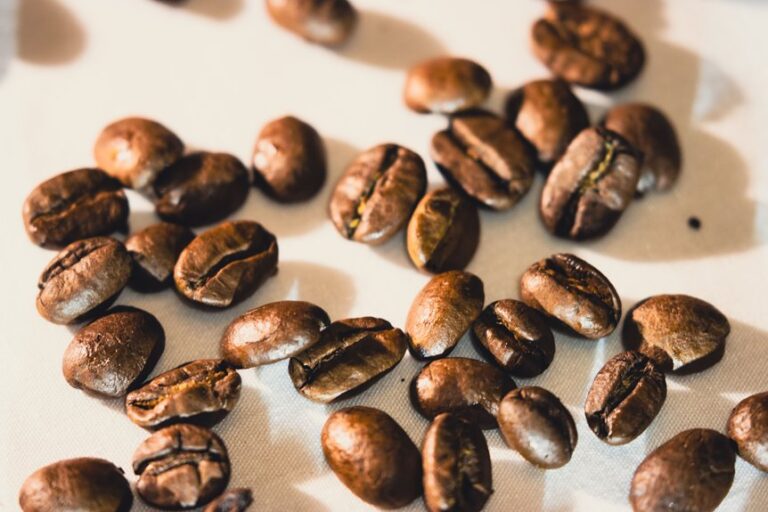

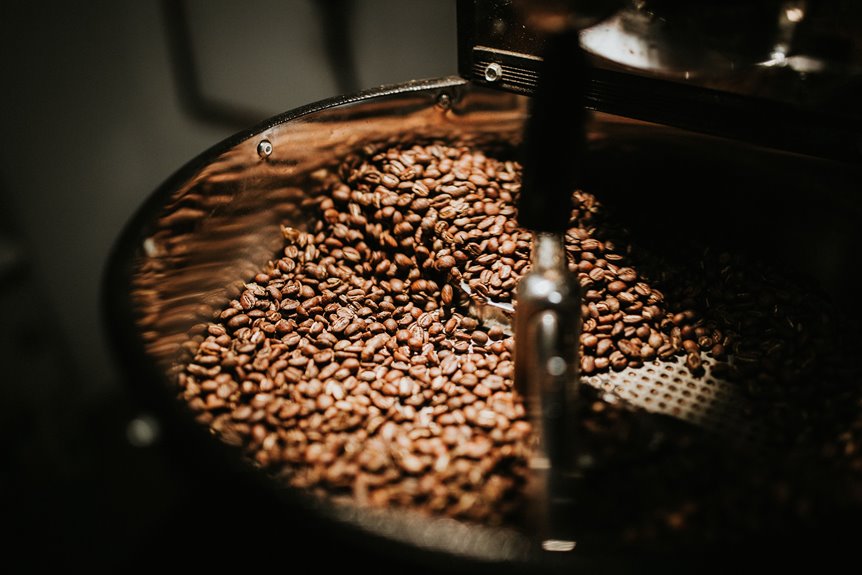
Ever wonder why coffee beans crack while roasting? That sharp pop you hear is steam escaping as heat causes the beans to expand. This process creates pressure, leading to the audible crack. The timing of each bean’s snap can vary, influencing the roast profile and flavor. Understanding these factors helps you appreciate the nuances in your cup of coffee.
What Causes Coffee Beans to Crack
Upon coffee beans cracking during roasting, it’s because heat and pressure build up inside the bean faster than they can escape. You’re watching cracking mechanics at work as moisture turns to steam and pushes against the bean’s hard outer shell.
As roasting temperatures rise, the pressure keeps climbing, and the shell can’t stretch forever. That’s why the bean snaps open with a sharp pop. You don’t need to feel lost here; this is a normal part of the roast process, and your batch is behaving as expected.
Small changes in heat, bean size, and moisture can shift when the crack begins. So, at the moment you hear it, you’re hearing the bean release stored energy, not something going wrong.
What First Crack Means in Roasting
As you hear the initial crack, you’re hearing your coffee beans reach a major turning point in the roast.
This sound usually means the beans are expanding, releasing steam, and starting to shift from grassy and sharp to warmer, sweeter tones.
Right after that, you’ll observe the flavor can change quickly, so this moment assists you in guiding the roast toward the taste you desire.
First Crack Basics
As your coffee shifts in the roaster, the preliminary crack is the moment the beans start to pop like tiny kernels, and that sound tells you a big change is happening inside.
You’ll hear it as a sharp series of pops, and those acoustic signals help you track progress without guessing. As the first crack begins, the beans have dried enough to release built-up pressure, so each pop shows that the roast is moving forward.
You can listen for the crack intensity to judge how lively the roast sounds, which helps you stay connected to the batch.
In the event the room is busy, don’t worry. Once you know this sound, you’ll feel more at home with the process, and your ears will guide you like a trusted friend at the roaster.
Flavor Changes After Crack
After initial crack, the coffee stops acting like a raw seed and starts behaving more like the drink you’d in mind. You’ll observe the flavor profile shift from grassy and sharp to sweeter, rounder, and more layered.
That pop opens the bean, so heat moves faster and aroma development jumps ahead. As you keep roasting, acids soften, sugars brown, and you begin to taste cocoa, caramel, or fruit hints depending on the bean.
This stage matters because you’re not just heating coffee anymore. You’re guiding its personality. Should you stay aware, you can choose a lighter cup with bright bite or a fuller cup with deeper warmth.
Either way, you’re joining a familiar roasting moment, and that can feel pretty good.
Why Moisture and Pressure Build Up
Even before the beans reach a loud crack, they start trapping a lot of energy inside. You can visualize each bean as a tiny shell with water and gases squeezed in tight.
As roasting continues, moisture interactions change fast, and that trapped water turns to steam. Since the outer layer dries initially, the inside keeps pushing outward. That creates pressure buildup, and you feel the bean’s tension rising like a crowded room.
- a warm bean puffing slightly
- steam pressing against hard walls
- tiny pores closing like doors
- a glossy skin turning fragile
- a shell straining to hold on
Because you’re part of the roasting moment, you can almost sense the bean getting restless. This concealed force sets up the crack you’ll hear next, and it’s why patience matters.
How Heat Changes the Bean Inside
At the point heat reaches the bean, it makes the trapped moisture spread out fast, so the inside starts to push outward.
Simultaneously, the bean’s cells begin to soften and shift, which changes how the whole bean holds together.
That mix of swelling and structural change sets the stage for the crack you hear during roasting.
Moisture Expansion
As heat moves through a coffee bean, the tiny bits of water trapped inside start to wake up and spread out, and that simple change is a big reason the bean eventually cracks. You can envision your beans as small, busy rooms filling with motion.
As the moisture content rises in energy, it turns into steam pressure that pushes from the inside. That pressure doesn’t act all at once; it builds little by little, so you feel the roast shift from quiet to lively.
- Warm beans swell like tiny balloons
- Steam presses against tight walls
- Dry spots heat faster and strain more
- The bean surface feels tense and firm
- A sudden pop can join your roast crowd
Cell Structure Changes
Heat doesn’t just warm a coffee bean; it starts to reshape the tiny cells inside it, and that change sets the stage for the crack you hear later.
As you follow the roasting process, you can envision the cell structure softening and stretching under rising heat. The walls lose strength, so pressure builds where the bean once felt firm and calm.
You’re not just watching color change; you’re seeing the bean’s inner support system give way a little at a time. That shift helps your coffee join the initial crack together, like a shared signal in the roaster.
It’s a small drama, sure, but it’s the kind that makes every bean feel alive, and honestly, a bit brave.
First Crack vs. Second Crack
Preliminary crack and second crack mark two very different moments in roasting, and each one tells you a lot about what’s happening inside the bean. During preliminary crack, you hear a sharp pop as steam pushes the bean apart and bean expansion begins. That sound feels lively, almost like your coffee is waking up with you.
As roast progression continues, second crack arrives softer and quicker, more like tiny snaps. It signals deeper internal changes and a more fragile bean surface.
- bright, loud pops
- slower, softer snaps
- beans swelling like little balloons
- shell lines opening
- a dark, toasty rhythm
You can listen for both, then trust your senses as the beans move from one stage to the next with you.
What First Crack Timing Reveals About Roast Level
Original crack timing gives you one of the clearest clues about roast level, and it can save you from guessing your way through the roast. As you hear it at the outset, your beans usually sit at a lighter stage, with more of their original character still showing.
Should crack timing come later, roast development has moved farther along, and the beans will look and taste more developed. You can trust this signal because heat, moisture loss, and expansion all show up in the sound.
How Roasters Use First Crack to Control Flavor
Once the initial crack begins, roasters use that sound as a live signal to shape flavor, not just as a sign that the beans are changing. You can lean into brighter tones or slow down for deeper sweetness, and that choice builds trust in your cup.
- A popping drum in a warm roastery
- Steam drifting above turning beans
- Golden shells shifting to chestnut brown
- A timer paused while ears stay alert
- Shared smiles as the aroma turns rich
During roast development, you listen, watch, and adjust heat so the beans fit your flavor profiling goals.
Should you move too fast, the cup could taste sharp. Should you wait a little longer, you might get a rounder, softer finish. That balance helps you feel part of the craft, like your palate matters and your coffee story is being shaped with care.
Frequently Asked Questions
What Equipment Best Detects Coffee Bean Cracks During Roasting?
You will achieve the best crack identification with a roasting drum’s audio sensors or a purpose-built acoustic monitor. These tools help you refine your roasting techniques and keep you connected with your coffee community.
How Does Roast Altitude Affect Cracking Behavior?
You will notice that higher roast altitudes often soften the drama as lower air pressure can encourage earlier cracking. Roast temperature and humidity levels still shape the rhythm. You are in good company as you track those cues.
Can Different Bean Sizes Crack at Different Times?
Yes, you will notice different bean sizes crack at different times because their bean structure and moisture content vary. You can track each batch closely and you will feel more confident roasting alongside your community.
Do Flavor Additives Change When Beans Crack?
Yes, you can expect flavor additives to slightly alter flavor profiles and sometimes influence cracking timing, but roasting techniques matter more. You will fit right in by experimenting carefully since additives can change heat transfer and surface behavior.
How Should Roasted Beans Be Cooled After Cracking?
You should cool roasted beans quickly using cooling methods like forced air or a cooling tray right after cracking temperatures pass. This will help preserve flavor, stop overdevelopment, and connect you with the community of roasters who achieve consistency.