
TDS meters can help you compare coffee tools by giving a clearer read on dissolved solids in the brew. They do not tell the whole story, but they do give a useful snapshot of extraction.
In 2026, the best picks bring accuracy, ATC, quick readings, and sturdy probes for daily use. From pocket testers to feature-rich models, a few standouts can change how you judge every cup.
| iSpring TDS2 Digital 2-Button TDS Meter with Backlit LCD Black |  | Budget Pick | Measurement Type: TDS | Display: Backlit LCD | Portability: Handheld | VIEW LATEST PRICE | Read Our Analysis |
| HM Digital COM-80 EC and TDS Hydro Tester |  | Professional Grade | Measurement Type: EC/TDS | Display: LCD | Portability: Handheld | VIEW LATEST PRICE | Read Our Analysis |
| APEC Digital Water Quality TDS Meter Kit | Best for Purity Checks | Measurement Type: TDS | Display: Digital display | Portability: Pocket-size | VIEW LATEST PRICE | Read Our Analysis | |
| 4-in-1 Digital Water Quality Tester (2025 New) |  | Best 4-in-1 | Measurement Type: TDS/EC/Temp | Display: Dual-backlit LCD | Portability: Handheld | VIEW LATEST PRICE | Read Our Analysis |
| INKBIRD 3-in-1 Digital Water TDS/EC/Temperature Meter |  | Best for Multi-Use | Measurement Type: TDS/EC/Temp | Display: LCD backlight | Portability: Handheld | VIEW LATEST PRICE | Read Our Analysis |
| Agratronix Coffee Moisture Tester Model 08150 |  | Best for Coffee Beans | Measurement Type: Moisture | Display: Backlit display | Portability: Handheld | VIEW LATEST PRICE | Read Our Analysis |
| 3-in-1 Digital Refractometer with ATC for Brewing and Wine | 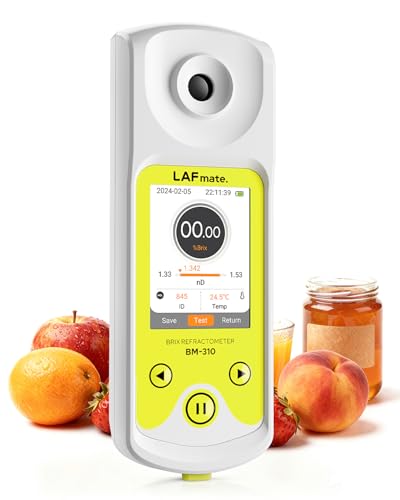 | Best Premium Choice | Measurement Type: Brix/RI | Display: TFT backlit screen | Portability: Portable | VIEW LATEST PRICE | Read Our Analysis |
More Details on Our Top Picks
iSpring TDS2 Digital 2-Button TDS Meter with Backlit LCD Black
Should you want a simple, compact way to check water quality for coffee brewing, the iSpring TDS2 Digital 2-Button TDS Meter is a strong fit. You can use it to test ppm in hard water and spot contamination from arsenic, lead, aluminum, and other metals. Its backlit LCD makes readings easy to see, and the two-button layout keeps operation simple. As soon as you lift it from the water, the hold function saves your reading. It also shuts off automatically to conserve energy. You get a black meter, lifetime support, and a 30-day money-back guarantee.
- Measurement Type:TDS
- Display:Backlit LCD
- Portability:Handheld
- Power Source:Batteries
- Auto Functions:Auto shut-off/hold
- Temperature Compensation:Not listed
- Additional Feature:Backlit LCD
- Additional Feature:Hold function
- Additional Feature:Automatic shut-off
HM Digital COM-80 EC and TDS Hydro Tester
The HM Digital COM-80 EC and TDS Hydro Tester is a practical pick should you want a fast, reusable meter with automatic temperature compensation and a clear LCD readout for checking brew water, filtered water, or other coffee-related liquids. You’ll get EC and TDS readings in seconds, with 1 ppm resolution, ±2% accuracy, and a 0–5000 ppm range. Its water-resistant body, data-hold, auto-off, and low-battery alerts make daily use simple. The included cap and batteries help you start right away. It isn’t coffee-specific, but it’s dependable for water-quality checks.
- Measurement Type:EC/TDS
- Display:LCD
- Portability:Handheld
- Power Source:Button cells
- Auto Functions:Auto-off/data-hold
- Temperature Compensation:ATC
- Additional Feature:0.5-second response
- Additional Feature:Water resistant
- Additional Feature:Protective cap
APEC Digital Water Quality TDS Meter Kit
APEC’s Digital Water Quality TDS Meter Kit is a smart pick should you want a lightweight, pocket-size tester that gives you a quick read on whether your water is clean enough for better coffee. It measures total dissolved solids in ppm, so you can judge salts, metals, and minerals fast. The 0–1999 ppm range, 1 ppm resolution, and ±2% accuracy give you solid everyday guidance. You’ll also get auto-reading, hold, and auto shut-off features, plus a stainless steel probe and carrying case. Use it to verify filtration and know at what point to change cartridges.
- Measurement Type:TDS
- Display:Digital display
- Portability:Pocket-size
- Power Source:CR2032 battery
- Auto Functions:Auto shut-off/hold
- Temperature Compensation:Not listed
- Additional Feature:Stainless steel probe
- Additional Feature:300 ppm calibration
- Additional Feature:Vinyl carrying case
4-in-1 Digital Water Quality Tester (2025 New)
Provided that you want a quick, no-fuss way to check brewing water, this 4-in-1 Digital Water Quality Tester is a smart pick for coffee lovers who care about consistency. You can measure TDS, EC, and temperature in °C or °F, with a wide 0–9999 ppm range for tap, RO, or filtered water. Its smart chip, dual-core processor, and titanium probe help you get stable, precise readings. The large LCD uses red or green backlighting to signal water quality, and the CR2032 battery, auto-shutoff, and tough ABS shell keep it practical.
- Measurement Type:TDS/EC/Temp
- Display:Dual-backlit LCD
- Portability:Handheld
- Power Source:CR2032 battery
- Auto Functions:Auto shutoff
- Temperature Compensation:Not listed
- Additional Feature:4-in-1 testing
- Additional Feature:Dual backlight colors
- Additional Feature:Titanium probe
INKBIRD 3-in-1 Digital Water TDS/EC/Temperature Meter
INKBIRD’s 3-in-1 Digital Water TDS/EC/Temperature Meter is a strong pick provided you want one compact tester to track brew water quality with more than just TDS, since it also measures EC and temperature with automatic compensation. You can check readings from 0–4995 ppm TDS and 0–9990 μs/cm EC, and the food-grade stainless probe helps maintain accuracy across changing temperatures. The backlit LCD makes it easy to read in low light, while data hold and auto-off add convenience. It’s lightweight, comfortable to use, and works well for water testing, though it isn’t suited to seawater.
- Measurement Type:TDS/EC/Temp
- Display:LCD backlight
- Portability:Handheld
- Power Source:AAA batteries
- Auto Functions:Data-hold/auto-off
- Temperature Compensation:ATC
- Additional Feature:Food-grade probe
- Additional Feature:Advanced LCD backlight
- Additional Feature:5-minute auto-off
Agratronix Coffee Moisture Tester Model 08150
The Agratronix Coffee Moisture Tester Model 08150 is a smart pick provided you need a handheld, coffee-calibrated meter that can travel with you from the field to storage. You can check green coffee from 7% to 40% and parchment coffee from 8% to 40%, while cocoa reads from 4% to 20%. Its 0.1% resolution helps you make tighter decisions, and it’s more accurate than scoop-type testers. You also get a backlit multilingual display, basic and precision modes, two 9V batteries, and a 32° to 113°F operating range.
- Measurement Type:Moisture
- Display:Backlit display
- Portability:Handheld
- Power Source:9V batteries
- Auto Functions:None listed
- Temperature Compensation:Not listed
- Additional Feature:Multilingual backlit display
- Additional Feature:Precision calibration mode
- Additional Feature:Grain scale offsets
3-in-1 Digital Refractometer with ATC for Brewing and Wine
With its 0–95% Brix range, ±0.2% precision, and automatic temperature compensation, this 3-in-1 digital refractometer is a smart pick should you brew coffee, make wine, or track sugar content in juices, honey, or syrup. You’ll get reliable readings from 5°C to 40°C, plus refractive index data. Its TFT backlit screen, unit switching, sugar charts, and multilingual menu make checks easy. You can store 100 readings, calibrate with distilled water, and recharge the 750 mAh battery via Type-C. IP65 protection and the included case suit field use.
- Measurement Type:Brix/RI
- Display:TFT backlit screen
- Portability:Portable
- Power Source:Rechargeable battery
- Auto Functions:Auto-off/sleep
- Temperature Compensation:ATC
- Additional Feature:Stores 100 readings
- Additional Feature:IP65 waterproof rating
- Additional Feature:Type-C fast charging
Factors to Consider When Choosing a Tds Meter for Coffee
At the time you choose a TDS meter for coffee, you should check its measurement range and accuracy level initially. You’ll also want temperature compensation and water compatibility so your readings stay reliable across different brew conditions. Clear display readability matters too, since you need to see results quickly and easily.
Measurement Range
For coffee brewing, you’ll want a TDS meter whose range comfortably spans the readings you actually use, usually from about 0 to at least 2000 ppm. That range lets you check brewed coffee, track extraction, and spot dilution without the meter maxing out. A 0–2000 ppm meter with 1 ppm resolution usually handles most brew control work well. In the event you test espresso concentrates, coffee concentrates, or stock solutions, choose a model with a higher ceiling, around 3000–5000 ppm or more, so it doesn’t saturate. You ought to also make sure it reads near 0–50 ppm for verifying very pure water for rinsing or brew prep. Wider-range meters can weaken low-end sensitivity, so balance maximum range with fine low-end resolution.
Accuracy Level
Accuracy matters just as much as range, because even a small error can skew your coffee measurements and lead you to chase the wrong brew adjustments. You should target a TDS meter rated to at least ±2% accuracy so your readings reflect real changes in dissolved solids. Aim for 1 ppm resolution, or finer, because tiny shifts in mineral content can still affect extraction and flavor. Choose a model with a fast response time, ideally under one second, and a stable hold function so you can capture consistent numbers during brewing. Also, check how often the meter needs calibration. Factory-calibrated units that let you recalibrate with 342 or 442 ppm standards help you keep readings trustworthy over time.
Temperature Compensation
Because TDS readings shift with temperature, you need a meter with Automatic Temperature Compensation (ATC) so it can adjust ppm values to a common reference, usually 25°C. Without ATC, conductivity can change about 2% per °C, so a 10°C swing might skew your result by roughly 20%. That matters while you’re comparing brews or dialing in extraction. Check that the ATC range matches your workflow; many meters compensate up to about 80°C, but hotter espresso or boiling samples can fall outside that limit. Should your meter not handle those temperatures well, let the sample cool to a stable, moderate point to start. Keep your sampling routine consistent too: measure at the same time after extraction and the same sample temperature so your TDS readings stay comparable.
Water Compatibility
While you’re choosing a TDS meter for coffee, make sure it can handle the water you actually brew with. Pick one that measures TDS in ppm and spans roughly 0–2000 ppm, so it can read both soft and mineral-rich water. Check for Automatic Temperature Compensation, or be ready to correct for temperature, because heat changes conductivity and skews results. You should also verify that the probe materials and water-resistance rating can withstand frequent dipping and cleaning without corroding or contaminating your samples. For coffee, you’ll want fine resolution, ideally 1 ppm, plus accuracy around ±2%, so you can catch small shifts that affect extraction. Finally, confirm the meter is easy to calibrate and that calibration solutions are easy to buy, so your readings stay reliable over time.
Display Readability
Once you’ve confirmed the meter can handle your water, make sure you can actually read it easily in the shop or lab. Choose a backlit LCD or another high-contrast screen so you can check readings in dim roasting rooms and cupping areas. Look for bold digits and a large display area; they cut eye strain whenever you’re taking repeated measurements and help you move faster. You should also verify that the meter shows clear numeric resolution, such as 1 ppm, plus units and temperature at the same time, so you don’t mix up results. A reliable hold indicator matters too, because it lets you read the value after removing the probe. Finally, check for low-battery and error icons so you won’t trust a bad reading.
Battery Life
Battery life matters, especially provided you test coffee water every day. You should check the battery type and capacity before you buy, whether it’s a CR2032 coin cell, AAA batteries, or a rechargeable pack. That tells you how often you’ll replace or charge it and how easy that’ll be. Also look for stated runtime, since some meters last months while others only run for a limited number of hours. In case you test daily, choose a model with longer life. Power-saving features like auto-off, sleep mode, or a low-power display can stretch each charge further. A low-battery indicator helps you avoid weak power and unreliable readings. Common batteries or USB charging can also lower hassle and long-term cost.
Portability And Size
While you’re choosing a TDS meter for coffee, portability and size can make daily use much easier. You’ll want a compact, pocket-size meter that’s about 5 to 6 inches long and weighs under 3 ounces, so you can slip it into an apron or bag without hassle. A lightweight body with a protective cap or carrying case helps shield the probe and keeps calibration steadier while you travel between cafés or brew stations. Check that it uses common coin cells like CR2032 or AAA batteries for easy roadside replacements. Also look at probe length and immersion depth; short, slim probes fit narrow carafes and small sample cups better. A simple button layout and backlit LCD can speed readings in busy, low-light coffee setups.
Hold And Auto-Off
Beyond portability and size, look for a TDS meter that makes readings easy to capture and keep. A hold function lets you freeze the TDS value on screen, so you can pull the probe, jot down the number, and avoid chasing a shifting display. For coffee, that matters because readings can drift as temperature settles. Choose a meter with a fast, responsive hold mode, ideally paired with a quick response time of 1 second or less, so you can compare brews and dilution tests with fewer errors. Auto-off also counts: it saves battery on coin-cell or AAA-powered meters through shutting down after about 2–5 minutes of inactivity. Provided you test often, pick one that lets you disable auto-off or extend the timer.
Frequently Asked Questions
How Often Should I Calibrate a Coffee TDS Meter?
Calibrate it every month, or before important measurements if you use it frequently. If the meter sits on a dusty bar cart, your readings can drift, so check it regularly to keep your coffee dialed in.
Can One Meter Measure Both Hot and Cold Coffee?
Yes, one meter can measure both hot and cold coffee, but cooling hot samples first improves accuracy. It also protects the sensor and reduces heat related drift.
Do TDS Meters Work for Espresso and Pour-Over?
Yes. TDS meters can help with both espresso and pour-over. Espresso often measures around 2% TDS, while pour-over often lands near 1.2%. Use them to compare brews, not to judge flavor alone.
How Do I Clean a TDS Meter After Coffee Testing?
Rinse the probe with distilled water after each coffee test, wipe it gently with a lint free cloth, and let it dry fully before storage. Skip soap and abrasive cleaners, and keep the meter capped and dry between uses.
What TDS Range Is Ideal for Brewed Coffee?
You’ll usually want brewed coffee around 1.15% to 1.35% TDS, with many balanced cups landing near 1.25%. If it’s much lower, it can taste weak; if it’s much higher, it can seem harsh.