
A simple espresso maker can make mornings easier, faster, and a lot less fussy.
This roundup covers six practical picks for everyday brewing. You’ll see quick countertop machines like CHULUX, XIXUBX, and SOWTECH, plus stovetop options such as Mongdio and SIXAQUAE. FUOCCI adds a bit of extra froth for a richer cup.
| CHULUX Slim Espresso Machine with Milk Frother |  | Best Overall | Type: Semi-automatic espresso machine | Coffee Input: Ground coffee | Milk Frothing: Steam wand | VIEW LATEST PRICE | Read Our Analysis |
| Mongdio Stovetop Espresso Maker Moka Pot (10 oz) |  | Best Value | Type: Stovetop moka pot | Coffee Input: Ground coffee | Milk Frothing: No | VIEW LATEST PRICE | Read Our Analysis |
| SIXAQUAE Moka Induction Espresso Maker 240ml (6-Cup) |  | Best for Induction | Type: Stovetop moka pot | Coffee Input: Ground coffee | Milk Frothing: No | VIEW LATEST PRICE | Read Our Analysis |
| XIXUBX Espresso & Cappuccino Machine with Steam Wand |  | Best Compact Pick | Type: Espresso machine | Coffee Input: Ground coffee | Milk Frothing: Steam wand | VIEW LATEST PRICE | Read Our Analysis |
| SOWTECH Espresso Cappuccino Machine with Milk Frother |  | Budget-Friendly Pick | Type: Espresso machine | Coffee Input: Ground coffee | Milk Frothing: Steam wand | VIEW LATEST PRICE | Read Our Analysis |
| FUOCCI Electric Moka Pot with Milk Frother | 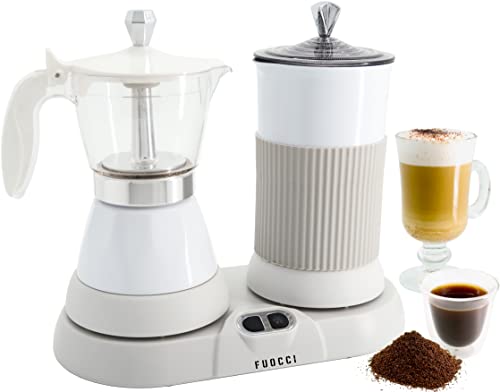 | Best Electric Moka Pot | Type: Electric moka pot | Coffee Input: Ground coffee | Milk Frothing: Milk steamer | VIEW LATEST PRICE | Read Our Analysis |
More Details on Our Top Picks
CHULUX Slim Espresso Machine with Milk Frother
If you want a compact espresso maker that feels simple but still gives you real coffee shop results, the CHULUX Slim Espresso Machine with Milk Frother is a strong pick. You get a 20 bar pump, quick 30 second heat up, and espresso in about 1 to 3 minutes. The pressure gauge helps you stay in control, while pre-infusion supports a smoother shot. Then the steam wand lets you make creamy milk foam for lattes, cappuccinos, and mochas. Its slim 5.5 inch body fits tight counters, and the removable tank makes daily use easy.
- Type:Semi-automatic espresso machine
- Coffee Input:Ground coffee
- Milk Frothing:Steam wand
- Operation:Semi-automatic
- Power Source:Electric
- Portability:Compact
- Additional Feature:20 bar Italian pump
- Additional Feature:Pressure gauge display
- Additional Feature:30-second preheating
Mongdio Stovetop Espresso Maker Moka Pot (10 oz)
The Mongdio Stovetop Espresso Maker Moka Pot is a smart pick for anyone who wants rich, café-style coffee without the fuss, especially since its 10 oz size and manual design make it easy to use at home, at work, or on the go. You get a sturdy, food-grade cast aluminum build, a heat-resistant handle, and a safety valve for steady brewing. Because it heats fast and evenly, you can make espresso, mocha, or Cuban coffee in minutes. Then just rinse it with warm water, dry the parts, and brew again.
- Type:Stovetop moka pot
- Coffee Input:Ground coffee
- Milk Frothing:No
- Operation:Manual
- Power Source:Stovetop
- Portability:Portable
- Additional Feature:Food-grade aluminum body
- Additional Feature:Heat-resistant handle
- Additional Feature:Safety pressure valve
SIXAQUAE Moka Induction Espresso Maker 240ml (6-Cup)
SIXAQUAE’s 240ml, 6-cup moka pot is a great pick for anyone who wants a simple, hands-on espresso maker that still feels a little sophisticated on the counter. You get a crystal-clear borosilicate glass top, so you can watch the brew rise, and the 304 stainless steel body feels sturdy enough for daily use. Because it works on induction, gas, ceramic, and electric stoves, you can use it almost anywhere. The reusable filter keeps things easy, while the safety valve and heat-resistant handle help you brew with confidence.
- Type:Stovetop moka pot
- Coffee Input:Ground coffee
- Milk Frothing:No
- Operation:Manual
- Power Source:Stovetop
- Portability:Portable
- Additional Feature:Borosilicate glass top
- Additional Feature:Induction cooktop compatible
- Additional Feature:Italian safety valve
XIXUBX Espresso & Cappuccino Machine with Steam Wand
Compact kitchens need a coffee machine that feels easy, not bulky, and the XIXUBX Espresso & Cappuccino Machine with Steam Wand fits that need well with its small 8.3-inch depth, 6-inch width, and light 3.3-pound build. You can brew espresso in about 2 minutes with 800 watts and 3.5 bars of pressure. Then you can switch to the steam wand for cappuccinos or lattes. The single knob keeps use simple, and the 240 mL capacity works well for daily cups. Use standard ground coffee, let it cool between brews, and enjoy tidy, easy mornings.
- Type:Espresso machine
- Coffee Input:Ground coffee
- Milk Frothing:Steam wand
- Operation:Semi-automatic
- Power Source:Electric
- Portability:Compact
- Additional Feature:Single knob control
- Additional Feature:Adjustable steam wand
- Additional Feature:Lifetime tech support
SOWTECH Espresso Cappuccino Machine with Milk Frother
If you want a small espresso maker that feels easy to live with, the SOWTECH Espresso Cappuccino Machine with Milk Frother fits that need well. You get one-knob control, so you can start brewing without fuss. Its 800W heating and 3.5-bar pressure make espresso, cappuccino, and latte fast from ground coffee. The steam wand helps you froth whole milk, and the adjustable design gives you more control. Because it’s compact, lightweight, and low-noise, it slips into tight kitchens. The reusable filter, Tritan cups, and 4.2-star rating add confidence every day.
- Type:Espresso machine
- Coffee Input:Ground coffee
- Milk Frothing:Steam wand
- Operation:Fully automatic
- Power Source:Electric
- Portability:Compact
- Additional Feature:Anti-scalding sleeve
- Additional Feature:Low-noise operation
- Additional Feature:Permanent reusable filter
FUOCCI Electric Moka Pot with Milk Frother
The FUOCCI Electric Moka Pot with Milk Frother is a smart pick for you whenever you want true espresso style drinks without making your kitchen feel crowded or complicated. You can brew 3 cups, about 150 ml, and make espresso, coffee, cappuccino, latte, mocha, or Cuban coffee in minutes. The built-in frother warms up to 200 ml and froths about 100 ml for smooth foam. With one-button control, a reusable filter, auto-shutoff, and a detachable cordless base, you get easy, safe use. Its compact white design cleans fast and fits busy mornings, beautifully.
- Type:Electric moka pot
- Coffee Input:Ground coffee
- Milk Frothing:Milk steamer
- Operation:Semi-automatic
- Power Source:Electric
- Portability:Compact
- Additional Feature:Detachable cordless base
- Additional Feature:Non-stick interior
- Additional Feature:Transparent PC top
Factors to Consider When Choosing a Simple Espresso Maker
Whenever you choose a simple espresso maker, start with brewing pressure because it shapes how bold and rich your shot tastes. Then check the boiler wattage, machine size, milk frothing, and water capacity so the machine fits your kitchen, your routine, and the drinks you love. A good match here saves you time and keeps your coffee setup feeling easy, not fussy.
Brewing Pressure
Brewing pressure can make or break your espresso, and a well-made simple espresso maker should give you enough force to push hot water through fine grounds with confidence. You’ll usually want a home range near 9 to 20 bars, since that helps extraction and builds crema. In case the pressure drops too low, around 3.5 bars, your shot can taste thin and feel less rich. But more pressure isn’t always better. Whenever control is weak, you can pull bitter coffee fast. That’s why steady flow matters as much as the peak number on the box. Look for real-time pressure feedback in case you can. It helps you know whether the machine holds the target. Also, gentle pre-infusion can set the stage for smoother, better-balanced flavor.
Boiler Wattage
A little extra boiler power can make your morning feel much less rushed, because boiler wattage affects how fast your espresso maker reaches brewing temperature. If you want quick espresso, look for stronger wattage, since higher-powered units usually warm up faster than lower-powered ones. Around 800W is often fine for basic home use, but 1350W to 1400W models can cut wait time and get you pulling shots sooner. That matters when you want coffee now, not after your brain wakes up. Also, check how well the machine recovers heat after steaming, because lower wattage can slow back-to-back drinks. Still, wattage works best with boiler size and pump pressure, so don’t judge by one number alone. Fast heat-up times, from 30 seconds to a few minutes, often point to smart heating design.
Machine Size
Beside your coffee corner, size can quietly make or break your espresso routine. You need a machine that fits where you’ll use it, so measure the footprint before you buy. A compact model can be as narrow as 5.5 inches, which helps on small counters, in dorm rooms, and in tight kitchens. If you move your maker often, a portable stovetop style can save space and feel easier to carry. Size also ties to capacity, so consider how much water you want on hand. Small units might hold 150 to 240 milliliters, while larger home machines offer bigger tanks. Finally, check the full height, especially whenever cabinets sit low. Handles, lids, and top parts can hide a surprise.
Milk Frothing
Upon you start looking at milk frothing, pay close attention to how the machine makes steam and how the wand is built, because those two parts shape the foam in your cup. Strong, adjustable steam helps you create finer microfoam, so your cappuccino or latte feels smooth and rich instead of flat. If you want more drink choices, look for a dedicated frothing system that can handle cappuccino, latte, mocha, and macchiato with ease. Also, check whether the frother is built in or separate, since an integrated setup can save space and make your routine simpler. Finally, choose a model with heat-resistant parts, removable pieces, and easy-rinse cleaning, because frothing should feel rewarding, not like a second chore.
Water Capacity
After you get the steam and frothing setup sorted, it makes sense to look at water capacity, because that affects how often you’ll stop to refill instead of making drinks. A small tank, often around 150 mL, keeps your machine compact and easy to move, which can help in tight kitchens. Still, whenever you pull several shots in a row, you’ll notice the extra refills fast. A larger reservoir, sometimes up to 40 oz, gives you more freedom when you’re serving guests or brewing through a busy morning. Whenever your model has a removable tank, you can refill and clean it with less fuss, especially when it holds more water. For single servings, a modest tank usually works well. For frequent use, go bigger.
Ease Of Use
Ease of use can make the difference between a machine you enjoy every morning and one that gathers dust on the counter. You’ll want one-touch or single-knob controls, because fewer steps mean less stress before your initial sip. Clear buttons also help you move fast without second-guessing. Next, pay attention to heat-up time. A machine that’s ready in about 30 seconds to 2 minutes saves you from pacing the kitchen. When cleanup matters to you, choose a model with a removable water tank and drip tray, since both make filling and emptying easier. A built-in pressure gauge or brewing markers can also guide you well. Should you prefer stovetop makers, keep in mind they’re simple, but they ask you to measure carefully and watch the heat.
Material Quality
Material matters more than many people realize, because the wrong build can turn a handy espresso maker into a short-lived headache. You should choose food-grade stainless steel, aluminum, or borosilicate glass, since each handles heat well and keeps your drink safe. Then, check that the boiler, brew head, filter, and water tank all use food-safe parts, because those pieces touch hot water and coffee every time you brew. Also, look for BPA-free plastic on handles or cups, so you get less burn risk without adding extra weight. Easy-clean or non-stick interiors help you rinse faster and protect the machine over time. Finally, don’t assume it’s dishwasher safe. Mixed materials often need hand washing to keep seals tight, finishes bright, and your espresso maker working smoothly.
Frequently Asked Questions
How Do I Clean Hard-To-Reach Espresso Machine Parts?
Use a narrow brush, pipe cleaner, or microfiber swab to scrub tight spots, then flush them with hot water. For removable parts, soak them in espresso cleaner, rinse thoroughly, and dry completely.
Can I Use Pre-Ground Coffee in These Espresso Makers?
Yes, pre-ground coffee works, but use espresso fine grounds for the best extraction. The shot quality is usually solid, though freshly ground beans tend to deliver more vivid flavor, deeper aroma, and a fuller cup.
Which Espresso Maker Heats up the Fastest?
A single boiler espresso machine or a stovetop moka pot usually heats up the quickest because both use less water and reach brewing temperature fast. If you want the shortest wait, pick a compact model with a small water reservoir and efficient heating.
Are These Machines Suitable for Small Kitchens?
Yes, many of these machines work well in small kitchens. Slimmer models fit neatly on counters without taking up much room.
How Often Should I Descale a Simple Espresso Maker?
Descale it every 1 to 3 months, based on how hard your water is and how often you use the machine. If you brew espresso daily, descale more often. Look for slower brewing, strange flavors, or visible mineral buildup, and follow the machine’s care instructions.