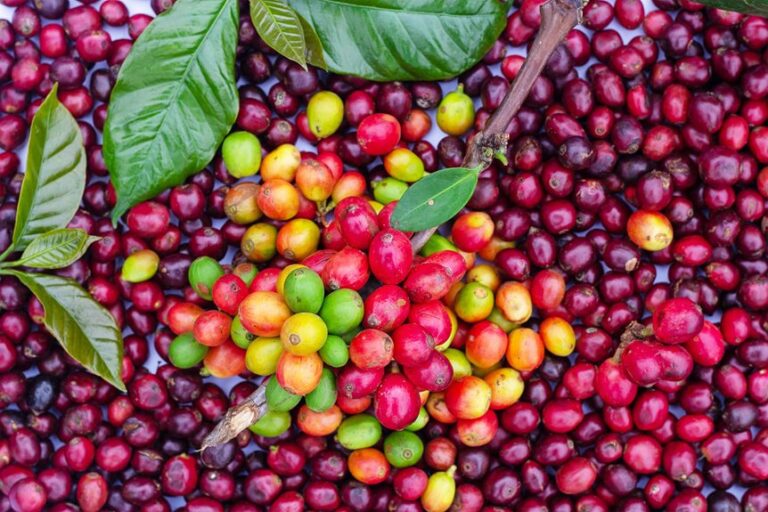

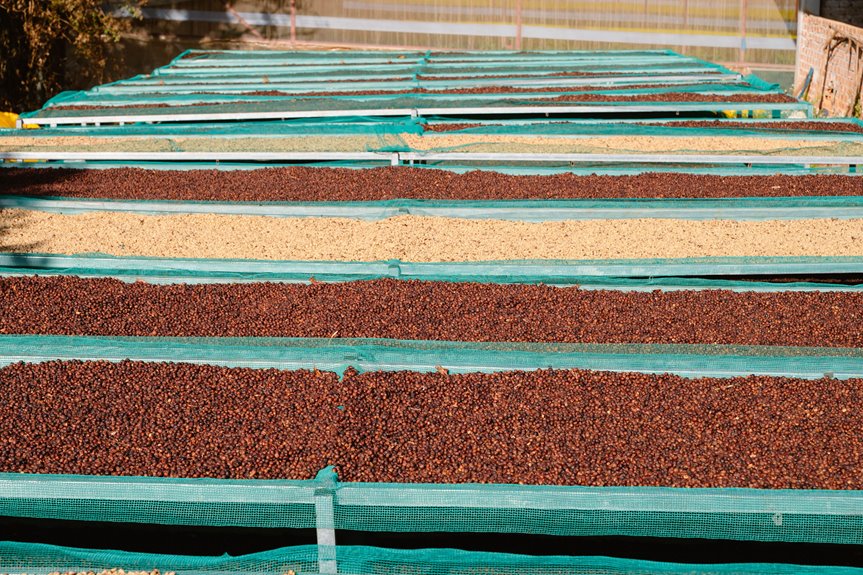
Coffee cherries are cleaned and sorted right after harvest to remove defects and debris. Pulping separates the outer fruit from the beans, starting the transformation. Washed (wet) processing uses fermentation and rinsing to remove mucilage for a cleaner flavor. Natural (dry) processing dries whole cherries for sweeter, fruit-forward notes, while honey processing leaves some mucilage for added body and sweetness. Each processing choice shapes acidity, body, and flavor profile before roasting.
Coffee Processing After Harvest
Right after harvest, coffee beans need careful processing to protect their flavor, quality, and value. You keep your batch moving with calm, steady steps that help everyone on the farm stay confident.
Initially, you sort out damaged beans and clear away dirt, leaves, and broken fruit. Then you watch moisture closely, because the right level keeps coffee storage safer and more stable.
Clean surfaces matter too, so equipment maintenance should stay on your checklist every day. Whenever you rinse tools and inspect parts, you cut down on delays and surprises.
You also protect the shared effort behind each crop. In this stage, each small action supports the next, and that makes the work feel manageable, even on busy days.
Pulping the Coffee Cherry
Once the coffee cherries are clean and sorted, you can move them into pulping with more control and less guesswork.
At this stage, you guide each cherry through eco friendly machinery that removes the skin and most of the fruit. You keep the flow steady, because smooth pulping protects the beans and lowers damage. You also watch worker safety, since moving parts need careful handling, good guards, and clear routines.
Should you stay alert, you help your team work with confidence and less stress.
The pulped coffee then leaves the machine ready for the next step, with the beans still wrapped in their parchment layer.
That simple shift matters, because it turns fresh fruit into coffee you can handle, sort, and care for as a group.
Washed Coffee Processing
Washed coffee processing often begins with a careful soak, and that initial wash does more than clean the beans. You help loosen sticky fruit and guide the beans through tanks where water usage stays closely managed.
After soaking, workers scrub away the remaining pulp, then sort the beans so only the best ones keep moving forward. This step gives you a brighter, cleaner cup, and it often feels like a shared craft because each choice shapes flavor.
Concurrently, you also need strong effluent treatment, since the rinse water carries sugars and solids that must be handled safely. Once you understand this method, you see how care, control, and community come together in every washed batch.
Natural Coffee Processing
Natural coffee processing lets the fruit dry on the bean before anyone removes it, so the coffee keeps more of the cherry’s sweetness as it slowly develops flavor. You’ll often feel part of a small, patient craft whenever you choose it. Fresh cherries spread across patios or raised beds for sun drying, and you turn them often so they dry evenly. During this time, wild fermentation happens inside the fruit, shaping bold fruit notes and a heavier body.
| Step | What You Do | What You Notice |
|---|---|---|
| Pick | Harvest ripe cherries | They look deep red |
| Dry | Set them in the sun | They shrink slowly |
| Turn | Move them often | They dry more evenly |
| Hull | Remove the dried skin | Beans come free |
If you enjoy coffees with a lively, rustic feel, natural processing can feel like your kind of cup.
Honey Coffee Processing
Honey coffee processing gives you a middle path between washed and natural methods, so you keep some of the coffee cherry’s sticky mucilage on the bean while it dries.
The amount you leave on, from a little to a lot, can change how sweet, bright, or heavy the cup feels.
As the beans dry, that coating helps shape the flavor, and you’ll notice that careful drying matters just as much as the amount of mucilage you keep.
Honey Processing Basics
Careful drying and sticky sweetness go hand in hand in honey processing, and that mix gives this method its special charm. You help the beans keep part of their fruit layer, so they dry with extra sugars on the surface. That can enhance body and add a smooth, sweet cup.
Still, you need steady airflow and attention, because honey fermentation can start fast should the beans sit too wet. Whenever you turn and monitor them, you protect flavor and avoid sticky defects that can dull the cup.
This style asks for patience, but it rewards you with depth and balance. In case you like coffees that feel warm, lively, and welcoming, honey processing lets you join a craft that feels both careful and rewarding.
Mucilage Retention Levels
Once you adjust how much mucilage stays on the bean, you shape the whole honey process from the start. You’re not just leaving sticky fruit behind; you’re guiding mucilage chemistry and the pace of microbial succession. That matters because each retention level changes how your coffee feels in the workspace and how your team handles it together.
| Retention level | What you notice |
|---|---|
| Low | Beans feel cleaner and easier to move |
| Medium | A balanced layer stays on, so handling feels familiar |
| High | Beans cling more, and you need closer care |
| Full | The lot stays richly coated, which asks for patience |
When you choose a level, you join a shared craft. You learn to trust the process, and your coffee lot starts to tell its own clear story.
Flavor And Drying Effects
The amount of mucilage you leave on the bean does more than change how it looks and feels, because it also shapes flavor as the coffee dries.
Whenever you keep more of that sticky layer, you invite sweeter notes, heavier body, and a softer pace in drying.
Should you remove more, the cup can taste cleaner and brighter, with more terroir influence showing through.
You’ll notice the difference most whenever airflow and heat stay steady, because uneven drying can mute delicate flavors or add rough ones.
Good storage conditions after drying matter too, since moisture can creep back in and blur the profile you worked to build.
With honey processing, you’re not just drying coffee. You’re guiding the bean toward the taste your community will recall.
Fermentation and Washing
At the time you control fermentation timing, you help shape how the beans develop before washing begins.
You can use different washing methods to remove the sticky fruit layer, and each one changes the final cup in its own way.
As you move through this step, you’ll start to see how careful washing brings out cleaner flavors and brighter characteristics.
Fermentation Timing
As soon as the coffee cherries are pulped and washed, fermentation starts doing quiet but significant work.
You don’t need to rush it, but you do need to watch the clock and the climate. Warm rooms speed things up, while cool spaces slow them down, so cold fermentation timing helps you stretch the process and build cleaner flavors.
In contrast, diurnal fermentation follows the day and night swing, so your beans might change pace as temperatures rise and fall.
You can check the beans often, feel the slimy layer fade, and trust your senses as much as the timer.
Whenever you time fermentation well, you give your coffee a better chance to taste balanced, bright, and true to your care.
Washing Methods
After fermentation has loosened the sticky mucilage, washing steps help you bring each bean back to a clean, steady state.
You guide the beans through fresh water so the loosened pulp slips away without rough handling. Use clean channels, tanks, or screens, and watch the flow so the beans stay moving together. Good equipment sanitation matters here because any leftover residue can cling to the next batch and slow your work. As you wash, sort out floaters and broken pieces, since that keeps the lot more even and easier to manage.
Should your setup allow water recycling, you can save resources while still rinsing well. With calm, steady care, you help your coffee community keep each lot clean, dependable, and ready for the next step.
Flavor Development
Fermentation and washing do more than clean the beans, because they also shape the cup you’ll taste later. Whenever you let the mucilage decompose at the right pace, you help release sweetness, brighter fruit, and a cleaner finish. In case you watch closely, you can guide flavor without forcing it.
| Stage | What You Notice | Cup Effect |
|---|---|---|
| Initial fermentation | Soft aroma | Lively start |
| Mid fermentation | Sweet scent | Round body |
| Late wash | Clear water | Crisp finish |
| Drying after wash | Stable beans | Balanced flavor |
| Altitude influence | Cooler nights | Sharper acidity |
Your varietal chemistry matters too, since each bean reacts in its own way. So, provided you process with care, you join a craft that values patience, esteem, and a cup that feels made for you.
Drying Coffee to the Right Moisture
Drying coffee to the right moisture is one of the most vital steps after harvest, because it protects the beans from mold, crackling heat damage, and that dull, tired flavor nobody wants in the cup. You guide this stage with care, and that helps every bean stay steady and safe.
Use solar monitoring to track heat and airflow, so you can adjust whenever clouds shift or the sun gets fierce. Watch for moisture equilibrium, because beans need time to settle before they feel ready.
- Spread beans in thin layers.
- Turn them often for even drying.
- Check texture, not just the clock.
- Store them only once they feel balanced.
At the point you pay attention here, you join a craft that values patience, trust, and great coffee.
Sorting, Hulling, and Roasting Prep
Now the beans are ready for the next careful steps, and this stage starts with sorting, hulling, and roasting prep. You watch bean grading happen initially, so the best beans move forward with confidence.
Then workers do defect removal, taking out broken pieces, stones, and any beans that could throw off the cup. After that, hulling strips away the last dry layers, and the clean beans finally feel ready.
This part matters because every small choice helps your coffee taste smoother and more balanced. Next, the beans get checked again for size and color, which keeps the batch steady and fair.
Whenever you follow this process, you join a careful coffee path where quality isn’t random. It’s earned, one smart step at a time.
Frequently Asked Questions
How Are Coffee Beans Stored Before Processing Begins?
You store coffee beans in clean sacks or bins, often in cold storage with tight moisture control, so they do not develop mold; that keeps your beans safe, fresh, and part of the good batch.
What Equipment Is Used to Transport Freshly Picked Coffee Cherries?
You’ll usually use cherry hoppers and mechanized conveyors to move freshly picked coffee cherries efficiently. You are part of a smooth, shared workflow that keeps harvests organized, protects fruit, and gets everything ready quickly.
How Does Altitude Affect Coffee Processing Methods?
At higher altitudes, you’ll often choose slower, more careful methods; for example, you could honey process a Gesha lot because cooler temperatures and microclimate effects favor varietal adaptation, helping your community’s coffee stand out beautifully.
Are Organic Coffee Beans Processed Differently?
Yes, you’ll usually follow organic methods and certification standards, but you process beans much like others. You avoid prohibited chemicals, keep lots separate, and protect the community you’re joining with careful, transparent handling.
What Happens to Defective Beans After Sorting?
You remove defective beans during quality control, then send them to defect disposal so they do not affect your lot. That keeps your coffee consistent, and you still belong to a careful, high standard process.